1

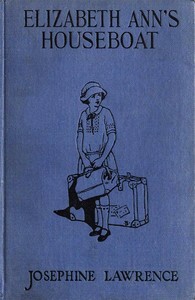
Elizabeth Ann's Houseboat — Key Ideas to Explore
(0 User reviews)
320
Project Gutenberg
2016
Not confirmed
Friendship -- Juvenile fiction; Truthfulness and falsehood -- Juvenile fiction; Families -- Juvenile fiction; Blame -- Juvenile fiction
Readers of public-domain and historical texts
Project Gutenberg digital edition
en
Edition facts
Words
39,772
Reading time
173 min
Text sections
32
This digital edition of Elizabeth Ann's Houseboat — Key Ideas to Explore is described by source-level measurements including 39,772 words, 2 hr 53 min estimated reading time, and 32 detected text sections.
The text analysis averages about 16.1 words per sentence, while the detected sections provide another way to judge how the source is divided.
Project Gutenberg metadata also associates the work with “Friendship -- Juvenile fiction,” connecting these edition facts with the source record’s subject description.
Source:
Project Gutenberg record #53815
In this 1929 children's novel, Elizabeth Ann navigates friendship, punctuality, and responsibility through everyday adventures like catching the school bus and planning a Halloween party, with a dawdling friend testing her patience.
Editorial Edition Score
4.8/5
★★★★★
★★★★★
Calculated from edition completeness, EPUB availability, text structure and catalogue metadata. Not a user rating.
How this score is calculated
- Description quality20 pts
- Title & short description10 pts
- Source metadata20 pts
- Text length15 pts
- Chapters / structure15 pts
- EPUB file integrity20 pts
Total of 100 points, scaled to a 2.5-5.0 range. Editions with an empty description or a missing EPUB file are not scored.
Edition quality
Public-domain source text
Read the source text
The source text is kept in the dedicated reader, separate from this catalogue record and its commentary.
Josephine Lawrence’s Elizabeth Ann’s Houseboat opens not with a houseboat but with a letter and a ride to fetch mail. The first chapter establishes a pattern of small, concrete conflicts: Elizabeth Ann wants to stop and examine a flower, but Lex insists on keeping his promise to Cousin Nellie to return promptly. This tension between desire and obligation recurs throughout the excerpts, where Elizabeth Ann must balance her own wishes against the demands of schedules, friendships, and adult expectations.
The catalog subjects list “Friendship,” “Truthfulness and falsehood,” “Families,” and “Blame,” yet the excerpts focus less on grand moral lessons than on the logistics of daily life—catching a bus, waiting for a friend, and managing time. The houseboat itself does not appear in the provided text, suggesting the title may refer to a later plot development not covered here.
The Bus as a Recurring Deadline
The school bus is a central, almost character-like presence in the excerpts. Dave the driver honks to warn stragglers, and the children must run to meet his schedule. In Chapter XIII, Elizabeth Ann and Doris sprint while Catherine dawdles, and Elizabeth Ann’s plea “Hurry, Catherine—you’ll be late” goes unheeded. The bus becomes a test of responsibility: those who miss it face consequences, such as Catherine having to walk or her father refusing to drive her. Lawrence uses the bus to create suspense in otherwise ordinary moments, turning a daily routine into a recurring source of tension.
The bus also highlights social dynamics. Elizabeth Ann waits for Catherine even when it means risking her own punctuality, showing her loyalty. Yet the narrative subtly critiques Catherine’s behavior: she expects others to accommodate her lateness, and her mother’s permissiveness is implied as a cause. The bus, then, is not just transportation but a measure of character.
Catherine Dawdles: A Portrait of Procrastination
Catherine Gould emerges as a foil to Elizabeth Ann. She walks slowly, ignores calls to hurry, and blames others for her own delays. In one scene, she misses the bus because she ate breakfast late, yet she plans to ask her father to complain to the School Board about Dave’s timing. Lawrence presents Catherine’s dawdling not as a single lapse but as a pattern: she is “absent-minded,” talks of nothing but the party, and expects special treatment. Elizabeth Ann observes that “perhaps it was better not to have your mother let you do just as you pleased,” a rare moment of explicit reflection.
The excerpts do not resolve Catherine’s behavior, leaving open whether she learns a lesson. This restraint is notable: the catalog subject “Blame” appears in Catherine’s tendency to shift responsibility, but the text does not moralize. Instead, it shows the practical frustrations her dawdling causes, especially for Elizabeth Ann and Doris, who must run to make the bus despite waiting for her.
Voice and Structure: Dialogue-Driven Storytelling
Lawrence’s prose relies heavily on dialogue to advance the plot and reveal character. The opening chapter’s exchange between Elizabeth Ann and Lex establishes their relationship: Lex is patient but firm, while Elizabeth Ann is curious and prone to distraction. Their conversation about the mail man reading magazines and his horse forgetting to go is a small, vivid detail that gives the world texture. Similarly, Catherine’s dialogue—complaining about her father, explaining her lateness—is consistently self-justifying, contrasting with Elizabeth Ann’s more practical remarks.
The narrative voice is close to Elizabeth Ann’s perspective, using phrases like “that provoking Catherine” and noting that “Elizabeth Ann told Doris that she thought perhaps it was better not to have your mother let you do just as you pleased.” This limited third-person point of view keeps the focus on Elizabeth Ann’s experiences and judgments, without authorial intrusion. The structure is episodic, with chapters titled like “A Letter” and “Catherine Dawdles,” each centered on a single incident or theme.
Readers should note that the houseboat of the title does not appear in the provided excerpts, which cover only the first thirteen chapters and a later scene. The story may shift focus once the houseboat is introduced, but the early chapters establish a world of school, friends, and daily obligations. Pay attention to how Lawrence uses small details—a flower in a field, a bus horn, a dawdling friend—to build character and conflict without dramatic events. The catalog subjects offer a framework, but the excerpts suggest a more nuanced exploration of responsibility and friendship through everyday choices.
That rainy afternoon, I kept thinking about Elizabeth Ann’s exasperation with her dawdling friend—how patience itself becomes a kind of journey. The book sat on my lap, but my mind wandered to Congo riverboats and Henry Stanley’s relentless schedules. The contrast felt right: one child fretting over a bus, another crossing a continent. I picked up The Boy Travellers on the Congo Adventures of Two Youths in a Journey with Henry M. Stanley "Through the Dark Continent" — Context and Discussion almost without deciding to, and the rain kept falling.
There are no reviews for this eBook.
There are no comments for this eBook.
Reader reflection
Before you leave, reflect on the book
Use these questions to collect your thoughts before moving on.
Your progress
0
/
10
2
How much did you enjoy the reading experience?
3
Would you recommend this book to another reader?
4
How demanding did the text feel?
5
Would you like to discuss this book with someone?
6
Which part made the strongest impression?
7
Could you follow the author’s main argument?
8
Did anything about the book feel genuinely new?
9
In one sentence, what did you learn?
10