1

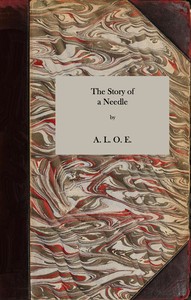
The Story of a Needle — Text and Context
(0 User reviews)
1162
Project Gutenberg
2021
Not confirmed
Conduct of life -- Juvenile fiction; Children -- Conduct of life -- Juvenile fiction; Siblings -- Juvenile fiction; Families -- Juvenile fiction; Filial piety -- Juvenile fiction; Needlework -- Juvenile fiction; Pins and needles -- Juvenile fiction
Readers of public-domain and historical texts
Project Gutenberg digital edition
en
Edition facts
Words
30,184
Reading time
132 min
Text sections
20
The catalog record for The Story of a Needle — Text and Context provides practical reading context through 30,184 words, 2 hr 12 min estimated reading time, and 20 detected text sections.
The text analysis averages about 18.5 words per sentence, while the detected sections provide another way to judge how the source is divided.
Project Gutenberg metadata also associates the work with “Conduct of life -- Juvenile fiction,” connecting these edition facts with the source record’s subject description.
Source:
Project Gutenberg record #65365
A first-person narrative from a needle's perspective traces its manufacture from Cornish iron ore to steel wire, then through adventures in a work-box. The tale intertwines moral lessons on industry and filial piety with a fairy-tale about idle children transformed into a compass.
Editorial Edition Score
4.8/5
★★★★★
★★★★★
Calculated from edition completeness, EPUB availability, text structure and catalogue metadata. Not a user rating.
How this score is calculated
- Description quality20 pts
- Title & short description10 pts
- Source metadata20 pts
- Text length15 pts
- Chapters / structure15 pts
- EPUB file integrity20 pts
Total of 100 points, scaled to a 2.5-5.0 range. Editions with an empty description or a missing EPUB file are not scored.
Edition quality
Public-domain source text
Read the source text
The source text is kept in the dedicated reader, separate from this catalogue record and its commentary.
The Story of a Needle opens with an unusual narrator: a steel needle recalling its own creation. The voice is wry and self-aware—the needle admits it remembers nothing of being smelted from Cornish iron ore, only waking on an anvil as a blunt piece of wire. It describes being hammered flat, heated, and pierced, all in a tone of mild surprise. This manufacturing sequence establishes a pattern: the needle is shaped by forces it cannot control, much like the children in the embedded fairy tale who are turned into a compass for their idleness. The book thus begins with a literal and figurative forging of character.
From Ore to Ornament: The Needle’s Making
The needle’s account of its own manufacture is precise and sensory. It recalls being part of a “rough mass of iron ore” from a Cornish mine, then melted, drawn into wire, and forced through ever-smaller holes. The language emphasizes transformation under pressure: a blow flattens one end, fire heats it, another blow pierces the eye. The needle describes itself as “neither useful nor ornamental” before these steps. This origin story mirrors the book’s moral framework—value is achieved through disciplined shaping. The needle’s passive voice (“I was dug out,” “I was popped into the fire”) underscores that it is acted upon, not acting. Yet it gains a distinct personality, commenting on its own dullness and later its brightness. The manufacturing details are not merely technical; they establish a metaphor for education and moral formation that runs through the entire work.
A Work-Box of Voices
The needle’s adventures begin inside a work-box, where it overhears conversations among sewing implements. These dialogues, such as the one in Chapter III, introduce moral lessons through personified objects. The needle listens to debates about usefulness, duty, and the consequences of idleness. The work-box becomes a miniature society, with each tool representing a virtue or failing. The needle itself is initially passive, but its presence ties these vignettes together. The excerpts show that the book shifts between the needle’s first-person reflections and third-person narratives, like the fairy tale told by a character named George. This tale—about a prince and princess turned into a compass—reinforces the theme that purpose is found through service. The structure of the work-box conversations allows A. L. O. E. to deliver moral instruction without direct preaching, embedding it in the interactions of domestic objects.
The Compass and the Needle: Parallel Transformations
A key episode involves George explaining the compass to Lily and Eddy. He describes how a magnetized needle always points north, aiding sailors. This leads into the fairy tale of idle royal children who are transformed into a compass by a fairy. The tale echoes the needle’s own story: both are objects that gain purpose through enforced change. The children’s punishment—to “toil in humble estate” for seven years—mirrors the needle’s journey from ore to tool. The fairy’s wand is described as “not half so big as the tiniest needle,” linking the magical and the mundane. This section reveals the book’s didactic structure: the needle’s physical transformation is a metaphor for moral growth, while the compass story literalizes the idea that idleness leads to loss of agency. The parallel suggests that even the smallest object can teach a large lesson about duty and direction.
Readers should note that the needle’s voice is consistently ironic and self-deprecating, which leavens the moral weight. The book alternates between the needle’s personal history and embedded tales, so paying attention to who is speaking—and to whom—helps clarify the layered lessons. The illustrations by Rosa C. Petherick, including the frontispiece of “a black stream flowing down on the carpet,” hint at domestic mishaps that may drive the plot. Approach this as a Victorian moral fable where the smallest object carries the heaviest meaning.
That little needle carried such a quiet weight—how something so small can hold a whole life of making and mending. It made me think of another creature whose story lingers softly, in its own way. Winkie, the Wily Woodchuck: Her Many Adventures — Context and Discussion feels like that same gentle patience, watching a small life unfold with unexpected tenderness. I keep returning to both.
There are no reviews for this eBook.
There are no comments for this eBook.
Reader reflection
Your personal reading reflection
Build a private reading journal entry for this title.
Your progress
0
/
10
2
How much did you enjoy the reading experience?
3
Is this a title you would suggest to others?
4
What was the reading difficulty like?
5
Did any part of the book feel personally relevant?
6
How useful were the ideas in this book?
7
What was its emotional impact?
8
Which aspect of the book did you value most?
9
In one sentence, what did you learn?
10