1

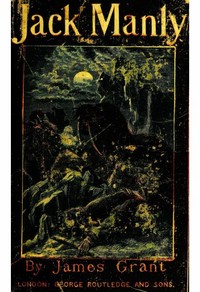
Jack Manly; His Adventures by Sea and Land — Background and Themes
(0 User reviews)
194
Project Gutenberg
2020
Not confirmed
Animals -- Juvenile fiction; Adventure stories; Seafaring life -- Juvenile fiction; Wilderness survival -- Juvenile fiction; Voyages around the world -- Juvenile fiction
Readers of public-domain and historical texts
Project Gutenberg digital edition
en
Edition facts
Words
89,188
Reading time
388 min
Text sections
8
This digital edition of Jack Manly; His Adventures by Sea and Land — Background and Themes is described by source-level measurements including 89,188 words, 6 hr 28 min estimated reading time, and 8 detected text sections.
The text analysis averages about 29.1 words per sentence, while the detected sections provide another way to judge how the source is divided.
Project Gutenberg metadata also associates the work with “Animals -- Juvenile fiction,” connecting these edition facts with the source record’s subject description.
Source:
Project Gutenberg record #63566
James Grant's 1860s adventure follows Jack Manly from a Newfoundland counting-room through icebergs, pirate chases, and African captivity. The narrative alternates between tight shipboard scenes and sprawling survival episodes, with recurring images of frozen waste, rotting provisions, and the sea as both prison and escape route.
Editorial Edition Score
4.8/5
★★★★★
★★★★★
Calculated from edition completeness, EPUB availability, text structure and catalogue metadata. Not a user rating.
How this score is calculated
- Description quality20 pts
- Title & short description10 pts
- Source metadata20 pts
- Text length15 pts
- Chapters / structure15 pts
- EPUB file integrity20 pts
Total of 100 points, scaled to a 2.5-5.0 range. Editions with an empty description or a missing EPUB file are not scored.
Edition quality
Public-domain source text
Read the source text
The source text is kept in the dedicated reader, separate from this catalogue record and its commentary.
James Grant's Jack Manly; His Adventures by Sea and Land opens not with a shipboard departure but with the narrator bent over a ledger in a dreary Newfoundland counting-room, six months after leaving a rose-shrouded villa in Peckham. This contrast between snug domesticity and the raw Atlantic frontier sets the pattern for a work that constantly moves between enclosed spaces—casks, cabins, ice floes—and vast, indifferent landscapes. The structure is episodic, each chapter a self-contained crisis: a cask adventure, a pirate chase, a seal-fisher combat, a stranding on an iceberg. Grant builds tension through accumulation of detail rather than psychological depth, relying on recurring motifs of dwindling supplies, rotting food, and the sea's capacity to trap or release.
Episodes as Structural Units
The table of contents reads like a logbook of disasters: “Adventure in a Cask,” “Combat with a Sea-Horse,” “On an Iceberg,” “The Death-Ship.” Each chapter title announces a discrete ordeal, and the narrative moves from one to the next with little connective tissue. Jack rarely reflects between crises; instead, Grant uses the chapter break as a reset button, plunging the reader into fresh peril. This episodic structure mirrors the uncertainty of sea travel itself—no safe harbor lasts long. The “Fatal Voyage of the Heer Van Estell” sequence (chapters XXVII–XXVIII) is a story within the story, a miniature of the whole: a ship becalmed, fever breaking out, provisions running out, and the crew casting lots. Grant embeds this nested tale to amplify the sense that Jack’s own adventures are part of a larger pattern of maritime suffering.
Recurring Images of Confinement and Decay
Again and again, Grant returns to images of entrapment and material decay. The opening chapter places Jack in a “dreary little town” and a “huge ledger”—a prison of ink and paper. Later, the becalmed De Ruyter lies “like a log,” its canvas “frittered and frayed,” its pitch boiling from the planking. Bodies of fever victims float alongside the ship, “with fishes sporting about them.” The iceberg chapters (XII–XIV) literalize this fixation: Jack is trapped on a drifting ice mass, surrounded by the corpses of seal-hunters. Grant lingers on the physical details of starvation—half biscuits, single morsels of meat—and on the slow dissolution of order: the captain dies, the crew weakens, even the superstitious cease to whistle for wind. These recurring images create a texture of hopelessness that makes each escape feel provisional.
Movement Between Sea and Land
The subtitle promises adventures “by Sea and Land,” and Grant structures the journey as a series of abrupt transitions between elements. After the iceberg ordeal, Jack returns to the ship, only to be shipwrecked and cast ashore in Africa (chapter XXXVIII). The second half of the book shifts to inland captivity, with chapters titled “The King of the Snake River,” “The Gabon Cliff,” and “The Wood of the Devil.” Yet even on land, the sea remains a reference point: the African king’s domain is described in terms of rivers and cliffs, and escape always involves reaching the coast. Grant uses these shifts to vary the threats—from polar bears and musk-oxen to African tribes and jungle pursuit—but the underlying pattern is the same: Jack is captured, endures, and flees. The movement between sea and land is not a change of theme but a change of scenery for the same ordeal.
The Embedded Legend as Structural Mirror
Chapters XXXV–XXXVII contain a manuscript legend titled “El Cabo dos Tormentos,” a story within the story that recapitulates the novel’s own concerns. The legend tells of a Dutch ship, the Heer Van Estell, carrying a wealthy director and his family back to Holland. Grant fills this inset tale with the same motifs: a fair wind turns foul, the ship loses its reckoning, provisions dwindle, fever breaks out, and the captain dies. The crew casts lots—a grim echo of the survival lottery in the main narrative. By embedding this story, Grant creates a mise en abyme: Jack’s adventures are framed by a tale that mirrors them, suggesting that such disasters are not unique but archetypal. The legend also allows Grant to vary his narrative voice, shifting from Jack’s first-person account to a third-person manuscript, while keeping the same thematic focus on endurance and loss.
Readers approaching Jack Manly should expect a picaresque structure held together by recurring images of confinement, decay, and narrow escape. Grant’s strength lies not in character development but in the accumulation of physical detail—the feel of rotting canvas, the taste of stale biscuit, the sight of corpses floating in still water. The book rewards attention to these recurring motifs rather than to plot continuity. Each chapter is a self-contained vignette of survival, and the whole reads less like a novel than a collection of sea yarns stitched together by a single narrator.
Reading about Jack Manly’s rotting provisions and that frozen, endless sea, I kept thinking of Minkie—how some stories make the cold feel like a character, a quiet pressure on the page. It isn’t the adventure that lingers, but the loneliness between actions. Minkie — Text and Context stays with me the same way, a different kind of waiting. I suppose both are about what we carry when there’s no shore in sight.
There are no reviews for this eBook.
There are no comments for this eBook.
Reader reflection
Your personal reading reflection
Build a private reading journal entry for this title.
Your progress
0
/
10
2
How did the book work for you overall?
3
Would you recommend this book to another reader?
4
Did the language feel accessible?
5
Did you relate to its people, ideas, or situations?
6
How useful were the ideas in this book?
7
How understandable was the text?
8
Which aspect of the book did you value most?
9
What is the main idea you are taking away?
10