1

Billy To-morrow — Edition Insights
(0 User reviews)
3530
Project Gutenberg
2020
Not confirmed
Conduct of life -- Juvenile fiction; Boys -- Juvenile fiction; Mothers and sons -- Juvenile fiction; Fatherless families -- Juvenile fiction
Readers of public-domain and historical texts
Project Gutenberg digital edition
en
Edition facts
Words
41,267
Reading time
180 min
Text sections
20
Billy To-morrow — Edition Insights can be approached with a clearer sense of reading commitment from its source measurements: 41,267 words, 3 hr estimated reading time, and 20 detected text sections.
The text analysis averages about 15.4 words per sentence, while the detected sections provide another way to judge how the source is divided.
Project Gutenberg metadata also associates the work with “Conduct of life -- Juvenile fiction,” connecting these edition facts with the source record’s subject description.
Source:
Project Gutenberg record #62288
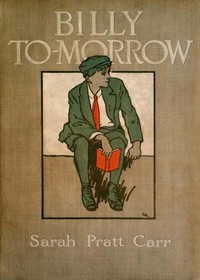
Billy Bennett's impulsive fight and its aftermath reveal a boy grappling with guilt, his father's memory, and the gap between his actions and his ideals in this 1909 children's novel by Sarah Pratt Carr.
Editorial Edition Score
4.8/5
★★★★★
★★★★★
Calculated from edition completeness, EPUB availability, text structure and catalogue metadata. Not a user rating.
How this score is calculated
- Description quality20 pts
- Title & short description10 pts
- Source metadata20 pts
- Text length15 pts
- Chapters / structure15 pts
- EPUB file integrity20 pts
Total of 100 points, scaled to a 2.5-5.0 range. Editions with an empty description or a missing EPUB file are not scored.
Edition quality
Public-domain source text
Read the source text
The source text is kept in the dedicated reader, separate from this catalogue record and its commentary.
Billy Bennett's fight is not a simple scuffle. When he hits Jimmy first, in the back, and kicks him, the act immediately weighs on him as a betrayal of his father's Loyal Legion button. The button, a symbol of honorable service, becomes a measure of his own failure. Carr does not let the violence stand alone; she pairs it with Billy's mother's quiet, practical care—hot water, lotions, and a refusal to whip. The tension between the father's remembered code and the mother's present mercy shapes the story's moral landscape.
The Father's Absent Authority
Billy's father is dead, but his rules survive. Billy recalls being taken between his father's knees on his first day of school and told: if he jumps on a boy first, he will be whipped; if he does not fight back when attacked, he will also be whipped. The father's words are precise, even the word 'lick'—Billy insists on it, though his mother gently corrects him. The father's Loyal Legion button becomes a tangible ghost. After the fight, Billy feels he has disgraced it 'forever.' His mother counters with a softer theology: 'with One there is no forever.' The story thus sets a rigid paternal code against a maternal ethic of recovery, without resolving which will win.
The Mother's Tactile Care
Mrs. Bennett does not lecture. She removes Billy's soiled clothes, fetches hot water and remedies, and strokes his hair. Carr emphasizes physical comfort: 'Hot water, lotions, a mother's tender hands, best of all, a mother's comprehending heart.' Billy's body is sore, his eyes 'like red fire on the Fourth,' but his mother's touch eases him. Yet she does not shield him from consequence. She sends word to check on Jimmy and the girls. Her care is not sentimental; it is practical and firm. She tells Billy to rest because he cannot help others until he helps himself. The mother's authority is quiet, embodied, and persistent.
Guilt and the Unspoken
Billy's guilt is physical and vocal. He groans, hides his face, and whispers that he felt 'mad enough to kill.' He asks his mother not to tell Edith and May Nell. He worries about Jimmy's limp arm and pale face. But Carr also shows Billy's shame in what is left unsaid: a drop glistens on his cheek that his mother pretends not to see. The narrative trusts that readers will recognize the weight of a boy's silence. Billy's feverish need to talk, his erratic thoughts, and his eventual sleep 'too profoundly asleep to be wakened' all suggest a psyche in turmoil. The story does not offer easy absolution; it leaves Billy waiting for morning.
Readers should attend to the small, recurring details that anchor Billy's world: the Loyal Legion button, the mother's bell left by his bedside, the phrase 'red fire on the Fourth.' These are not ornaments but clues to how the novel builds meaning through objects and sensations. The fight is not the story's center; it is the event that forces Billy to measure himself against his father's ghost and his mother's grace. Watch how Carr uses physical pain to map moral distress.
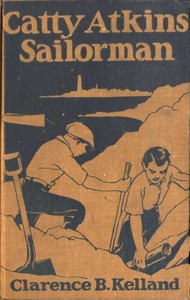
That old 1909 Billy To-morrow stayed with me long after the last page—that ache of a boy measuring himself against a father he barely remembers. There’s something softer in the same vein: Catty Atkins, Sailorman — Reading Notes, where a kid fumbles toward his own code, gently, without ever quite knowing the shape of it.
There are no reviews for this eBook.
There are no comments for this eBook.
Reader reflection
What did you think of this book?
Answer a few questions and save a private reflection on this device.
Your progress
0
/
10
2
How did the book work for you overall?
3
Would you pass this book on to a friend?
4
How easy was the book to follow?
5
Did you relate to its people, ideas, or situations?
6
Did this book create an emotional response?
7
How useful did the reading feel?
8
What did you appreciate most?
9
In one sentence, what did you learn?
10