1

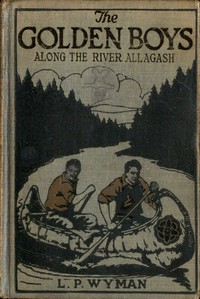
The Golden Boys Along the River Allagash — Reading Notes
(0 User reviews)
91
Project Gutenberg
2018
Not confirmed
Detective and mystery stories; Brothers -- Juvenile fiction; Fugitives from justice -- Juvenile fiction; Haunted places -- Juvenile fiction; Allagash River (Me.) -- Juvenile fiction
Readers of public-domain and historical texts
Project Gutenberg digital edition
en
Edition facts
Words
58,150
Reading time
253 min
Text sections
9
For The Golden Boys Along the River Allagash — Reading Notes, the stored edition analysis reports 58,150 words, 4 hr 13 min estimated reading time, and 9 detected text sections.
The text analysis averages about 14.4 words per sentence, while the detected sections provide another way to judge how the source is divided.
Project Gutenberg metadata also associates the work with “Detective and mystery stories,” connecting these edition facts with the source record’s subject description.
Source:
Project Gutenberg record #57230
In this early-20th-century boys' adventure, the Golden brothers—Bob, Jack, and Rex—navigate the Allagash River, facing a sabotaged motorboat, mysterious arrows, and a slit canoe. The narrative blends mechanical troubleshooting, Native American guide Kernertok's cautious wisdom, and a fugitive subplot, all set against Maine's remote waterways.
Editorial Edition Score
4.7/5
★★★★★
★★★★★
Calculated from edition completeness, EPUB availability, text structure and catalogue metadata. Not a user rating.
How this score is calculated
- Description quality20 pts
- Title & short description10 pts
- Source metadata20 pts
- Text length15 pts
- Chapters / structure15 pts
- EPUB file integrity20 pts
Total of 100 points, scaled to a 2.5-5.0 range. Editions with an empty description or a missing EPUB file are not scored.
Edition quality
Public-domain source text
Read the source text
The source text is kept in the dedicated reader, separate from this catalogue record and its commentary.
The book opens with two brothers, Bob and Jack, struggling to start a stubborn marine engine in their motorboat. Their banter—'Gas’s all right, spark’s all right, everything’s all right and still she won’t go'—establishes a tone of practical problem-solving mixed with lighthearted frustration. The engine's refusal to cooperate is the first of many mechanical and natural obstacles the boys will face.
This initial scene, set entirely on the water, introduces the series' recurring pattern: the Golden Boys must diagnose and fix what breaks, whether machinery, plans, or relationships. The dialogue-driven exposition efficiently sketches character—Jack's dry humor, Bob's persistence—without lengthy description.
Mechanical Minds at Work
The brothers' approach to the stalled engine reveals a key trait: they treat breakdowns as puzzles. Bob cranks the flywheel repeatedly, counting each cough of the engine as a partial victory. Jack, after taking over, quips, 'There, she coughed six times. That beats your record by one.' This competitive yet cooperative dynamic recurs throughout the excerpts.
Later, when a canoe is deliberately slashed, the response is similarly methodical: they assess the damage, hypothesize the culprit's intent ('he intended to cut it all up'), and immediately repair it using bark and pitch. The boys rarely panic; instead, they analyze and act. This mechanical competence is a hallmark of the series, reflecting the era's fascination with technology and self-reliance.
Kernertok's Quiet Authority
The Native American guide Kernertok speaks in a clipped, stereotyped dialect—'Heap big tracks. No seen um before'—but his role is not merely comic relief. He is consistently the most cautious and perceptive member of the group. When the boys find a slit in the canoe, Kernertok 'shook his head slowly' and pronounces, 'Him heap big cut.' His concern is palpable: 'It was plain to the boys that the old man was worried.'
Kernertok's knowledge of the woods is treated as authoritative. He advises a thorough search for the arrow-shooter, noting that 'Injun hunt quick. No look careful. We mak’ heap good look.' The boys defer to his judgment, even as they maintain their own bantering tone. This dynamic—experienced guide versus energetic youths—creates a productive tension.
Threats from All Sides
The mystery escalates through a series of unexplained incidents: a shot arrow, a slashed canoe, and a stolen wallet. The boys debate possible culprits: the fugitive who stole Rex's money, whiskey runners who might think the boys are after them, or—as Bob jokingly suggests—'a real lalapaloosla' (a mythical creature). Jack dismisses the last, but the uncertainty lingers.
The ambiguity is deliberate. The excerpts offer no clear answer, leaving the reader to weigh the evidence alongside the characters. When Rex asks if the arrow-shooter could be connected to the thief, Bob replies, 'That’s a pretty hard question to answer.' This refusal to jump to conclusions keeps the mystery alive and invites the reader to speculate.
Setting as Silent Character
The Allagash River region is more than backdrop; it actively shapes the plot. The boys' journey depends on the river's navigability, and the remote setting isolates them from easy help. When the canoe is damaged, they must repair it with natural materials—bark and pitch—because no hardware store is nearby.
The catalog subjects list 'haunted places' and 'fugitives from justice,' and the excerpts hint at both: the arrow comes from an unseen assailant in the woods, and the boys discuss a thief 'from somewhere up here.' The wilderness amplifies every threat. Kernertok's worry reflects the real dangers of the Maine woods, where a slit canoe or a hidden enemy can have serious consequences.
Readers approaching this book should pay attention to how the boys balance action with observation. The mystery unfolds not through sudden revelations but through small, cumulative clues—a broken twig, a second cut in the canoe, a worried glance from Kernertok. The narrative rewards patience and attention to detail, much like the engine repair that opens the story. Treat each setback as a piece of a larger puzzle.
There’s something about the Golden boys’ patient tinkering with that wrecked motor—the way they treat the river as a partner, not an enemy—that stays with me. It’s the same quiet wonder I found later in The Island of Appledore — Inside the Classic, where solitude and water do their slow, gentle work on a person.
There are no reviews for this eBook.
There are no comments for this eBook.
Reader reflection
Take a moment to reflect on this book
Create a short personal record of your experience with this book.
Your progress
0
/
10
2
How did the book work for you overall?
3
Would you recommend this book to another reader?
4
How much effort did this book require?
5
How did the pace of the book feel?
6
Which element worked best for you?
7
Could you see yourself revisiting this book?
8
Could you follow the author’s main argument?
9
What did this book teach you most?
10