1

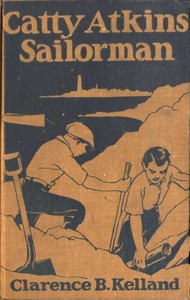
Catty Atkins, Sailorman — Reading Notes
(0 User reviews)
647
Project Gutenberg
2018
Not confirmed
Boys -- Juvenile fiction; Mystery fiction; Yachting -- Juvenile fiction; Nantucket Island (Mass.) -- Juvenile fiction
Readers of public-domain and historical texts
Project Gutenberg digital edition
en
Edition facts
Words
50,917
Reading time
222 min
Text sections
23
This digital edition of Catty Atkins, Sailorman — Reading Notes is described by source-level measurements including 50,917 words, 3 hr 42 min estimated reading time, and 23 detected text sections.
The text analysis averages about 12.5 words per sentence, while the detected sections provide another way to judge how the source is divided.
Project Gutenberg metadata also associates the work with “Boys -- Juvenile fiction,” connecting these edition facts with the source record’s subject description.
Source:
Project Gutenberg record #56718
Clarence Budington Kelland's 1922 boys' adventure follows Catty Atkins and Wee-wee Moore on a Nantucket yacht cruise, where the narrator's colloquial voice, crew banter, and a treasure-hunt plot emerge through dialect-heavy dialogue and precise nautical details.
Editorial Edition Score
4.8/5
★★★★★
★★★★★
Calculated from edition completeness, EPUB availability, text structure and catalogue metadata. Not a user rating.
How this score is calculated
- Description quality20 pts
- Title & short description10 pts
- Source metadata20 pts
- Text length15 pts
- Chapters / structure15 pts
- EPUB file integrity20 pts
Total of 100 points, scaled to a 2.5-5.0 range. Editions with an empty description or a missing EPUB file are not scored.
Edition quality
Public-domain source text
Read the source text
The source text is kept in the dedicated reader, separate from this catalogue record and its commentary.
The first-person narrator, Wee-wee Moore, establishes a colloquial, self-deprecating voice from the opening lines: “It seems as if Catty and I have a lot of luck.” The prose is marked by informal contractions (“hain’t,” “’ud,” “calc’late”) and a rhythmic, almost oral quality, as when the crew debates whether boys are nuisances through a mock-logical exchange. Kelland lets dialect define character: Naboth’s gruff skepticism (“Eat more ’n they’ll work”) contrasts with Rameses III’s playful pedantry (“There hain’t no law agin ’em”). The setting—a Long Island yacht club, then the Albatross—is sketched through concrete details: a power dinghy with gold-lettered name, a float, and a crew in “whites.”
Dialect as Characterization
Kelland uses nonstandard speech not merely for local color but to differentiate the crew and advance comic tension. Naboth’s speech is peppered with rural idioms (“Ready as human hands kin git it—considerin’”) and a stubborn logic that reduces boys to inherent nuisances: “pig is always pork.” Rameses III counters with absurd analogies (“an elephant’s a nuisance because you can’t pack his shirts in his trunk”). The narrator, Wee-wee, adopts a more standard but still informal register, bridging the reader and the salty crew. This linguistic layering creates a hierarchy of voices without explicit authorial commentary.
The Treasure-Hunt Predicament
The excerpts reveal a treasure-hunt subplot that traps the boys in frustration. Catty laments, “They’ve got it fenced in with barbed wire,” and Wee-wee suggests “sneak it away from them.” The dialogue conveys helplessness (“We’re licked”) and a glimmer of ingenuity (“there’s always a way anything can be done”). The crew’s banter—Naboth dismissing boys as nuisances—mirrors the boys’ own sense of being outmatched. The treasure itself remains unspecified, but the physical details (barbed wire, fifty men) ground the conflict in tangible obstacles.
Narrative Voice and Self-Deprecation
Wee-wee’s narration consistently undercuts the boys’ competence. He admits, “We butted in,” and Catty declares, “I’d take me and drown me in a potato sack.” This self-mockery prevents the adventure from becoming grandiose. The boys are observers as much as actors; they row back “kind of silent and discouraged,” and the crew’s debate about nuisances unfolds without their participation. Kelland’s choice to filter the story through a fallible, self-aware narrator keeps the tone light and the stakes modest, even as the plot involves a potential treasure.
Structure and Pacing Through Dialogue
The excerpts show Kelland’s reliance on extended dialogue to advance plot and character. The crew’s argument about boys spans several paragraphs, with minimal narration (“He acted like he could see Naboth had made a point”). This technique slows the pace, allowing comic rhythms to build. Action is often reported rather than dramatized: “We rowed back kind of silent and discouraged.” The result is a story that feels conversational, as if the reader is overhearing the characters. The treasure hunt emerges through complaint and speculation, not direct action, creating a sense of anticipation rather than immediacy.
Readers should attend to how Kelland balances the boys’ perspective with the crew’s earthy wisdom. The treasure plot is less a puzzle than a backdrop for character interaction. The dialect rewards slow reading, as the humor often lies in the crew’s logical contortions. This is a story where the journey—and the talk—matters more than the destination.
There’s something about Catty’s Nantucket chatter, all that salty banter and wheedle, that feels like an old friend talking. It reminds me of those Rambler boys and their gold mine—not the treasure itself, but the way a place grows dearer when it’s shared. The Rambler Club's Gold Mine — Story, Setting & Ideas carries that same quiet, dusty warmth, like a day remembered.
There are no reviews for this eBook.
There are no comments for this eBook.
Reader reflection
What did you think of this book?
Answer a few questions and save a private reflection on this device.
Your progress
0
/
10
2
Was reading this book enjoyable?
3
Would you recommend this book to another reader?
4
How demanding did the text feel?
5
How useful did the reading feel?
6
How closely did the book connect with your experience?
7
How clearly were the main ideas presented?
8
Was the book moving at the right speed?
9
What is the main idea you are taking away?
10