1

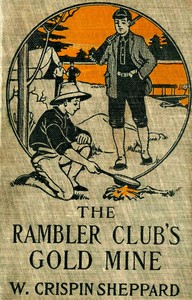
The Rambler Club's Gold Mine — Story, Setting & Ideas
(0 User reviews)
206
Project Gutenberg
2022
Not confirmed
Adventure stories; Gold mines and mining -- Juvenile fiction; Boys -- Societies and clubs -- Juvenile fiction; Washington (State) -- Juvenile fiction
Readers of public-domain and historical texts
Project Gutenberg digital edition
en
Edition facts
Words
53,697
Reading time
234 min
Text sections
6
Before opening The Rambler Club's Gold Mine — Story, Setting & Ideas, the edition data offers a quick orientation: 53,697 words, 3 hr 54 min estimated reading time, and 6 detected text sections.
The text analysis averages about 13.3 words per sentence, while the detected sections provide another way to judge how the source is divided.
Project Gutenberg metadata also associates the work with “Adventure stories,” connecting these edition facts with the source record’s subject description.
Source:
Project Gutenberg record #67654
This editorial note examines how the opening, middle, and later excerpts of W. Crispin Sheppard's 1912 adventure story guide a first reading, focusing on the map, the packhorse chase, and the boys' dialogue to reveal the book's structure and tone.
Editorial Edition Score
4.7/5
★★★★★
★★★★★
Calculated from edition completeness, EPUB availability, text structure and catalogue metadata. Not a user rating.
How this score is calculated
- Description quality20 pts
- Title & short description10 pts
- Source metadata20 pts
- Text length15 pts
- Chapters / structure15 pts
- EPUB file integrity20 pts
Total of 100 points, scaled to a 2.5-5.0 range. Editions with an empty description or a missing EPUB file are not scored.
Edition quality
Public-domain source text
Read the source text
The source text is kept in the dedicated reader, separate from this catalogue record and its commentary.
The Rambler Club's Gold Mine opens with a map—literally. Chapter I is titled 'The Map,' and the first line of dialogue has Bob Somers predicting 'a lot more adventures' involving mountains, swift streams, and wild animals. The introduction, written by the author, explains that the boys earned a gold-location secret from an aged Indian warrior named Wanatoma after saving his life in a forest fire. This framing gives readers a clear premise: the club is setting out to find a gold mine, undaunted by possible dangers. The tone is brisk and optimistic, with the narrator stating that hardships 'must be met with a cheerful spirit.' The opening thus establishes both the quest and the club's resolute attitude.
The Map as a Structural Anchor
The first chapter's title, 'The Map,' signals that a physical object drives the plot. In the introduction, the author notes that Wanatoma 'has imparted to them a secret long guarded—the location of a rich deposit of gold.' The map is not described in the excerpts, but its presence is felt throughout: the boys refer to 'Wanna's mountain' and discuss 'prospectin' on its slopes.' The map serves as both a goal and a source of tension—will it lead them true? Readers can watch for how the map is consulted, interpreted, or lost as the journey progresses.
Dialogue as Character and Comedy
The excerpts reveal that the boys speak in a lively, colloquial style. Tim says, 'Havin' the time o' his life, too,' about the runaway packhorse, and later jokes about the moon 'dragged itself up over the hills.' Dave, the would-be writer, replies, 'I'll make a note of it.' These exchanges show distinct personalities: Tim is the joker, Dave the self-aware scribe, Dick the practical leader. The dialogue also carries the story's humor—when Dick says, 'If we're not smart, we're smarting, all right,' after scratching his hands in briars, the pun lightens a frustrating moment. First-time readers can enjoy how the banter keeps the tone buoyant even during setbacks.
The Packhorse Chase: A Set Piece of Peril and Persistence
A middle excerpt describes the club's pursuit of a lost packhorse. The chase takes them through 'high, bunchy grass,' steep ridges, and a 'wild little gorge' with tangled briars. The landscape is vividly sketched: 'The cliff's frowning heights rose higher and higher above them.' The boys must dismount and force their way to a stream. This episode exemplifies the book's pattern: a problem arises (the horse bolts), the boys split up to solve it, and they endure physical discomfort with good-natured grumbling. The packhorse chase also introduces the theme of lost or scattered supplies, which may recur. Readers can note how such obstacles test the club's resourcefulness and unity.
The Author's Voice and the Series Context
W. Crispin Sheppard wrote multiple Rambler Club books, and this one is the seventh. The introduction references earlier titles like 'The Rambler Club Among the Lumberjacks' and promises that the next book, 'The Rambler Club's Aeroplane,' will involve airship adventures in Wyoming. This series structure means that characters and relationships are already established; new readers may need to infer backstory from dialogue. The author also illustrates the book himself—the frontispiece shows 'There was Much Waving of Hands.' The narrative voice is omniscient but unobtrusive, occasionally offering a wry comment like 'the animals quaff' after the boys drink. This consistency in tone helps anchor the story's adventurous yet lighthearted spirit.
For a first reading, pay attention to how the map is used—or misused—and how the club's camaraderie is tested by each new obstacle. The excerpts suggest that the gold mine itself may not appear until late in the book (Chapter XX is 'Gold Creek'), so the journey is the main event. The boys' cheerful persistence, even when a packhorse vanishes or a bear threatens, sets the emotional rhythm. Let the dialogue guide your sense of who each boy is, and enjoy the period details of 1912 wilderness travel.
Years among these shelves taught me how boys in The Rambler Club's Gold Mine find their way through maps and chatter, each clue a quiet handhold. That same patient unfolding dwells in Jean Craig in New York — Text and Context, where a stranger’s city becomes familiar through small observations. Both trust the reader to linger, unhurried, between the lines.
There are no reviews for this eBook.
There are no comments for this eBook.
Reader reflection
How did this book work for you?
Your answers remain private and are stored only in this browser.
Your progress
0
/
10
2
Was reading this book enjoyable?
3
Would you pass this book on to a friend?
4
Did the language feel accessible?
5
How useful were the ideas in this book?
6
Did the book meet your expectations?
7
Did the story or argument move comfortably?
8
Did you relate to its people, ideas, or situations?
9
In one sentence, what did you learn?
10