1

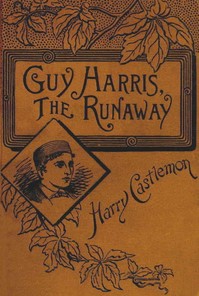
Guy Harris, the Runaway — A Closer Reading
(0 User reviews)
82
Project Gutenberg
2018
Not confirmed
Christian life -- Juvenile fiction; Conduct of life -- Juvenile fiction; Children -- Conduct of life -- Juvenile fiction; Sailing -- Juvenile fiction; Aunts -- Juvenile fiction; Outdoor life -- Juvenile fiction; Hunting -- Juvenile fiction; Runaway teenagers -- Juvenile fiction; Debt -- Juvenile fiction
Readers of public-domain and historical texts
Project Gutenberg digital edition
en
Edition facts
Words
99,771
Reading time
434 min
Text sections
31
The catalog record for Guy Harris, the Runaway — A Closer Reading provides practical reading context through 99,771 words, 7 hr 14 min estimated reading time, and 31 detected text sections.
The text analysis averages about 18.0 words per sentence, while the detected sections provide another way to judge how the source is divided.
Project Gutenberg metadata also associates the work with “Christian life -- Juvenile fiction,” connecting these edition facts with the source record’s subject description.
Source:
Project Gutenberg record #56381
An editorial note on how the opening dispute over a cross-gun, the ghostly sounds aboard the Santa Maria, and the mutiny scene shape a first reading of Harry Castlemon's 1887 adventure.
Editorial Edition Score
4.9/5
★★★★★
★★★★★
Calculated from edition completeness, EPUB availability, text structure and catalogue metadata. Not a user rating.
How this score is calculated
- Description quality20 pts
- Title & short description10 pts
- Source metadata20 pts
- Text length15 pts
- Chapters / structure15 pts
- EPUB file integrity20 pts
Total of 100 points, scaled to a 2.5-5.0 range. Editions with an empty description or a missing EPUB file are not scored.
Edition quality
Public-domain source text
Read the source text
The source text is kept in the dedicated reader, separate from this catalogue record and its commentary.
The novel begins with a sharp quarrel over a cross-gun. Guy Harris refuses to pay George Wolcom for a poorly made weapon, and George vows revenge. This opening establishes Guy as a boy who stands his ground over principle, even when the amount is trivial—half a dollar. The dialogue is brisk and colloquial, with each boy speaking in short, defiant bursts. The scene also introduces a brass match-box, stamped with wild ducks and deer, which Guy has long coveted. Tom Proctor gives it to him as a reward for keeping a lost pigeon. These small objects—the defective gun, the decorative box—are not mere props; they signal that disputes over fairness and ownership will drive the plot.
A Dispute Anchored in Objects
The opening chapter hinges on two tangible items: a cross-gun that fails to meet its promised design and a brass match-box that Guy has repeatedly tried to buy. The cross-gun is described as “a piece of wood which might have been taken for a cross-gun, although it looked about as much like a ball-club.” This precise, slightly humorous description grounds the conflict in a concrete object. Guy’s refusal to pay is not about stinginess but about the gun not matching what he ordered. The match-box, by contrast, is “stamped all over with figures of wild ducks, deer and rabbits” and has a “curiously contrived spring.” Its value is aesthetic and sentimental. These objects anchor the moral calculus: Guy rewards a neighborly act (returning the pigeon) but refuses to reward shoddy work. Readers see early that Guy judges actions by their fairness, not by social pressure.
The Santa Maria’s Ghostly Hold
Later excerpts shift the setting to a ship, the Santa Maria, where Guy is a runaway. The crew believes the vessel carries a ghostly crew. Guy hears “a low, moaning sound, like the wail of some one in intense bodily agony” coming from the hold. The old sailor Upham mocks Guy’s attempts to explain it as “boxes of freight rubbing against one another.” The passage builds suspense through sound and the crew’s fearful reactions. Guy’s “philosophy was not proof against such a manifestation,” and he jumps into his bunk, drawing blankets over his head. The language here is more atmospheric than in the opening: “silence deep as that of the grave” and “cold chills begun to creep all over him.” This section shows Castlemon shifting from domestic dispute to maritime horror, using the confined space of the forecastle and the crew’s superstition to create unease.
Mutiny Brewing Among the Crew
After the ghostly episode, Guy notices “something unusual going on among the men.” They gather in little groups, and Upham talks privately with every sailor except Guy. Guy suspects a mutiny and places a handspike where he can grab it, hoping to “get in at least a blow or two in return for the barbarous treatment.” The captain’s appearance at three o’clock to smoke his cigar becomes the signal: the sailors drop their work and march aft in a body. The chapter heading, “The Ghosts of the Santa Maria,” ties the supernatural fear to the crew’s real grievance. The mutiny is presented as a collective action, with Upham as the ringleader. Guy is an outsider, both to the crew’s plans and to the captain’s authority. This position—caught between fear of the mate and hope for the mutiny—deepens his isolation and sets up a turning point.
Voice and Structure Across the Excerpts
Castlemon’s narrative voice is consistent: direct, with short sentences and frequent exclamations (“Great Scott!”). Dialogue drives the action, especially in the opening quarrel. The shipboard sections rely more on description of sounds and collective reactions. The structure alternates between intimate disputes and broader group dynamics. The match-box and cross-gun from the first chapter are not mentioned again in the excerpts, suggesting they may be early catalysts rather than ongoing symbols. The ghostly hold and mutiny are clearly connected: the crew uses the ghost story to frighten Guy and perhaps to unite themselves. Readers should note how Castlemon uses objects and sounds to create tension, and how Guy’s responses—stubborn in the opening, fearful on the ship—reveal his character under different pressures.
These excerpts show a novel that moves from a domestic quarrel over a cross-gun to a shipboard crisis involving ghosts and mutiny. The early focus on fairness and objects gives way to survival and group conflict. Readers may find it useful to track how Guy’s sense of justice, established in the first chapter, is tested in the later scenes where he is isolated and afraid. The brass match-box, the defective gun, and the ghostly sounds are all concrete details that reward attention.
Reading about Guy Harris and that uneasy silence aboard the Santa Maria, I keep thinking how boys’ adventure stories always carry that tremor of home beneath the salt spray. There’s a similar ache in Billy Whiskers in France — A Closer Reading, a wanderer’s loneliness hiding behind the cheerful clatter of hooves. It lingers quietly, like a forgotten deck song.
There are no reviews for this eBook.
There are no comments for this eBook.
Reader reflection
How did this book work for you?
Your answers remain private and are stored only in this browser.
Your progress
0
/
10
2
Was reading this book enjoyable?
3
Is this a title you would suggest to others?
4
How demanding did the text feel?
5
Was the book what you thought it would be?
6
Which aspect of the book did you value most?
7
What was its emotional impact?
8
Did any part of the book feel personally relevant?
9
What is the main idea you are taking away?
10