1

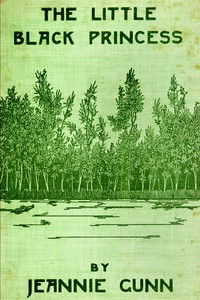
The Little Black Princess: A True Tale of Life in the Never-Never Land — Background and Themes
(0 User reviews)
987
Project Gutenberg
2018
Not confirmed
Conduct of life -- Juvenile fiction; Children -- Conduct of life -- Juvenile fiction; Adventure and adventurers -- Juvenile fiction; Voyages and travels -- Juvenile fiction; Kings and rulers -- Juvenile fiction; Northern Territory -- Description and travel -- Juvenile fiction
Readers of public-domain and historical texts
Project Gutenberg digital edition
en
Edition facts
Words
30,299
Reading time
132 min
Text sections
3
The Little Black Princess: A True Tale of Life in the Never-Never Land — Background and Themes can be approached with a clearer sense of reading commitment from its source measurements: 30,299 words, 2 hr 12 min estimated reading time, and 3 detected text sections.
The text analysis averages about 20.9 words per sentence, while the detected sections provide another way to judge how the source is divided.
Project Gutenberg metadata also associates the work with “Conduct of life -- Juvenile fiction,” connecting these edition facts with the source record’s subject description.
Source:
Project Gutenberg record #57205
Jeannie Gunn's account of Bett-Bett, an eight-year-old Aboriginal girl in Australia's Northern Territory, blends natural history with cross-cultural observation, revealing a child's knowledge of crocodile behavior and survival strategies.
Editorial Edition Score
4.6/5
★★★★★
★★★★★
Calculated from edition completeness, EPUB availability, text structure and catalogue metadata. Not a user rating.
How this score is calculated
- Description quality20 pts
- Title & short description10 pts
- Source metadata20 pts
- Text length15 pts
- Chapters / structure15 pts
- EPUB file integrity20 pts
Total of 100 points, scaled to a 2.5-5.0 range. Editions with an empty description or a missing EPUB file are not scored.
Edition quality
Public-domain source text
Read the source text
The source text is kept in the dedicated reader, separate from this catalogue record and its commentary.
Jeannie Gunn introduces Bett-Bett as a "little bush nigger girl" who is a king's niece, framing her as a princess of the Australian bush. The narrative immediately establishes a tension between fairy-tale expectations and the harsh realities of life in the Never-Never Land: Bett-Bett's palace is the bush, her subject a speckled dog, her trouble finding food, and her fear of "Debbil-debbils." The opening chapter sets a tone of affectionate observation, but the catalog subjects—"Conduct of life" and "Kings and rulers"—sit oddly against the excerpts, which focus on survival, hunting, and the practical knowledge of a child.
A Princess Without a Sceptre
The catalog lists "Kings and rulers" as a subject, yet the excerpts show no royal court or governance. Bett-Bett's status is asserted in the first sentence—"she was a King's niece"—but the narrative quickly undercuts it: she does not wave a golden sceptre. Instead, her authority comes from her knowledge of the bush. She knows which crocodiles are "cheeky fellow" (sea-going) and which are "frightened fellow" (land-locked). She teaches Gunn how to find crocodile eggs and recounts a narrow escape from a mother crocodile. The "king" is never seen; the only ruler is the environment itself.
Learning from Mother Nature
Gunn presents Bett-Bett as a student of "Mother Nature," who punishes mistakes severely. The excerpts show Bett-Bett explaining crocodile behavior: they "all day knock up longa egg," meaning they leave eggs to hatch in the sand but watch them. Gunn reflects that Bett-Bett "knew her lessons, which is more than can be said of many white children." This comparison suggests a pedagogical intent, but the catalog subject "Conduct of life" implies moral instruction. The excerpts, however, emphasize practical survival skills—tracking, hunting, disguising footprints—rather than ethical lessons. Murraweedbee drags a branch to hide her tracks from her husband, a strategy of evasion, not conduct.
Language and Voice in the Never-Never
Gunn renders Aboriginal English phonetically: "Me knock up longa me boy," "him all day krowl-krowl." This choice gives the characters a distinct voice but also risks caricature. The catalog subject "Voyages and travels" is partially borne out by the narrative's movement through the landscape—the Long Reach waterhole, the Roper River—but the excerpts focus on specific episodes rather than a journey. Gunn's own voice is that of a participant-observer, carrying a revolver and joining hunts. She notes that a white woman hunting with lubras might seem odd, but she frames it as being "at school." The interplay of voices—Gunn's educated English and the lubras' creole—shapes the reader's understanding of cross-cultural encounter.
Readers should attend to the gap between the catalog's framing and the text's details. The book is not a conventional adventure or conduct story; it is a record of daily life filtered through Gunn's perspective. Bett-Bett's world is one of immediate threats—crocodiles, enemies, hunger—and the narrative resists easy moralizing. The excerpts offer a glimpse into a specific time and place, but the complete work may reveal more about the author's assumptions than about Aboriginal life itself.
That rainy afternoon, Bett-Bett’s quiet competence with crocodiles made me wonder what other young lives unfolded far from maps. I set the book down, and my hand drifted to something sturdier, saltier—Sea Scouts up-Channel — Context and Discussion—and for a while, the rain outside became a different kind of tide.
There are no reviews for this eBook.
There are no comments for this eBook.
Reader reflection
Your personal reading reflection
Build a private reading journal entry for this title.
Your progress
0
/
10
2
How did the book work for you overall?
3
Would you pass this book on to a friend?
4
How easy was the book to follow?
5
Did any part of the book feel personally relevant?
6
How original did the book feel?
7
Would a second reading be valuable?
8
How would you describe its reading pace?
9
In one sentence, what did you learn?
10