1

Sea Scouts up-Channel — Context and Discussion
(0 User reviews)
173
Project Gutenberg
2018
Not confirmed
Sea stories; Adventure stories; Sailboats -- Juvenile fiction; Sea Scouts -- Juvenile fiction
Readers of public-domain and historical texts
Project Gutenberg digital edition
en
Edition facts
Words
56,145
Reading time
245 min
Text sections
8
For Sea Scouts up-Channel — Context and Discussion, the stored edition analysis reports 56,145 words, 4 hr 5 min estimated reading time, and 8 detected text sections.
The text analysis averages about 13.2 words per sentence, while the detected sections provide another way to judge how the source is divided.
Project Gutenberg metadata also associates the work with “Sea stories,” connecting these edition facts with the source record’s subject description.
Source:
Project Gutenberg record #58336
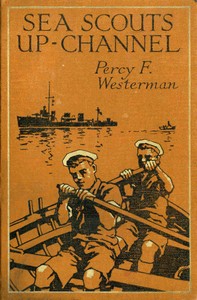
Percy F. Westerman's 1920s sea adventure follows the 9th Southend Sea Scouts as they take over a guardship in the Isle of Wight, then face storms, a fouled propeller, and a mysterious ketch. The opening establishes a practical, weather-aware tone, while later excerpts show a scout exploring an abandoned yacht and a separate crew setting sail from Bude.
Editorial Edition Score
4.7/5
★★★★★
★★★★★
Calculated from edition completeness, EPUB availability, text structure and catalogue metadata. Not a user rating.
How this score is calculated
- Description quality20 pts
- Title & short description10 pts
- Source metadata20 pts
- Text length15 pts
- Chapters / structure15 pts
- EPUB file integrity20 pts
Total of 100 points, scaled to a 2.5-5.0 range. Editions with an empty description or a missing EPUB file are not scored.
Edition quality
Public-domain source text
Read the source text
The source text is kept in the dedicated reader, separate from this catalogue record and its commentary.
The novel opens with Scoutmaster Graham and his patrol discussing an impending dirty night from the lofty superstructure of their temporary floating home in the Isle of Wight. The dialogue immediately establishes a contrast between the lads' enthusiasm and the practical concerns of weather and equipment—Pat Hayes notes they have nothing much to go to sea in, while Desmond calls it jolly lucky to be afloat. This grounded, slightly self-deprecating voice persists throughout the excerpts, avoiding melodrama in favor of matter-of-fact observation.
The setup is efficient: the 9th Southend Sea Scouts have borrowed the guardship of the 6th Wootton Bridge Sea Scouts, whose own troop has gone to a jamboree in France. The adult Scoutmaster Graham and his brother officer Mr. Tweedie are former R.N.V.R. colleagues, a detail that hints at wartime experience without elaboration. The narrative wastes no time on backstory, plunging straight into the lads' reactions to their borrowed vessel and the coming weather.
A Scout's Resourcefulness Below Decks
In a later excerpt, Patrol Leader Desmond investigates a deserted yacht. The prose focuses on physical actions and sensory details: he finds the cabin doors locked, the circular hatch open, and lowers himself into the fo'c'sle, momentarily blinded by the shift from dazzling sunshine to gloom. His discovery of unwashed dishes, bully beef, sardines, and tinned apricots prompts a characteristic response: They're not Scouts, or they would never have left the place in such a mess. He washes up, stows the crockery, and then—hot and tired, with an injured toe—turns in on a lowered cot using a sail-bag for a pillow.
This sequence reveals Westerman's method: small, concrete tasks define character. Desmond's decision to clean rather than simply rest shows ingrained Scout training, while his injury and subsequent deep sleep add a note of vulnerability. The abandoned meal suggests recent occupancy, but the narrative withholds explanation, leaving the reader to wonder who left the mess and why the yacht is unattended.
Silent Departure from Bude Canal
A parallel thread introduces Tom Truscott and Dick Wilde, part-owners of the 8-ton centre-board ketch Spanker. They hurry along the canal bank at Bude, urged on by the lock-keeper to clear the basin before a topsail schooner locks in. The description is brisk and technical: the men are deft hands at their work, casting off ropes and hoisting headsails with minimum noise, gliding through the lock almost as silently as a wraith. Once at sea, they set mizzen and mainsail, discuss setting a topsail, and anticipate more wind before reaching Lundy Island.
This section shifts perspective from the scouts to adult yachtsmen, yet the tone remains consistent—practical, focused on seamanship, and lightly humorous in the banter about the jack-yarder topsail. The mention of Bude, Lundy, and the north Cornish coast grounds the story in specific geography, and the quiet departure contrasts with the earlier stormy opening, suggesting the novel will alternate between different vessels and crews.
Weather as a Recurring Presence
From the opening dirty night to the summer haze off Cornwall, weather functions as both obstacle and atmosphere. The Scoutmaster's remark that the weather isn't everything is immediately tested by a vicious blast of wind that shakes the old boat up. Later, the ketch's crew finds less wind than expected, then anticipates plenty before long. These observations are woven into dialogue and action rather than described in set pieces, creating a sense of characters who read the sky and adjust plans accordingly.
The excerpts do not reveal whether the storm arrives, but the pattern is clear: Westerman uses weather to drive decisions—borrowing a guardship, departing a canal in haste, or setting sail for Lundy. Readers attentive to these cues will find the narrative's rhythm tied to wind and tide, with the sea itself as an active participant.
Gaps and Inferences in the Excerpts
The provided text breaks off mid-chapter, leaving several threads unresolved. Desmond's exploration of the deserted yacht occurs after he has been separated from his patrol? The circumstances are unclear. The ketch Spanker is heading for Penarth via Lundy, but whether its path will cross the scouts' story is not shown. The table of contents lists chapters with intriguing titles—The Fouled Propeller, The Semaphore Message, The Trek, The Missing Patrol Leader—suggesting a mix of maritime mishap, land-based adventure, and mystery.
Readers should note that the excerpts offer no resolution to the abandoned yacht's owner, no explanation of how Desmond rejoins his troop, and no indication of the scouts' ultimate destination beyond the Channel. The novel's title, Sea Scouts up-Channel, implies a voyage eastward along the English Channel, but the excerpts show characters in the Isle of Wight and Cornwall, leaving the route and goal to be discovered.
Approach Sea Scouts up-Channel as a series of linked episodes rather than a single plotted arc. The excerpts reward attention to small details—a locked cabin door, a Primus stove in gimbals, a lock-keeper's shouted instructions—that build a credible maritime world. Westerman trusts his readers to follow technical terms and shifting perspectives without hand-holding. Let the weather reports and the scouts' practical decisions guide your reading, and watch for how the separate threads of Desmond and the Spanker may eventually converge.
Reading about the scouts checking their knots against the dawn weather brought back summer mornings on my uncle’s dinghy, the quiet dread of a stiffening breeze. That same patient anxiety lived in Virginia’s Adventure Club, where my childhood self first understood that boats are less about distance than trust. Virginia's Adventure Club — Edition Insights still sits on my shelf, pages softened like old rope.
There are no reviews for this eBook.
There are no comments for this eBook.
Reader reflection
Take a moment to reflect on this book
Create a short personal record of your experience with this book.
Your progress
0
/
10
2
Was reading this book enjoyable?
3
Is this a title you would suggest to others?
4
What was the reading difficulty like?
5
Would you like to discuss this book with someone?
6
Would a second reading be valuable?
7
Did any part of the book stay with you emotionally?
8
What did you think about the pace?
9
What did this book teach you most?
10