1

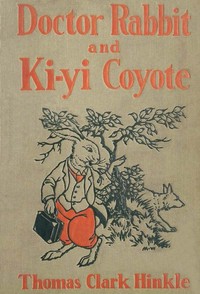
Doctor Rabbit and Ki-Yi Coyote — Background and Themes
(0 User reviews)
370
Project Gutenberg
2018
Not confirmed
Animals -- Juvenile fiction; Friendship -- Juvenile fiction; Adventure and adventurers -- Juvenile fiction; Rabbits -- Juvenile fiction; Coyote -- Juvenile fiction
Readers of public-domain and historical texts
Project Gutenberg digital edition
en
Edition facts
Words
18,365
Reading time
80 min
Text sections
27
The catalog record for Doctor Rabbit and Ki-Yi Coyote — Background and Themes provides practical reading context through 18,365 words, 1 hr 20 min estimated reading time, and 27 detected text sections.
The text analysis averages about 16.7 words per sentence, while the detected sections provide another way to judge how the source is divided.
Project Gutenberg metadata also associates the work with “Animals -- Juvenile fiction,” connecting these edition facts with the source record’s subject description.
Source:
Project Gutenberg record #57556
Thomas Clark Hinkle's 1918 woodland adventure follows Doctor Rabbit, a cheerful physician who treats the Big Green Woods' creatures while outwitting the predatory Ki-Yi Coyote. The narrative shifts between cozy domestic scenes and tense chases, with a brisk, colloquial voice that balances humor and peril.
Editorial Edition Score
4.7/5
★★★★★
★★★★★
Calculated from edition completeness, EPUB availability, text structure and catalogue metadata. Not a user rating.
How this score is calculated
- Description quality20 pts
- Title & short description10 pts
- Source metadata20 pts
- Text length15 pts
- Chapters / structure15 pts
- EPUB file integrity20 pts
Total of 100 points, scaled to a 2.5-5.0 range. Editions with an empty description or a missing EPUB file are not scored.
Edition quality
Public-domain source text
Read the source text
The source text is kept in the dedicated reader, separate from this catalogue record and its commentary.
From its first sentence, Doctor Rabbit and Ki-Yi Coyote establishes a brisk, conversational voice that treats danger with a wink. The narrator announces that Doctor Rabbit “lived in the very biggest tree” and “looked after all the other rabbits when they were ill,” then immediately undercuts the cozy setup: “But there were some he did not dare go near. Well, I should say not!” This direct address to the reader, complete with exclamations and rhetorical asides, sets a tone that is part bedtime story, part playground dare. The pace shifts noticeably between scenes of domestic worry—Stubby Woodchuck peeking from his door, Mother Chipmunk fretting over little Jimmy—and sudden bursts of action when Ki-Yi Coyote appears. The result is a rhythm that keeps young listeners alert, alternating cozy chatter with genuine tension.
A Voice That Winks at the Reader
The narrator of Doctor Rabbit and Ki-Yi Coyote is an active presence, not a neutral observer. Phrases like “Well, I should say not!” and “No indeed, he would have been glad of it” create a conspiratorial intimacy, as if the storyteller is sharing a secret. This voice also controls pacing through punctuation: dashes and exclamation points accelerate moments of fright, while longer, comma-laden sentences slow down domestic exchanges. For example, when Cheepy Chipmunk mistakes a squirrel’s tail for the coyote’s, the narrator describes the fall in a single breathless sentence: “Poor Cheepy fell off backward, he was so scared.” The effect is a narrative that feels spoken aloud, with the teller’s tone guiding the listener’s emotional response.
Domestic Interiors vs. Open Threats
The story repeatedly contrasts the safety of burrows and tree hollows with the exposed, unpredictable outdoors. Stubby Woodchuck “closed his door and went back into his kitchen” rather than visit a neighbor; Mother Chipmunk slips out “at the back door” and is so startled by another mother that both nearly faint. These interior scenes are filled with mundane details—vegetables for breakfast, a child asking questions—that make the threat of Ki-Yi Coyote feel more invasive. The coyote himself is rarely described directly; instead, his presence is signaled by a tail glimpsed behind a tree or by the sudden silence of the woods. This technique keeps the menace offstage, heightening suspense through the characters’ reactions rather than explicit description.
Humor as a Counterweight to Fear
Hinkle leavens the tension with gentle comedy, often at the characters’ own expense. When Cheepy Chipmunk falls backward off his stump, Blue Jay laughs and shouts, “Ha, ha, ha!” The chipmunk’s angry retort—“You’d better go and attend to your business, if you have any”—is a classic put-down that defuses the scare. Similarly, Doctor Rabbit’s habit of curling his mustache and talking about his “constitution” gives him a fussy, almost dandyish quality that contrasts with his role as a problem-solver. Even the coyote’s name, “Ki-Yi,” with its singsong repetition, sounds more like a playground taunt than a genuine threat. This blend of peril and playfulness keeps the story from becoming too frightening for its intended audience.
Because the excerpts cover only the opening chapters, the full arc of Doctor Rabbit’s plan to drive out Ki-Yi Coyote remains unknown. Readers should pay attention to how the narrator’s tone shifts as the scheme unfolds—whether the voice stays consistently playful or grows more urgent. The illustrations by Milo Winter, listed in the contents, may also offer clues about pacing and emphasis. This is a story that rewards reading aloud, where the rhythm of the prose becomes part of the adventure.
Rereading Thomas Clark Hinkle’s cozy menace in Doctor Rabbit and Ki-Yi Coyote, I found myself thinking back to a different sort of treasure hunt. The fierce, friendly tension of the woods lingered, and then some quiet line about maps surfaced. That led me straight to Jerry Todd and the Oak Island Treasure — Reading Notes, whose boyish scheming feels like a gentler cousin to Ki-Yi’s sly paw. Strange, how one book’s shadow falls so easily on another.
There are no reviews for this eBook.
There are no comments for this eBook.
Reader reflection
What was your reading experience?
Capture what you thought, learned, and would like to remember.
Your progress
0
/
10
2
How much did you enjoy the reading experience?
3
Would you encourage someone else to read it?
4
What was the reading difficulty like?
5
Could you apply anything you learned?
6
Did the story or argument move comfortably?
7
Did the book meet your expectations?
8
Did any part of the book feel personally relevant?
9
What did this book teach you most?
10