1

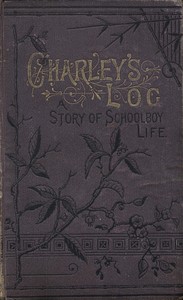
Charley's Log: A Story of Schoolboy Life — Text and Context
(0 User reviews)
633
Project Gutenberg
2020
Not confirmed
Christian life -- Juvenile fiction; Boys -- Conduct of life -- Juvenile fiction; Boarding schools -- England -- Juvenile fiction; Diary fiction; Schoolboys -- Juvenile fiction
Readers of public-domain and historical texts
Project Gutenberg digital edition
en
Edition facts
Words
29,918
Reading time
131 min
Text sections
3
This digital edition of Charley's Log: A Story of Schoolboy Life — Text and Context is described by source-level measurements including 29,918 words, 2 hr 11 min estimated reading time, and 3 detected text sections.
The text analysis averages about 20.4 words per sentence, while the detected sections provide another way to judge how the source is divided.
Project Gutenberg metadata also associates the work with “Christian life -- Juvenile fiction,” connecting these edition facts with the source record’s subject description.
Source:
Project Gutenberg record #61457
An editorial note on Emma Leslie's 'Charley's Log,' examining how the first-person diary form, nautical diction, and moral tensions between adventure and conscience shape the schoolboy narrative.
Editorial Edition Score
4.6/5
★★★★★
★★★★★
Calculated from edition completeness, EPUB availability, text structure and catalogue metadata. Not a user rating.
How this score is calculated
- Description quality20 pts
- Title & short description10 pts
- Source metadata20 pts
- Text length15 pts
- Chapters / structure15 pts
- EPUB file integrity20 pts
Total of 100 points, scaled to a 2.5-5.0 range. Editions with an empty description or a missing EPUB file are not scored.
Edition quality
Public-domain source text
Read the source text
The source text is kept in the dedicated reader, separate from this catalogue record and its commentary.
The first entry of Charley's log announces itself with a double purpose: the boy intends to practice for a future captaincy, yet his mother has sent him to school precisely to steer him away from the sea. This tension between the domestic world his mother envisions and the nautical realm he inhabits in imagination drives the diary's voice from the start. Charley renames his bedroom a 'cabin,' refers to the headmaster as 'the governor,' and speaks of 'heaving up hammocks'—a private vocabulary that signals his resistance to the school's ordinary routines. The log form itself becomes a tool of that resistance, a space where he can maintain his identity as a future sailor even as he sits at a desk.
The Log as a Stylistic Choice
Leslie adopts the dated diary entry as the novel's structure, with each chapter headed by a date and introduced by Charley's first-person reflections. This choice gives the narrative an immediate, unpolished quality: sentences are short, exclamations frequent, and the tone shifts abruptly from enthusiasm to frustration. The log format also allows for gaps in time—'A month since I wrote up my log'—which Leslie uses to imply events without narrating them directly. The reader infers Charley's emotional state from what he chooses to record and what he omits. The diary voice is consistently boyish, using colloquial phrases like 'jolly mean' and 'a wide berth,' and it never slips into adult vocabulary. This consistency suggests Leslie carefully calibrated Charley's diction to match his age and background, avoiding the moralizing tone that might have tempted a writer of didactic fiction.
Nautical Language as a Marker of Identity
Charley's maritime vocabulary is not decorative but functional: it defines his relationships and his view of the world. He calls his friend Tom his 'lieutenant,' describes a housemaid's discovery of rope yarn as 'squalls,' and refers to being sent to Coventry as 'a turn at Coventry.' This language is shared with Tom, reinforcing their bond as co-conspirators against the school's authority. When Charley contemplates running away to sea, the nautical terms become literal again, collapsing the metaphor back into reality. The excerpts show that Leslie uses this diction to mark Charley's difference from other boys: the fair-haired boy he dismisses as needing 'curl-papers' is contrasted with Charley's own rough, seafaring self-image. The language also creates a private code that excludes adults, particularly the housemaid who 'found out' the rope yarn and the 'governor' who represents the land-based world Charley rejects.
Moral Conflict Through Dialogue and Reflection
The excerpts reveal a shift in Charley's moral reasoning after the skating accident that nearly killed Frank Chandos. In early entries, Charley's voice is defiant: he plans to 'have our own way in most things.' After the accident, his log records a new caution: 'I mean to go on the square with our larks.' Leslie dramatizes this change through dialogue with Tom, where Charley explicitly rejects the idea of repeating the skating 'fun' because he 'shouldn't like to be a murderer, even in fun.' The diary form allows the reader to see Charley's internal struggle—he admits he 'shan't be able to hold out much longer' against the temptation to run away, yet he also acknowledges that Frank's recovery is a reason to stay. The moral weight is carried by Charley's own words, not by authorial commentary. Leslie lets the boy's conscience emerge from his own recorded thoughts, making the ethical development feel earned rather than imposed.
Setting and Social Dynamics in the Boarding School
The boarding school setting is sketched through specific details: the 'little bedroom—cabin' that Charley shares with Tom, the 'housemaid' who interferes with their nautical decorations, and the 'governor' whose birthday grants a holiday. Leslie builds the social world through Charley's judgments of other boys—the 'quiet lot' he initially dismisses, the 'fair hair' he mocks, and the 'fellows' who later send him to Coventry over cribs. The excerpts show a hierarchy among the boys: Collins has a hamper, Jackson sleeps in a larger room with six beds, and Charley is summoned to a meeting where his reputation as 'not a sneak' is tested. The setting is not idyllic; it is a place of rules, punishments, and peer pressure. Leslie uses the log to show how Charley navigates these pressures, sometimes yielding to them and sometimes resisting. The school is a microcosm where the boy's nautical fantasies clash with the realities of communal life.
Readers attentive to diction will notice how Charley's language evolves: early entries are full of bravado, later ones include words like 'mean' and 'murderer' that carry moral weight. The log form invites comparison between what Charley says and what he does, a gap that Leslie exploits for dramatic irony. Pay attention to the moments when Charley addresses the reader directly—'I suppose' and 'you know'—as these reveal his awareness of an audience. The book rewards a slow reading that tracks the interplay between the boy's voice and the moral structure Leslie builds around it.
I remember sitting with my own schoolboy diary, the ink smudged where I’d hesitated over what to confess. Charley’s Log brings back that quiet wrestle between what I did and what I wished I’d done. Oddly, the same gentle feeling surfaced among the simpler adventures of The Bobbsey Twins and Baby May — Story, Setting & Ideas, where small choices felt just as weighty.
There are no reviews for this eBook.
There are no comments for this eBook.
Reader reflection
How will you remember this book?
Save your reaction, strongest insight, and memorable passage.
Your progress
0
/
10
2
Was reading this book enjoyable?
3
Would you pass this book on to a friend?
4
How much effort did this book require?
5
How distinctive were its ideas or approach?
6
How much did the book move you?
7
How understandable was the text?
8
How well did it match your expectations?
9
What did this book teach you most?
10