1

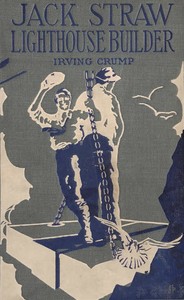
Jack Straw, Lighthouse Builder — Inside the Classic
(0 User reviews)
753
Project Gutenberg
2020
Not confirmed
Teenage boys -- Juvenile fiction; Friendship -- Juvenile fiction; Maine -- Juvenile fiction; Lighthouses -- Juvenile fiction; Construction industry -- Employees -- Juvenile fiction
Readers of public-domain and historical texts
Project Gutenberg digital edition
en
Edition facts
Words
52,261
Reading time
228 min
Text sections
19
The source record for Jack Straw, Lighthouse Builder — Inside the Classic measures this digital text at 52,261 words, 3 hr 48 min estimated reading time, and 19 detected text sections.
The text analysis averages about 17.8 words per sentence, while the detected sections provide another way to judge how the source is divided.
Project Gutenberg metadata also associates the work with “Teenage boys -- Juvenile fiction,” connecting these edition facts with the source record’s subject description.
Source:
Project Gutenberg record #61595
Irving Crump's 1915 adventure follows Jack Straw and his friend Ray as they help build a lighthouse on Hood Island, Maine, encountering lobster pirates and testing their wits against a suspicious one-legged fisherman. The narrative relies on technical construction details and dialect-heavy dialogue.
Editorial Edition Score
4.8/5
★★★★★
★★★★★
Calculated from edition completeness, EPUB availability, text structure and catalogue metadata. Not a user rating.
How this score is calculated
- Description quality20 pts
- Title & short description10 pts
- Source metadata20 pts
- Text length15 pts
- Chapters / structure15 pts
- EPUB file integrity20 pts
Total of 100 points, scaled to a 2.5-5.0 range. Editions with an empty description or a missing EPUB file are not scored.
Edition quality
Public-domain source text
Read the source text
The source text is kept in the dedicated reader, separate from this catalogue record and its commentary.
Irving Crump opens Jack Straw, Lighthouse Builder not with a storm or a rescue but with a schoolboy absorbed in track-and-field statistics. Jack Straw, walking down a maple-lined avenue at Drueryville Academy, nearly collides with trees and hitching posts because his nose is buried in The Blue and White. The scene establishes a protagonist who is physically capable—captain of the football team—but whose attention is easily captured by printed records. The author quickly shifts the setting from campus to the Maine coast, where the real work begins: constructing a lighthouse on a rocky island. Crump’s prose favors concrete action over interior reflection, and he relies heavily on dialect to distinguish characters, especially the old lobsterman whose speech is rendered in a thick, phonetic brogue.
Dialect as Characterization
Crump gives the one-legged fisherman a voice so distinctive that it nearly becomes a character trait. The old salt’s speech is peppered with dropped h’s, inverted syntax, and maritime interjections: “Blime me,” “O-ho-ho,” “Keel ’aul me.” When he accuses Jack and Ray of being lobster pirates, he muses aloud to his boat, the Betsy Anne, in a rambling monologue that mixes self-justification with suspicion. The boys’ responses, by contrast, are direct and indignant. This contrast does more than signal class or regional difference; it creates a tension between two modes of communication—one theatrical and suspicious, the other plain and earnest. Crump does not explain the fisherman’s motives; he lets the dialect carry the implication of a man who has been wronged and now trusts no one.
The Weight of Technical Detail
Crump’s background research, acknowledged in the front matter, shows in the narrative’s attention to lighthouse construction. The story includes a diagram of Hood Island and Cobra Reef, and the text describes aerial cables, dory repainting, and the logistics of hauling lobster pots. When Jack and Ray are caught handling a pot, the fisherman’s interrogation turns on a detail: Captain Eli’s dory was brown, but it has been repainted green. This small observation becomes a plot point, and the boys must argue not about their intentions but about the color of a boat. Crump trusts that readers will follow such practical evidence. The technical vocabulary—painter, tiller, sheet, stern cleat—is used without apology, grounding the adventure in the physical realities of the Maine coast.
Voice and the Unreliable Narrator
Though the novel is told in third person, Crump frequently filters events through the fisherman’s suspicious perspective. The old man’s internal monologue—addressed to the Betsy Anne—presents a version of events in which Jack and Ray are clearly guilty. He recounts finding a watch in his trap, the boy’s denial, and the subsequent discovery that the watch is missing from the boy’s pocket. The reader knows the boys are innocent, but the fisherman’s logic is internally consistent. Crump does not resolve this tension with an omniscient aside; instead, he lets the dialogue carry the conflict. The effect is a narrative that occasionally feels as trapped as the characters, forced to argue against a fixed suspicion. This technique gives the adventure a layer of dramatic irony: the reader sees the misunderstanding, but the characters must live through it.
Setting as Obstacle and Stage
The Maine coast in this novel is not a picturesque backdrop but a functional space of work and danger. The lighthouse site on Hood Island is reached by cable; the sea is a highway for pirates and a source of livelihood for fishermen. Crump describes the physical actions of sailing, hauling, and tying lines with precision. When the fisherman ties the painter of Captain Eli’s dory to a stern cleat and grasps the tiller, the reader can visualize the boat’s layout. The setting also dictates the social hierarchy: the old lobsterman commands the boat because he knows the waters. Jack and Ray, despite their schoolboy competence, are at his mercy. This reversal—the urban or academic hero rendered helpless by local knowledge—is a recurring pattern in adventure fiction, and Crump executes it without commentary, letting the geography speak for itself.
Readers should pay attention to the way Crump uses physical evidence—a repainted dory, a missing watch, the condition of a revolver—to advance the plot. These objects carry more weight than the characters’ declarations of innocence. The novel rewards attention to practical detail and to the cadence of spoken language. The excerpts suggest a story that moves between schoolboy adventure and a more grounded, technical world of lighthouse construction and coastal law. The incomplete text leaves the resolution of the lobster-pirate accusation unknown, but the pattern of the narrative suggests that Jack and Ray will have to prove themselves through action rather than argument.
Reading how Jack and Ray wrestled with the lighthouse’s raw stone and stubborn tides brought back summers spent helping my grandfather repair our old dock—steel and salt under our hands. That same slow, patient feeling surfaced years ago with Peter Poodle, Toy Maker to the King — Background and Themes—the quiet pride of building something that outlasts the day.
There are no reviews for this eBook.
There are no comments for this eBook.
Reader reflection
How will you remember this book?
Save your reaction, strongest insight, and memorable passage.
Your progress
0
/
10
2
How much did you enjoy the reading experience?
3
Would you encourage someone else to read it?
4
How easy was the book to follow?
5
Did this book create an emotional response?
6
What did you think about the pace?
7
How clear did the writing feel?
8
How strong was your personal connection to the text?
9
Which lesson or insight stayed with you?
10