1

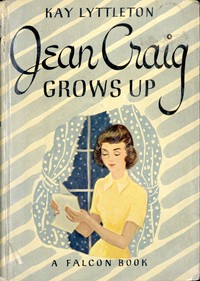
Jean Craig Grows Up — Context and Discussion
(0 User reviews)
239
Project Gutenberg
2021
Not confirmed
Bildungsromans; Country life -- Juvenile fiction; Families -- Juvenile fiction; Ghosts -- Juvenile fiction; First loves -- Juvenile fiction; Moving, Household -- Juvenile fiction
Readers of public-domain and historical texts
Project Gutenberg digital edition
en
Edition facts
Words
43,600
Reading time
190 min
Text sections
6
This digital edition of Jean Craig Grows Up — Context and Discussion is described by source-level measurements including 43,600 words, 3 hr 10 min estimated reading time, and 6 detected text sections.
The text analysis averages about 14.6 words per sentence, while the detected sections provide another way to judge how the source is divided.
Project Gutenberg metadata also associates the work with “Bildungsromans,” connecting these edition facts with the source record’s subject description.
Source:
Project Gutenberg record #65427
Kay Lyttleton's 1948 novel follows Jean Craig's family through a move from suburban Connecticut to a rural farmhouse, blending everyday sibling squabbles with ghostly rumors and a mother's quiet advocacy for racial inclusion.
Editorial Edition Score
4.7/5
★★★★★
★★★★★
Calculated from edition completeness, EPUB availability, text structure and catalogue metadata. Not a user rating.
How this score is calculated
- Description quality20 pts
- Title & short description10 pts
- Source metadata20 pts
- Text length15 pts
- Chapters / structure15 pts
- EPUB file integrity20 pts
Total of 100 points, scaled to a 2.5-5.0 range. Editions with an empty description or a missing EPUB file are not scored.
Edition quality
Public-domain source text
Read the source text
The source text is kept in the dedicated reader, separate from this catalogue record and its commentary.
The novel opens not with Jean herself but with her sister Kit's exasperated plea for quiet while she tries to write—a small domestic friction that immediately establishes the crowded, noisy household. Lyttleton's prose moves briskly through dialogue and action, rarely pausing for interior reflection. The early chapters are dense with party planning, sibling banter, and the looming anxiety of a father's illness, all conveyed through quick exchanges and physical comedy, such as Tommy toppling into Doris's lap. The narrative voice is light and observant, often filtering events through Jean's perspective without deep introspection.
From Suburban Snow to Country Chickens
The story's first half is anchored in a Connecticut suburb, where falling snow obscures the view of the Sound and the family's big house feels cut off by a “thick, soft curtain.” The pace is leisurely, filled with telephone calls, record-playing parties, and the children's casual bickering. After the move to a rural farmhouse, the setting shifts abruptly: the house is “weatherbeaten and gray,” and the barn floor is covered with hay. Lyttleton's descriptions become more sensory—the green sheen over the land, the sound of a brook in the lower meadow. The rhythm of life changes from indoor social planning to outdoor chores like buying chickens from “Ma” Parmelee, whose rooster Jim Dandy is promised to guard against hawks. The narrative pace slows, matching the seasonal turn from winter to spring.
A Mother's Unexpected Voice
Jean's mother, initially presented as “sweet and feminine,” delivers a striking monologue about immigration and racial barriers. She recalls a Polish exile friend named Wanda and criticizes her own mother's prejudice, then declares that the family's new rural community will face the same “race barriers” as the nation. Jean is startled: “Why, Mother, I never heard you talk this way before.” The mother's speech is the novel's most direct thematic statement, advocating for a “circle that shall join together the hands of all these boys and girls from different races.” This moment shifts the book's register from light domestic adventure to something more earnest, though the excerpts do not reveal how this theme is developed later.
Ghosts and New Neighbors
Chapter titles such as “The Haunted House” and “A Ghost Is Uncovered” signal a supernatural subplot, but the excerpts offer only hints: the mother mentions “lonely hills” and the family's move to a house that looks like it has been “outdoors all its life.” The ghost story appears to be woven into the larger pattern of adjustment to country life. Meanwhile, the mother urges Jean to welcome a Finnish family moving into Ma Parmelee's house, calling them “All God's folks.” Jean speculates about “a new blend to our community,” noting a Swedish family as well. The narrative thus intertwines the mystery of the haunted house with the practical work of building a diverse community, though the excerpts do not resolve either thread.
Pace and Voice: From Chatter to Reflection
Lyttleton's narrative voice is most distinctive in its dialogue: the children speak in quick, colloquial exchanges, often overlapping or interrupting. Early scenes are dominated by exclamations and protests (“Cut it out, will you?”). As the story progresses, longer descriptive passages emerge, especially in nature writing—spring “descended on the land all at once,” and Doris listens to a “new sound” from the woods. The mother's monologue introduces a more formal, reflective tone, with phrases like “these queer old earth lines, these race barriers.” This shift in register suggests a deliberate expansion of the novel's concerns beyond the children's immediate world, though the excerpts do not show whether the voice remains varied throughout.
Readers should pay attention to how Lyttleton balances the ghost-story thread with the family's integration into a multicultural rural community. The mother's unexpected political speech and the children's casual banter create two distinct tonal registers; noticing when and why the narrative shifts between them will illuminate the book's structure. The excerpts leave the ghost plot and the Finnish family's arrival unresolved, so the full novel likely ties these strands together in the later chapters.
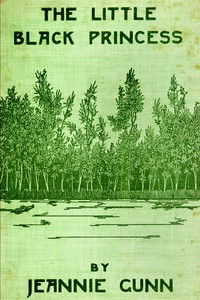
That rainy afternoon, Jean Craig’s mother quietly insisting the new neighbors deserved kindness stayed with me long after I closed the book. It reminded me of another true story I stumbled upon later, about a little girl growing up in Australia’s vast, lonely bush. Her world felt so different, yet the same patient warmth ran through it. The Little Black Princess: A True Tale of Life in the Never-Never Land — Background and Themes felt like finding an old photograph in a drawer—unexpected, and quietly familiar.
There are no reviews for this eBook.
There are no comments for this eBook.
Reader reflection
How did this book work for you?
Your answers remain private and are stored only in this browser.
Your progress
0
/
10
2
Did this book hold your interest?
3
Would you recommend this book to another reader?
4
What was the reading difficulty like?
5
How clearly were the main ideas presented?
6
Did any part of the book stay with you emotionally?
7
Could you see yourself revisiting this book?
8
Did the book give you something worth debating?
9
Which lesson or insight stayed with you?
10