1

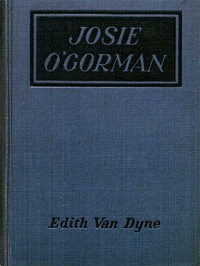
Josie O'Gorman — Key Ideas to Explore
(0 User reviews)
384
Project Gutenberg
2019
Not confirmed
Detective and mystery stories; Kidnapping -- Juvenile fiction; Young women -- Juvenile fiction; Women detectives -- Juvenile fiction
Readers of public-domain and historical texts
Project Gutenberg digital edition
en
Edition facts
Words
46,088
Reading time
201 min
Text sections
25
This digital edition of Josie O'Gorman — Key Ideas to Explore is described by source-level measurements including 46,088 words, 3 hr 21 min estimated reading time, and 25 detected text sections.
The text analysis averages about 16.9 words per sentence, while the detected sections provide another way to judge how the source is divided.
Project Gutenberg metadata also associates the work with “Detective and mystery stories,” connecting these edition facts with the source record’s subject description.
Source:
Project Gutenberg record #60974
This editorial note examines Emma Speed Sampson's authorial choices in Josie O'Gorman, focusing on the protagonist's distinctive physical assets, the use of dialect and setting in Kentucky, and the strategic dialogue that advances the detective plot.
Editorial Edition Score
4.8/5
★★★★★
★★★★★
Calculated from edition completeness, EPUB availability, text structure and catalogue metadata. Not a user rating.
How this score is calculated
- Description quality20 pts
- Title & short description10 pts
- Source metadata20 pts
- Text length15 pts
- Chapters / structure15 pts
- EPUB file integrity20 pts
Total of 100 points, scaled to a 2.5-5.0 range. Editions with an empty description or a missing EPUB file are not scored.
Edition quality
Public-domain source text
Read the source text
The source text is kept in the dedicated reader, separate from this catalogue record and its commentary.
Emma Speed Sampson, writing as Edith Van Dyne, equips her girl detective with an unconventional toolkit: a pair of colorless eyes that can shift to an expression of “absolute stupidity” and a nose she describes as “blobby.” These features are not mere quirks; Sampson treats them as deliberate assets, emphasizing Josie’s control over her own appearance. The narrator notes that Josie’s “funny nose” can be manipulated into various shapes, allowing her to alter her countenance so that “her best friends would have difficulty in recognizing her.” This emphasis on physical mutability sets the stage for a detective who relies on disguise and misdirection rather than brute force.
A Detective’s Unlikely Assets
Sampson devotes the opening chapter to cataloging Josie’s appearance in precise, almost clinical detail. Her sandy hair, freckled complexion, and small figure are listed alongside her “colorless, nondescript eyes” and “blobby” nose. The narrator insists that these features, rather than conventional beauty, are Josie’s “greatest assets.” The description of her eyes—able to take on “an expression of absolute stupidity, even imbecility”—suggests a performance of naivety that disarms suspects. Josie’s feet, smooth and childlike, are mentioned with satisfaction, hinting at a pride in physical detail that aligns with her detective’s attention to minutiae. This inventory of attributes establishes a character whose body is a tool, not an ornament.
Dialect and Setting in Kentucky
When Josie visits an old Kentucky home, Sampson layers the scene with dialect and sensory detail. The cabin of Sis Minerva and Brer Abe is described as “picturesque,” with a leaning chimney, geraniums, and holly wreaths. The dialogue of Brer Abe, rendered in dialect, includes his explanation of a cracked accordion: “Fas’ as I mends in one place she bus’ out in another.” The narrative notes that grandchildren must pinch the cracks to produce a tune. This attention to vernacular speech and domestic objects—coon skins tanning, a hog scratching under the house—grounds the mystery in a specific rural setting. Sampson uses these details to create atmosphere and to signal that Josie’s investigation moves through varied social landscapes.
Strategic Dialogue and Misdirection
Sampson crafts dialogue that serves the plot while revealing character. In a conversation with Teddy, Josie instructs him to spread a rumor about a man’s death: “Just make up any old thing and don’t be too explicit or too much interested.” She also asks him to refer to her shop obliquely, representing a firm from Youngstown, Ohio, to avoid detection. Her warning, “if you see me looking fish-eyed don’t be astonished,” ties back to her earlier described asset of appearing stupid. Teddy’s response—“What you say goes and nothing you may say and any way you may look won’t astonish me”—shows his trust and establishes a partnership. The dialogue moves the investigation forward while reinforcing Josie’s control over her persona.
Narrative Voice and Reader Positioning
Sampson’s narrator adopts a confiding tone, often addressing the reader directly or offering commentary on Josie’s methods. For instance, the narrator states that Josie is “as free from vanity and self-consciousness as any girl living,” a claim that positions her as an exceptional figure. The description of her nose control is presented with a hint of wonder: “she could change her countenance so that her best friends would have difficulty in recognizing her.” This narrative voice invites the reader to admire Josie’s skills while maintaining a light, adventurous tone. The excerpts suggest that Sampson balances instruction—showing how Josie works—with entertainment, making the detective’s process transparent without sacrificing suspense.
Sampson’s choices in diction, dialogue, and description build a detective story that values cleverness over strength. Josie’s physical mutability, the Kentucky setting rendered through dialect and detail, and the strategic exchanges between characters all contribute to a narrative where observation and performance are key. Readers attentive to these authorial decisions will find a layered work that rewards close reading of its language and structure.
Reading about Josie’s sharp dialogue and Kentucky hills, I remembered my grandmother’s porch swing, where I first met Catty Atkins. That same unhurried feeling—a girl solving puzzles in a world that smells like river mud and coffee—came back. Some books don’t tell you a story; they simply let you sit beside a friend. Catty Atkins, Sailorman — Reading Notes reminded me of that quiet company again.
There are no reviews for this eBook.
There are no comments for this eBook.
Reader reflection
Your personal reading reflection
Build a private reading journal entry for this title.
Your progress
0
/
10
2
How much did you enjoy the reading experience?
3
How likely are you to recommend this book?
4
What was the reading difficulty like?
5
How original did the book feel?
6
How did the pace of the book feel?
7
How much did the book move you?
8
How clearly were the main ideas presented?
9
What is the main idea you are taking away?
10