1

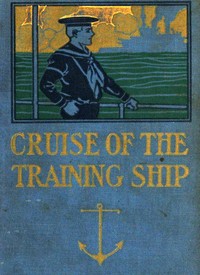
The Cruise of the Training Ship; Or, Clif Faraday's Pluck — Key Ideas to Explore
(0 User reviews)
2022
Project Gutenberg
2021
Not confirmed
Conduct of life -- Juvenile fiction; Adventure stories; Friendship -- Juvenile fiction; Voyages and travels -- Juvenile fiction; Sailors -- Juvenile fiction; Cruelty -- Juvenile fiction; Students -- Juvenile fiction; Youth -- Conduct of life -- Juvenile fiction; Courage -- Juvenile fiction; Hazing -- Juvenile fiction; United States Naval Academy -- Juvenile fiction
Readers of public-domain and historical texts
Project Gutenberg digital edition
en
Edition facts
Words
51,354
Reading time
224 min
Text sections
6
The source record for The Cruise of the Training Ship; Or, Clif Faraday's Pluck — Key Ideas to Explore measures this digital text at 51,354 words, 3 hr 44 min estimated reading time, and 6 detected text sections.
The text analysis averages about 13.2 words per sentence, while the detected sections provide another way to judge how the source is divided.
Project Gutenberg metadata also associates the work with “Conduct of life -- Juvenile fiction,” connecting these edition facts with the source record’s subject description.
Source:
Project Gutenberg record #66062
Upton Sinclair's early naval adventure follows Clif Faraday and fellow plebes aboard the training ship Monongahela, where hazing, a capsized launch, and a derelict ship test their courage. The narrative contrasts institutional cruelty with individual pluck, using precise nautical jargon and vivid storm scenes.
Editorial Edition Score
4.7/5
★★★★★
★★★★★
Calculated from edition completeness, EPUB availability, text structure and catalogue metadata. Not a user rating.
How this score is calculated
- Description quality20 pts
- Title & short description10 pts
- Source metadata20 pts
- Text length15 pts
- Chapters / structure15 pts
- EPUB file integrity20 pts
Total of 100 points, scaled to a 2.5-5.0 range. Editions with an empty description or a missing EPUB file are not scored.
Edition quality
Public-domain source text
Read the source text
The source text is kept in the dedicated reader, separate from this catalogue record and its commentary.
The opening scene of The Cruise of the Training Ship drops the reader directly into a hazing ritual on the orlop deck of the USS Monongahela. A plebe called “Nanny” is bound, gagged with spun oakum, and threatened with a beating—all rendered in rapid, slangy dialogue (“Handsomely there! Not so fast”). The author, writing under the pseudonym Ensign Clarke Fitch, immediately establishes a world where upperclassmen wield arbitrary power and the victim’s only defense is physical resistance or wit.
This early tension between institutional authority and personal resilience runs through the excerpts. The narrative voice shifts between clipped commands and the interior panic of characters like Clif Faraday, who later finds himself swimming in a storm after a collision. The language is concrete and action-driven, with nautical terms (“served and spliced,” “orlop deck”) used without explanation, signaling a readership familiar with shipboard life.
Hazing as a Crucible for Character
The excerpts present hazing not as mere bullying but as a systematic test that separates the timid from the resourceful. In the first chapter, the tormentors call the victim “Nanny Gote” and treat him like cargo (“get him served and spliced”). The language dehumanizes: the plebe is a “rat” to be “dead to rights.” Yet the narrative does not endorse this cruelty. Instead, it focuses on the victim’s physical reactions—white face, pleading look—and the mechanics of the gag, which prevents speech.
Later, Clif Faraday recalls that his successful resistance to hazing has made him enemies among the upper classes. This cause-and-effect pattern suggests that the story treats hazing as a moral arena where pluck (the subtitle’s keyword) is forged through opposition. The reader is left to infer that Clif’s later survival skills—swimming, quick thinking, loyalty to friends—are honed by these earlier confrontations.
Storm, Collision, and the Capsized Launch
The storm sequence is the most physically intense passage in the excerpts. Clif, thrown into the sea after a collision, struggles against “buffeting waves” and “stinging lances” of spray. The prose becomes rhythmic and sensory: “The roar of the increasing storm sounded like a mocking chorus of demons.” This is not a generic tempest; it is a specific test of endurance, with details like the capsized launch’s keel and the “dark smudges” of survivors.
Three characters—Clif, Joy, and Trolley—cling to the overturned boat. Their dialogue is clipped and practical (“Come up higher, Trolley, the boat can stand it”). The scene emphasizes teamwork under extreme duress, with Joy’s Japanese heritage marked by dialect (“Hurray, Clif, me glad you saved”). The storm also forces a moral shift: Clif momentarily forgets past enmities, thinking of Judson Greene with “heartfelt sympathy.” This suggests that the crisis temporarily dissolves the hazing hierarchy.
Nautical Language and the Reader’s Orientation
The excerpts are dense with specialized terms: “orlop deck,” “spun oakum,” “served and spliced,” “cutter,” “launch capsized.” These are not decorative; they anchor the action in a specific maritime setting. The author assumes a reader who either knows or will infer the meanings from context. For example, “Handsomely there!” is a command meaning “slowly” or “carefully,” not a compliment.
This technical vocabulary creates a sense of authenticity but also a barrier. The story does not pause to explain; it trusts the reader to keep pace. The effect is immersive: the reader, like the plebes, must learn the ropes quickly. The contrast between the formal chapter titles (e.g., “Nanny in Trouble”) and the colloquial dialogue (“Ow-w! Wow-w-w!”) further highlights the gap between official discipline and raw experience aboard the Monongahela.
The excerpts offer a concentrated sample of Upton Sinclair’s early adventure style: fast-paced, morally clear, and rich in physical detail. Readers should note how the author uses the training ship as a microcosm where social conflict (hazing) and natural danger (storm) intertwine. The incomplete text leaves many questions—the fate of the other cadets, the resolution of the derelict ship plot, the ultimate lesson of “pluck”—but the patterns of loyalty, endurance, and nautical craft are already visible.
There’s something about Clif’s solitary pluck aboard the Monongahela that lingers, the way courage often does—quiet, unshown. It makes me think of another kind of solitude, the one that must sit unspoken in the woods. I found myself turning to Fire in the Woods Illustrated — Context and Discussion afterwards, remembering how both books hold space for the same still, untheatrical resolve.
There are no reviews for this eBook.
There are no comments for this eBook.
Reader reflection
How will you remember this book?
Save your reaction, strongest insight, and memorable passage.
Your progress
0
/
10
2
How much did you enjoy the reading experience?
3
Is this a title you would suggest to others?
4
How demanding did the text feel?
5
Do you expect to return to this book?
6
Did this book create an emotional response?
7
How useful were the ideas in this book?
8
Which part made the strongest impression?
9
What did this book teach you most?
10