1

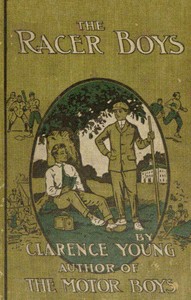
The Racer Boys; Or, The Mystery of the Wreck — Background and Themes
(0 User reviews)
234
Project Gutenberg
2020
Not confirmed
Adventure stories; Teenage boys -- Juvenile fiction; Brothers -- Juvenile fiction; Shipwrecks -- Juvenile fiction
Readers of public-domain and historical texts
Project Gutenberg digital edition
en
Edition facts
Words
55,011
Reading time
240 min
Text sections
6
For The Racer Boys; Or, The Mystery of the Wreck — Background and Themes, the stored edition analysis reports 55,011 words, 4 hr estimated reading time, and 6 detected text sections.
The text analysis averages about 12.2 words per sentence, while the detected sections provide another way to judge how the source is divided.
Project Gutenberg metadata also associates the work with “Adventure stories,” connecting these edition facts with the source record’s subject description.
Source:
Project Gutenberg record #61534
Clarence Young's 1912 adventure novel follows brothers Frank and Andy Racer as they investigate a shipwreck and befriend a mysterious boy with amnesia. The story's diction, dialogue, and descriptive choices reveal a focus on action, brotherly banter, and coastal setting details.
Editorial Edition Score
4.7/5
★★★★★
★★★★★
Calculated from edition completeness, EPUB availability, text structure and catalogue metadata. Not a user rating.
How this score is calculated
- Description quality20 pts
- Title & short description10 pts
- Source metadata20 pts
- Text length15 pts
- Chapters / structure15 pts
- EPUB file integrity20 pts
Total of 100 points, scaled to a 2.5-5.0 range. Editions with an empty description or a missing EPUB file are not scored.
Edition quality
Public-domain source text
Read the source text
The source text is kept in the dedicated reader, separate from this catalogue record and its commentary.
The Racer Boys opens with a rowing race between brothers Frank and Andy, a scene that immediately establishes their competitive yet affectionate relationship. The dialogue is peppered with teasing challenges—Andy taunts Frank with “I can taste that chocolate soda now”—and the narration favors brisk, physical action over introspection. The setting, a saltwater bay with “slowly-heaving” waves, is sketched in broad strokes, prioritizing movement over atmosphere. This opening signals a story driven by external events and verbal sparring rather than interiority.
Dialogue as Characterization
The brothers’ speech patterns distinguish them clearly. Frank, the older, speaks with “a quiet look of determination” and uses measured replies like “Better save your breath for rowing.” Andy, a year younger, is more impulsive and playful, his lines often ending with exclamations or laughter. Their banter is the primary vehicle for character, as in the opening race where Andy’s “Yum-yum!” contrasts with Frank’s dry retort. Even minor characters like Mr. Hedson and the fertilizer factory manager speak in functional, plot-forwarding exchanges. The dialogue rarely lingers; it propels the story toward the next action—a wreck, a rescue, a chase.
Descriptive Economy and Sensory Details
Young’s descriptions are lean, often limited to a single vivid detail. The fertilizer factory “smells worse than ten skunks on a wet night,” a simile that is both concrete and exaggerated, fitting the boys’ perspective. The whale carcass is mentioned matter-of-factly, without gore, as a commodity to be sold. The sea is “slowly-heaving” or “salt waves,” never elaborated beyond function. This economy keeps the narrative pace brisk, but it also means the setting never becomes immersive—it is a backdrop for action. The most sensory passage is Andy’s complaint about the factory, which stands out precisely because it is an exception.
The Amnesiac as a Narrative Device
Paul Gale, the rescued boy with no memory, is introduced through dialogue and behavior rather than interior monologue. His condition is described externally: “the past was an entire blank to him,” and Dr. Martin’s prognosis is delivered in clinical terms. Paul’s own speech is limited to expressions of gratitude or fear, as when he cries out in the night, “Get away! Leave me alone!” His amnesia is a plot engine—it motivates the search for the mysterious man and the wreck—but Young does not explore its psychological dimensions. Paul remains a cipher, defined by his lack of past rather than any emerging personality.
Structure and Pacing Through Chapter Breaks
The chapter titles, such as “Hit by a Whale” and “A Midnight Scare,” promise immediate action, and the prose delivers. Scenes are short, often ending with a cliffhanger or a shift in location. The narrative moves from the rowing race to the wreck to the rescue within a few pages, with minimal transition. This episodic structure, common in series fiction, prioritizes incident over continuity. The whale that hits the boat in chapter one is quickly forgotten as a plot point, reappearing later only as a source of income. The pacing leaves little room for reflection, aligning with the boys’ own forward momentum.
Readers approaching The Racer Boys should expect a fast-moving story where dialogue and action carry the weight of character and plot. The author’s choices in diction—colloquial, direct, and occasionally humorous—create a tone of youthful energy. The mystery of the wreck and Paul’s identity unfold through external events rather than internal conflict, making this a straightforward adventure suited for readers who prefer momentum over introspection.
That gray afternoon, the rain drumming the window, I kept returning to the Racer brothers' brisk exchanges—how their quick words masked a deeper, unspoken loyalty. It made me think of quieter bonds, the kind formed in unfamiliar rooms. So I picked up Jean Craig in New York — Text and Context, and there it was: the same steady courage, only dressed in city silence instead of sea spray.
There are no reviews for this eBook.
There are no comments for this eBook.
Reader reflection
What did you think of this book?
Answer a few questions and save a private reflection on this device.
Your progress
0
/
10
2
Was reading this book enjoyable?
3
Would you pass this book on to a friend?
4
What was the reading difficulty like?
5
How personally connected did you feel to the book?
6
Would a second reading be valuable?
7
Was the book moving at the right speed?
8
How strongly did the book affect you emotionally?
9
What changed or sharpened your thinking?
10