1

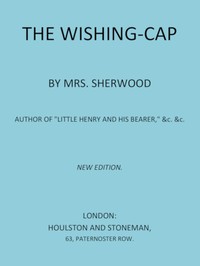
The Wishing Cap — A Reader’s Guide
(0 User reviews)
453
Project Gutenberg
2020
Not confirmed
Christian life -- Juvenile fiction; Orphans -- Juvenile fiction; Children -- Death -- Juvenile fiction; Siblings -- Juvenile fiction; Kindness -- Juvenile fiction; Avarice -- Juvenile fiction; Wishes -- Juvenile fiction
Readers of public-domain and historical texts
Project Gutenberg digital edition
en
Edition facts
Words
5,228
Reading time
23 min
Text sections
4
This digital edition of The Wishing Cap — A Reader’s Guide is described by source-level measurements including 5,228 words, 23 min estimated reading time, and 4 detected text sections.
The text analysis averages about 23.2 words per sentence, while the detected sections provide another way to judge how the source is divided.
Project Gutenberg metadata also associates the work with “Christian life -- Juvenile fiction,” connecting these edition facts with the source record’s subject description.
Source:
Project Gutenberg record #63295
In this moral tale, a wealthy but ungodly lady introduces five children to a 'wishing-cap' that grants only obtainable items. The orphan Charles, guided by his parents' pious teachings, contrasts with the other children's worldly desires, revealing tensions between faith and materialism.
Editorial Edition Score
4.4/5
★★★★★
★★★★★
Calculated from edition completeness, EPUB availability, text structure and catalogue metadata. Not a user rating.
How this score is calculated
- Description quality20 pts
- Title & short description10 pts
- Source metadata20 pts
- Text length15 pts
- Chapters / structure15 pts
- EPUB file integrity20 pts
Total of 100 points, scaled to a 2.5-5.0 range. Editions with an empty description or a missing EPUB file are not scored.
Edition quality
Public-domain source text
Read the source text
The source text is kept in the dedicated reader, separate from this catalogue record and its commentary.
The story opens by establishing a clear moral contrast: a wealthy London lady who has 'never given her heart to God' cares for five children, among them the orphan Charles, whose deceased parents were 'very pious people' and raised him 'in the fear of God.' This initial opposition between worldly wealth and spiritual devotion sets the stage for the central device of the wishing-cap, which the lady introduces as a game that 'will only produce such things as may be easily had.' The children's reactions—Louisa's curiosity, James's impatience, Charlotte's recollection of fairy tales—reveal their varying degrees of innocence and worldliness before a single wish is made.
The Wishing-Cap as a Moral Test
The lady explicitly distinguishes her wishing-cap from the magical one in fairy tales: it 'will not bring wonders to pass.' This limitation transforms the cap into a device for revealing character rather than granting fantasies. Charlotte, who remembers reading about a wishing-cap in a fairy tale, is surprised that such a thing could exist outside fiction. The lady's cap, however, is grounded in reality—it produces only 'such things as may be easily had.' This framing suggests that the children's wishes will reflect their true desires and moral priorities, not their capacity for imagination. The cap becomes a test of contentment and gratitude, themes central to Sherwood's didactic purpose.
Charles's Distinctive Piety
Charles is set apart from the other children from the opening paragraphs. While the four siblings—James, Edward, Charlotte, and Louisa—are introduced as a group, Charles is identified as an orphan whose parents 'had been dead only a very few months.' His daily habit of reading 'a few chapters in a Bible which his papa had given him' and his effort to 'remember the good things which had been taught him' mark him as the story's moral center. The narrator states that 'God blessed little Charles, and helped him to be good,' a direct authorial endorsement that positions his faith as the source of his goodness. This explicit piety contrasts with the lady's lack of religious devotion and likely sets up a conflict when the wishing-cap tempts the children to wish for worldly goods.
The Tension Between Fairy Tale and Christian Morality
Sherwood deliberately invokes the fairy-tale tradition only to subvert it. Charlotte's reference to 'a man, in a fairy tale, who had a wishing-cap' acknowledges the genre's appeal, but the lady immediately deflates expectations by insisting her cap is inferior. This move reflects a broader tension in children's literature of the period: the desire to entertain while instructing. The wishing-cap, stripped of its magical power, becomes a pedagogical tool. The children's eager talk about the cap 'while they were drinking their tea' shows their excitement, but the narrative's moral framework suggests that such excitement may be misplaced. The reader is left to wonder whether the cap will expose the children's vanity or, in Charles's case, reinforce his spiritual priorities.
Readers attentive to Sherwood's method will notice how the wishing-cap functions less as a plot device and more as a mirror for each child's inner life. The story's brevity—just over 5,000 words—means that every detail, from Charles's Bible reading to the lady's careful qualification of the cap's powers, carries weight. Pay particular attention to how the children's wishes are described when they finally make them, as these moments crystallize the moral distinctions Sherwood has been drawing from the first page.
I have often thought Charles, clutching his little book of godly maxims, would have found a quiet friend in the twins of Emu Plains. That older story, The Twins of Emu Plains — Inside the Classic, shares his stubborn, tender honesty against the noise around them. It is not a loud kinship, merely a shared glance, knowing that faith is often simply remembering who you are.
There are no reviews for this eBook.
There are no comments for this eBook.
Reader reflection
How will you remember this book?
Save your reaction, strongest insight, and memorable passage.
Your progress
0
/
10
2
What was your overall reaction to the book?
3
Would you pass this book on to a friend?
4
How easy was the book to follow?
5
How would you describe its reading pace?
6
Could you see yourself revisiting this book?
7
Would you like to discuss this book with someone?
8
How would you rate its originality?
9
What changed or sharpened your thinking?
10