1

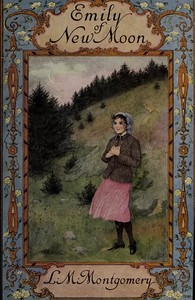
Emily of New Moon — A Closer Reading
(0 User reviews)
692
Project Gutenberg
2020
Not confirmed
Orphans -- Juvenile fiction; Aunts -- Juvenile fiction; Authorship -- Juvenile fiction; Moving, Household -- Juvenile fiction; Prince Edward Island -- History -- 20th century -- Juvenile fiction; Canada -- History -- 1867-1914 -- Juvenile fiction
Readers of public-domain and historical texts
Project Gutenberg digital edition
en
Edition facts
Words
122,284
Reading time
532 min
Text sections
35
For Emily of New Moon — A Closer Reading, the stored edition analysis reports 122,284 words, 8 hr 52 min estimated reading time, and 35 detected text sections.
The text analysis averages about 15.1 words per sentence, while the detected sections provide another way to judge how the source is divided.
Project Gutenberg metadata also associates the work with “Orphans -- Juvenile fiction,” connecting these edition facts with the source record’s subject description.
Source:
Project Gutenberg record #61236
L.M. Montgomery's novel follows orphaned Emily Byrd Starr as she moves to New Moon farm, navigating strict Aunt Elizabeth, imaginative play, and her own literary ambitions through letters to her deceased father.
Editorial Edition Score
4.9/5
★★★★★
★★★★★
Calculated from edition completeness, EPUB availability, text structure and catalogue metadata. Not a user rating.
How this score is calculated
- Description quality20 pts
- Title & short description10 pts
- Source metadata20 pts
- Text length15 pts
- Chapters / structure15 pts
- EPUB file integrity20 pts
Total of 100 points, scaled to a 2.5-5.0 range. Editions with an empty description or a missing EPUB file are not scored.
Edition quality
Public-domain source text
Read the source text
The source text is kept in the dedicated reader, separate from this catalogue record and its commentary.
The opening chapter establishes a child's perspective that resists adult definitions of loneliness. Emily does not know she is being pitied because she has Father, the Wind Woman, and the trees—Adam-and-Eve, the Rooster Pine, the friendly lady-birches. The house in the hollow is described as having grown like a big brown mushroom, a simile that blends the domestic with the organic. This early voice, attuned to naming and personifying her surroundings, sets the pattern for a protagonist who experiences the world through a private imaginative lens, one that includes a mysterious phenomenon she calls 'the flash.'
Letters as a Window on Voice
Emily's letters to her dead father, threaded through the narrative, offer a direct channel into her developing voice. In Chapter XVII, she writes with phonetic spelling ('exiting,' 'fritened,' 'skrape') and breathless punctuation that mimics a child's rush to tell a story. The letters also reveal her struggle to reconcile adult prohibitions with her own curiosity. When Aunt Elizabeth warns 'little pitchers have big ears,' Emily notes that her ears are 'only pointed,' a literal-minded retort that preserves her dignity. These epistolary sections allow Montgomery to show Emily's interior life—her worries about Ilse's mother, the meaning of 'warped,' and the weight of a dare—without an omniscient narrator smoothing over her raw, unpolished observations.
The Flash and the Creative Impulse
Emily's creative process is tied to a recurring sensory event she calls 'the flash.' In the first chapter, it arrives unexpectedly during a chilly twilight walk, and later it accompanies the composition of lines for an epic poem, The White Lady. The flash is not explained as divine inspiration or mere fancy; it is a physical, almost electric jolt that validates her artistic efforts. When she tells Aunt Laura that 'the flash came to me' after writing two lines, the aunt's gentle reply—that ginger cookies will matter again once inspiration passes—grounds the experience in everyday life. This tension between transcendent creativity and domestic routine runs through the excerpts, suggesting that Emily's gift is both a source of identity and a thing she must learn to integrate with the practical world of un-counted cookies and household rules.
Dares, Ghosts, and the Rules of New Moon
Social codes at New Moon are strict—Aunt Elizabeth disapproves of little girls away at night—but Emily's friendships introduce competing pressures. Ilse dares her to sleep alone in a garret, and Emily accepts partly because she fears Teddy's opinion. The dare scene in Chapter XVII is layered with comedy and dread: Emily boasts she is not afraid, then admits 'inside' she is terrified. The garret is described with its rag room, broken furniture, and the smell of the kitchen chimney, a setting that feels both real and gothic. Emily's internal debate—'it would not do for a New Moon person to believe in gosts'—shows her trying to uphold family dignity while privately wondering if ghosts exist. The episode captures how Emily's world is shaped by the push and pull of loyalty, pride, and the need to prove herself.
Readers attentive to Montgomery's craft will notice how the excerpts layer Emily's private vocabulary—the flash, the Wind Woman, the named trees—against the more formal speech of adults. The letters, with their misspellings and dashes, preserve a child's logic without condescension. Pay attention to the moments when Emily's observations collide with what she is not supposed to know: the whispered hints about Ilse's mother, the meaning of 'warped.' These gaps are where the novel's emotional complexity lives.
Some evenings I think of Emily Byrd Starr, writing her letters to a father she still loved, building a world from solitude. That same patient construction appears in Jack Straw, Lighthouse Builder, a quieter sort of kinship across years. Both books understand how a child’s hand can steady itself against the dark, brick by brick. Jack Straw, Lighthouse Builder — Inside the Classic stays with me, gentle as a remembered shore.
There are no reviews for this eBook.
There are no comments for this eBook.
Reader reflection
How did this book work for you?
Your answers remain private and are stored only in this browser.
Your progress
0
/
10
2
How did the book work for you overall?
3
Would you pass this book on to a friend?
4
How much effort did this book require?
5
How would you describe its reading pace?
6
How useful did the reading feel?
7
How clearly were the main ideas presented?
8
Could you see yourself revisiting this book?
9
In one sentence, what did you learn?
10