1

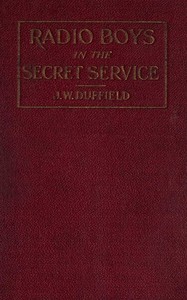
Radio Boys in the Secret Service; Or, Cast Away on an Iceberg — A Closer Reading
(0 User reviews)
710
Project Gutenberg
2020
Not confirmed
Eskimos -- Juvenile fiction; Shipwrecks -- Juvenile fiction; Radio -- Juvenile fiction; Telegraph, Wireless -- Juvenile fiction
Readers of public-domain and historical texts
Project Gutenberg digital edition
en
Edition facts
Words
54,383
Reading time
237 min
Text sections
29
The source record for Radio Boys in the Secret Service; Or, Cast Away on an Iceberg — A Closer Reading measures this digital text at 54,383 words, 3 hr 57 min estimated reading time, and 29 detected text sections.
The text analysis averages about 15.2 words per sentence, while the detected sections provide another way to judge how the source is divided.
Project Gutenberg metadata also associates the work with “Eskimos -- Juvenile fiction,” connecting these edition facts with the source record’s subject description.
Source:
Project Gutenberg record #62000
This editorial note examines how the opening, middle, and later excerpts of J. W. Duffield's 1922 adventure novel guide a first reading, focusing on the twin brothers' contrasting roles, the recurring 'squeaky-roar' voice, and the iceberg setting.
Editorial Edition Score
4.8/5
★★★★★
★★★★★
Calculated from edition completeness, EPUB availability, text structure and catalogue metadata. Not a user rating.
How this score is calculated
- Description quality20 pts
- Title & short description10 pts
- Source metadata20 pts
- Text length15 pts
- Chapters / structure15 pts
- EPUB file integrity20 pts
Total of 100 points, scaled to a 2.5-5.0 range. Editions with an empty description or a missing EPUB file are not scored.
Edition quality
Public-domain source text
Read the source text
The source text is kept in the dedicated reader, separate from this catalogue record and its commentary.
The novel opens with a clear division between the Burton twins: Walter stays behind while Guy departs for Europe, their parting marked by a promise to exchange wireless messages. This early scene establishes a pattern of separation and communication that drives the plot. The twins are introduced as complementary—Walter is described as 'bright-eyed' and Guy as 'sick-eyed' but 'sturdy'—a contrast that hints at their different roles in the story to come.
The Twins as a Narrative Device
The opening chapter introduces the twins as 'Wireless Twins,' a label that signals their shared expertise in radio. Yet the narrative immediately separates them: Guy boards a train, and Walter remains at home. This split allows the story to follow two threads—Guy's journey abroad and Walter's vigil at the wireless set. The reader is primed to expect parallel adventures, with radio serving as the link between them. The twins' distinct personalities are sketched lightly: Walter is active and watchful, while Guy is more vulnerable, needing amber glasses for his 'supersensitive eyes.' These details are not elaborated, but they create a baseline for how each brother might react under pressure.
The Squeaky-Roar Voice as a Clue
Midway through the excerpts, a distinctive voice emerges: the 'squeaky-roar' of the London 'fog pirate.' This voice first appears in the chapter titles and then in a dramatic moment on the iceberg, where Guy recognizes it as belonging to a man named Gunseyt. The voice is described as both 'squeaky' and 'roaring,' an unusual combination that makes it memorable. The narrative treats this recognition as a key revelation—Guy is 'electrified' by the sound. For a first-time reader, this moment signals that the fog pirate is not a random villain but someone already encountered, possibly earlier in the story. The excerpts do not reveal the full identity or motive, but the voice becomes a thread to follow.
The Iceberg as a Turning Point
The later excerpts shift to a survival scenario on an iceberg, following a shipwreck. The description is immediate and physical: passengers are 'hurled off the raft and onto the ice,' and the raft is dragged up a 'beach' of ice. This setting is starkly different from the earlier London fog and train stations. The chapter titles—'On the Iceberg,' 'The Eskimos,' 'A Midnight Invasion'—suggest a sustained sequence of events in this frozen environment. For the reader, the iceberg represents a crisis point where the twins' separate paths may converge. The wreck of the Herculanea is described from Walter's perspective as he listens to distress signals, creating a parallel between his remote reception of the disaster and Guy's direct experience of it.
Radio as Both Tool and Theme
Throughout the excerpts, radio technology is not just a plot device but a recurring motif. The twins communicate via wireless, Walter monitors distress calls, and the 'fog pirate' seems to misuse radio for criminal purposes. The novel's title promises 'Secret Service,' and the excerpts hint at espionage or sabotage—the 'squeaky-roar' voice is linked to a 'fog pirate' who may be intercepting or jamming signals. The radio is portrayed as a skill that requires concentration: Walter listens 'rigidly,' missing no letter. This emphasis on technical competence gives the story a practical, educational layer. A first-time reader can appreciate how the radio serves both as a lifeline and as a source of mystery.
The excerpts present a story built on separation, recognition, and survival. The twins' bond is tested by distance and disaster, while the recurring voice and the iceberg setting create suspense. Readers should pay attention to how the radio messages bridge the twins' experiences and how the fog pirate's identity unfolds. The novel rewards close attention to small details—like the amber glasses or the 'squeaky-roar'—that may prove significant later.
Reading Duffield’s iceberg drift, I kept thinking how the twin brothers’ quiet split—one listening, one pushing—echoes that same ache in The Racer Boys; Or, The Mystery of the Wreck — Background and Themes. There’s something tender about boys holding a mystery between them, that squeaky-roar voice lingering like a half-remembered whistle. It stays with you, softly, long after the page.
There are no reviews for this eBook.
There are no comments for this eBook.
Reader reflection
Your personal reading reflection
Build a private reading journal entry for this title.
Your progress
0
/
10
2
What was your overall reaction to the book?
3
Is this a title you would suggest to others?
4
How much effort did this book require?
5
Would this book work well in a reading group?
6
How did the pace of the book feel?
7
Is this a title worth rereading?
8
Which aspect of the book did you value most?
9
What did this book teach you most?
10