1

Sea Scouts All: How the "Olivette" was won — Context and Discussion
(0 User reviews)
661
Project Gutenberg
2017
Not confirmed
Sea stories; Adventure stories; Sailboats -- Juvenile fiction; Sea Scouts -- Juvenile fiction
Readers of public-domain and historical texts
Project Gutenberg digital edition
en
Edition facts
Words
43,926
Reading time
191 min
Text sections
6
Sea Scouts All: How the "Olivette" was won — Context and Discussion can be approached with a clearer sense of reading commitment from its source measurements: 43,926 words, 3 hr 11 min estimated reading time, and 6 detected text sections.
The text analysis averages about 13.5 words per sentence, while the detected sections provide another way to judge how the source is divided.
Project Gutenberg metadata also associates the work with “Sea stories,” connecting these edition facts with the source record’s subject description.
Source:
Project Gutenberg record #55513
Percy F. Westerman's 1920s sea adventure follows the 1st Milford Sea Scouts as they acquire and sail the yacht 'Olivette'. The opening chapters establish the troop's financial constraints and their scoutmaster's plan, while later excerpts show the crew handling a squall and navigating the Rosalie along the Suffolk coast. The catalog subjects—sea stories, sailboats, and Sea Scout fiction—are directly reflected in the text's focus on seamanship, boat handling, and coastal navigation.
Editorial Edition Score
4.7/5
★★★★★
★★★★★
Calculated from edition completeness, EPUB availability, text structure and catalogue metadata. Not a user rating.
How this score is calculated
- Description quality20 pts
- Title & short description10 pts
- Source metadata20 pts
- Text length15 pts
- Chapters / structure15 pts
- EPUB file integrity20 pts
Total of 100 points, scaled to a 2.5-5.0 range. Editions with an empty description or a missing EPUB file are not scored.
Edition quality
Public-domain source text
Read the source text
The source text is kept in the dedicated reader, separate from this catalogue record and its commentary.
The first chapter of Sea Scouts All opens with a precise financial figure: the 1st Milford Sea Scouts have sixteen pounds, sixteen shillings, and sixpence in their treasury. Scoutmaster Armitage, a former R.N.V.R. lieutenant, tells Patrol-leader Peter Stratton that this sum is “hardly enough to buy a boat.” The troop’s existing vessel is described as “not much to look at,” yet the boys find “quite a good deal of fun out of her.” This practical, budget-conscious tone sets the stage for a story grounded in the realities of youth seamanship rather than romanticized adventure.
Seamanship in Action
The excerpts show the author’s emphasis on technical sailing details. When the Rosalie rolls heavily in a crosswind, Mr. Armitage orders the trysail and mainsail set: “Quickly the canvas bellied to the quartering wind, and, as the sheets were hove taut, the Rosalie no longer rolled like a barrel.” The narrative explains that the yacht’s speed falls to “a bare five knots” under sail alone, but the motion becomes a “rhythmic glide.” Later, the crew navigates by landmarks—Aldborough, Orfordness, the Cork lightship—and the scoutmaster chooses a series of short passages to avoid arriving off Dover in darkness. These passages demonstrate that the book delivers on its catalog subject of “Sea stories” by embedding authentic sailing practice into the plot.
The Scout Troop as a Crew
The troop consists of eight “promising and undoubtedly keen youths” under Scoutmaster Armitage. The boys have distinct roles: Peter Stratton is patrol-leader, Dick Roche is the optimist, and Woodleigh prides himself on his skill as a cook at sea. When the Rosalie lurches during tea, Stratton, Flemming, and Warkworth “rolled in a heap upon the floor,” while Mr. Jackson subsides onto the table. The scene mixes competence with comic mishap. The catalog subject “Sea Scouts -- Juvenile fiction” is borne out by the troop’s organization, their use of scout titles like “patrol-leader,” and the scoutmaster’s authority. Yet the excerpts also show the boys acting as a normal sailing crew, not as a formal scout unit on land.
Setting and Sensory Detail
The coastal setting is rendered with specific observations. The wind is “off shore,” the lightship “pounding heavily, cascades of water pouring through her hawse-pipes,” and tramp steamers leave “a long, almost horizontal trail of smoke far to leeward.” The Rosalie’s decks are soon wet, and the crew must hold on to move. Later, the sun’s “tardy appearance” gives “a finishing touch to their enjoyment.” These details ground the adventure in a tangible environment. The catalog subject “Sailboats -- Juvenile fiction” is evident, but the excerpts also emphasize the sensory experience of being at sea—spray, motion, and the shift from engine to sail power—rather than merely listing boat parts or maneuvers.
Readers interested in early twentieth-century youth adventure fiction will find that Sea Scouts All delivers on its promise of sea stories and scout activity. The excerpts reveal a work that values technical accuracy in sailing and a clear-eyed portrayal of a troop’s limited resources. The narrative does not romanticize the sea but shows it as a place requiring skill, judgment, and teamwork. The illustrations by Charles Pears, noted in the front matter, likely complement the text’s visual descriptions of boats and coastal scenes.
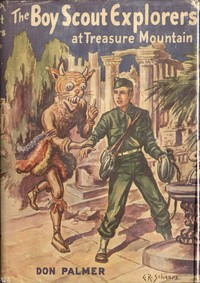
That feeling of a band of boys earning their boat through sheer grit stayed with me long after I finished Sea Scouts All. It reminded me of another quiet adventure where the journey matters more than the treasure, and I kept thinking about it while reading The Boy Scout Explorers at Treasure Mountain — Background and Themes. Both just left a gentle mark, somehow.
There are no reviews for this eBook.
There are no comments for this eBook.
Reader reflection
How did this book work for you?
Your answers remain private and are stored only in this browser.
Your progress
0
/
10
2
Did this book hold your interest?
3
How likely are you to recommend this book?
4
How easy was the book to follow?
5
Is this a title worth rereading?
6
What was its emotional impact?
7
Which part made the strongest impression?
8
Could you follow the author’s main argument?
9
In one sentence, what did you learn?
10