1

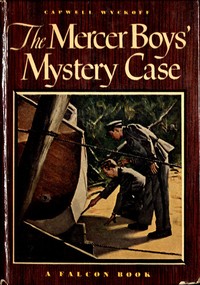
The Mercer Boys' Mystery Case — Themes and Context
(0 User reviews)
76
Project Gutenberg
2017
Not confirmed
Detective and mystery stories; Schools -- Juvenile fiction; Brothers -- Juvenile fiction; Military cadets -- Juvenile fiction
Readers of public-domain and historical texts
Project Gutenberg digital edition
en
Edition facts
Words
51,154
Reading time
223 min
Text sections
7
For The Mercer Boys' Mystery Case — Themes and Context, the stored edition analysis reports 51,154 words, 3 hr 43 min estimated reading time, and 7 detected text sections.
The text analysis averages about 14.7 words per sentence, while the detected sections provide another way to judge how the source is divided.
Project Gutenberg metadata also associates the work with “Detective and mystery stories,” connecting these edition facts with the source record’s subject description.
Source:
Project Gutenberg record #55560
An editorial note examining how the opening, middle, and later excerpts of Capwell Wyckoff's 1948 mystery guide a first reading through the cadets' investigation of a missing trophy at Woodcrest Military Academy.
Editorial Edition Score
4.7/5
★★★★★
★★★★★
Calculated from edition completeness, EPUB availability, text structure and catalogue metadata. Not a user rating.
How this score is calculated
- Description quality20 pts
- Title & short description10 pts
- Source metadata20 pts
- Text length15 pts
- Chapters / structure15 pts
- EPUB file integrity20 pts
Total of 100 points, scaled to a 2.5-5.0 range. Editions with an empty description or a missing EPUB file are not scored.
Edition quality
Public-domain source text
Read the source text
The source text is kept in the dedicated reader, separate from this catalogue record and its commentary.
The first chapter, “The Glories of the Past,” establishes a formal, orderly world: cadets in gray uniforms gather in Locke Hall for a special meeting called by Colonel Morrell. The dialogue is brisk and functional, with characters identified by class rank and name—Don Mercer, Bob Hudson—and the mystery is introduced as a straightforward task: locate a missing cup awarded to the Class of 1933. The tone is earnest and slightly stiff, typical of mid-century juvenile series fiction, but the excerpt offers a clear entry point: a concrete object (the trophy) and a clear institutional setting (Woodcrest Military Institute).
The Opening: A World of Order and Duty
The opening excerpt presents a hierarchy of cadets awaiting orders. The language is unadorned: “A special meeting, huh?” and “Here comes the rest of the party.” The headmaster, Colonel Morrell, is referred to with respect, and the cadets’ mission is framed as a duty to the school’s honor. The missing cup is not yet a crime—it is a puzzle, a lapse in institutional memory. This sets expectations for a story driven by procedure and teamwork rather than danger. The reader is introduced to the Mercer brothers (Don and Jim) and their friend Terry Mackson, but the excerpt does not reveal their personalities beyond their roles as class representatives. The setting—a military academy in fall—is sketched lightly, with no sensory detail beyond the uniforms and the hall.
The Middle: Action and Mischief
In a later excerpt, the cadets recover stolen eagle statues from a swamp. The tone shifts to physical comedy: the eagles are “getting heavier all the time,” and Terry jokes with a cab driver about “flower pots.” The cadets return muddy to the school, and the story is told “like wildfire.” This section introduces a subplot involving the Gates family—Melvin Gates, whose son years ago may have taken the cup. The colonel dismisses Gates’ actions as “petty revenge,” but the cadets remain curious. The writing here is more relaxed, with banter and a sense of camaraderie. The mystery expands beyond the missing cup to include family grudges and town politics, as a newspaper editorial “practically ruins the family with decent people.” The reader sees that the investigation is not just about finding an object but about uncovering old secrets.
The Later Excerpt: A Surprise and a New Lead
Chapter 13 opens with a snowstorm and a mischievous Terry Mackson. The weather is described with a touch of wonder: “the world wrapped in a whirling, blowing snowstorm.” Terry’s “light of mischief” suggests a character trait—he is the instigator. The excerpt cuts off before the action, but the shift in setting (from fall to winter) and mood (from duty to play) signals a turning point. The cadets are now acting on their own initiative, not just following orders. The snow provides a visual contrast to the earlier orderly scenes, and the reader may infer that the investigation is becoming more personal. The excerpt ends before any plot development, leaving the reader with a sense of anticipation: what will Terry do next?
Reading the Excerpts as a Sequence
These three excerpts trace a progression from institutional order to individual action. The opening emphasizes hierarchy and duty; the middle shows the cadets working together with humor and resourcefulness; the later excerpt hints at personal initiative and a change in atmosphere. A first-time reader might note how the mystery deepens: the cup is not just lost but connected to a family feud. The writing style remains consistent—simple, dialogue-heavy, with little interiority—but the stakes shift from recovering an object to confronting a community’s past. The excerpts do not reveal the resolution, but they suggest that the cadets’ loyalty to Woodcrest will be tested. The reader is left to wonder how the Gates family’s “money enough to keep to themselves” will factor into the final chapters.
The excerpts offer a reliable sample of the book’s tone and structure: a mystery that unfolds through conversation and action rather than deduction. Readers who enjoy series fiction from the mid-20th century will find familiar rhythms—formal dialogue, clear moral lines, and a focus on group effort. The incomplete nature of the excerpts means that the full arc of the cup’s disappearance and the Gates family’s role remains unknown, but the cadets’ determination is evident from the start.
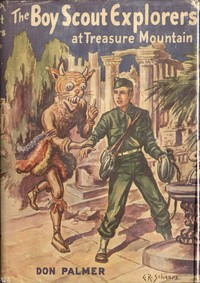
In the Mercer boys' careful hunt for that missing trophy, I catch a familiar echo of another expedition—the Scouts climbing toward Treasure Mountain with the same steady patience. Both books trust that good lads solve mysteries through quiet observation, not haste. That enduring decency in old The Boy Scout Explorers at Treasure Mountain — Background and Themes feels like a handshake between kindred spirits across my shelves.
There are no reviews for this eBook.
There are no comments for this eBook.
Reader reflection
Your personal reading reflection
Build a private reading journal entry for this title.
Your progress
0
/
10
2
Was reading this book enjoyable?
3
How likely are you to recommend this book?
4
How demanding did the text feel?
5
How did the reading compare with what you expected?
6
Did the book give you something worth debating?
7
How much did the book move you?
8
Did anything about the book feel genuinely new?
9
What did this book teach you most?
10