1

The Boy Scout Explorers at Treasure Mountain — Background and Themes
(0 User reviews)
438
Project Gutenberg
2017
Not confirmed
Adventure stories; Treasure troves -- Juvenile fiction; Peru -- Juvenile fiction; Explorers (Boy Scouts) -- Juvenile fiction
Readers of public-domain and historical texts
Project Gutenberg digital edition
en
Edition facts
Words
46,454
Reading time
202 min
Text sections
8
The source record for The Boy Scout Explorers at Treasure Mountain — Background and Themes measures this digital text at 46,454 words, 3 hr 22 min estimated reading time, and 8 detected text sections.
The text analysis averages about 10.7 words per sentence, while the detected sections provide another way to judge how the source is divided.
Project Gutenberg metadata also associates the work with “Adventure stories,” connecting these edition facts with the source record’s subject description.
Source:
Project Gutenberg record #55415
This editorial note examines Don Palmer's word-level choices in The Boy Scout Explorers at Treasure Mountain, focusing on how diction, dialogue tags, and descriptive phrasing shape the narrative's tone and character dynamics.
Editorial Edition Score
4.7/5
★★★★★
★★★★★
Calculated from edition completeness, EPUB availability, text structure and catalogue metadata. Not a user rating.
How this score is calculated
- Description quality20 pts
- Title & short description10 pts
- Source metadata20 pts
- Text length15 pts
- Chapters / structure15 pts
- EPUB file integrity20 pts
Total of 100 points, scaled to a 2.5-5.0 range. Editions with an empty description or a missing EPUB file are not scored.
Edition quality
Public-domain source text
Read the source text
The source text is kept in the dedicated reader, separate from this catalogue record and its commentary.
Don Palmer opens The Boy Scout Explorers at Treasure Mountain with a scene built on temporal anxiety: Jack Hartwell glances at his wristwatch, the waiter pointedly asks about ordering, and the delayed Mr. Livingston is described as having spent ten years in FBI work. The word 'pointedly' does more than convey impatience—it signals that the boys are being judged by adult standards of punctuality and decorum. Palmer’s choice to begin with a missed appointment rather than an action sequence establishes that these Scouts earn their adventures through patience and trust in their leader.
Dialogue Tags as Character Markers
Palmer uses dialogue tags to reinforce personality without lengthy exposition. Willie Medaugh 'suddenly warbled' when he spots Mr. Livingston—'warbled' is an odd, musical verb for a broad-shouldered fifteen-year-old, hinting at a cheerful, unguarded nature. In contrast, Ken Dougherty's responses are introduced with 'said in answer' or 'agreed,' suggesting a measured, reliable temperament. The most revealing tag belongs to Pedro, the native guide: 'Pedro declared with a troubled shake of his head. “No good come to go on.”' The narrator does not call him superstitious; the shake of the head and the broken English do that work. Palmer lets the reader infer Pedro's worldview from his syntax and gesture.
The Weight of Adverbs in Description
Palmer’s descriptive passages rely heavily on adverbs that amplify the Scouts' emotional state. The mountains are 'bitterly cold,' the hours 'bitterly cold,' and the shadows 'oppressive.' When Jack remarks on the 'closed in feeling,' Ken answers 'soberly.' Later, War speaks 'nervously.' These adverbs are not decorative; they maintain a consistent tone of unease. Even the firelight is described as a 'circle of firelight,' implying safety that is about to be breached. The adverb 'pointedly' from the opening scene reappears in spirit: every emotional cue is flagged, leaving little ambiguity about how the reader should feel.
Verbs of Movement and Threat
Action sequences in the excerpt are driven by verbs that emphasize speed and danger. An arrow 'swished past' War's ear; Jack 'pulled an arrow from the wood.' The Scouts 'moved out of the circle of firelight'—not stepped or walked, but moved, a verb that suggests coordinated, urgent action. When Mr. Livingston orders a search, the bearers 'huddled together, chattering excitedly.' 'Huddled' and 'chattering' contrast with the Scouts' controlled responses, drawing a clear line between the local porters' fear and the boys' Scout-trained composure. Palmer’s verb choices consistently reinforce the hierarchy of competence.
Repetition and the Construction of Mystery
Palmer uses repetition to build suspense around the hidden city and the missing Burton Monahan. Within a single page, Jack says 'we may stumble on a hidden plateau or valley,' Willie says 'maybe we'll come across that ancient Inca city,' and Ken shrugs about Indians watching. The characters echo each other's speculations, but no new information is added. This technique keeps the mystery alive without advancing the plot. The arrow that 'barely missed War' is called 'another warning,' linking it to an earlier, unseen arrow. Palmer trusts that the reader will remember the first warning, though it is not described in the excerpt—a small but effective narrative shortcut.
Palmer’s prose in The Boy Scout Explorers at Treasure Mountain is efficient and unadorned, but his word-level choices—from 'warbled' to 'swished' to 'huddled'—create a clear emotional landscape. Readers attentive to diction will find that the Scouts’ competence is built not through heroic speeches but through precise verbs and restrained dialogue tags. The narrative voice remains steady, letting the characters’ own words and the narrator’s quiet adverbs carry the tension.
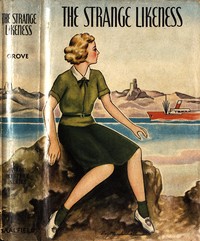
I remember huddling with a flashlight under my blanket, the way Palmer’s careful diction made each Scout’s voice feel distinct, almost like eavesdropping. That quiet attention to how people speak—not just what they say—reminded me of the tender unease I felt reading The Strange Likeness, where every word seemed to carry a hidden weight. It’s the same slow, familiar ache of recognition. The Strange Likeness — Key Ideas to Explore holds that stillness, like a photograph developing in the dark.
There are no reviews for this eBook.
There are no comments for this eBook.
Reader reflection
What did you think of this book?
Answer a few questions and save a private reflection on this device.
Your progress
0
/
10
2
Did this book hold your interest?
3
How likely are you to recommend this book?
4
How demanding did the text feel?
5
Could you apply anything you learned?
6
How closely did the book connect with your experience?
7
Could you see yourself revisiting this book?
8
Did anything about the book feel genuinely new?
9
What is the main idea you are taking away?
10