1

The Fur-Seal's Tooth: A Story of Alaskan Adventure — Key Ideas to Explore
(0 User reviews)
38
Project Gutenberg
2018
Not confirmed
Animals -- Juvenile fiction; Conduct of life -- Juvenile fiction; Adventure stories; Friendship -- Juvenile fiction; Voyages and travels -- Juvenile fiction; Natural history -- Juvenile fiction; Alaska -- Juvenile fiction; Youth -- Conduct of life -- Juvenile fiction; Hunting -- Juvenile fiction; Accidents -- Juvenile fiction; Shooting -- Juvenile fiction
Readers of public-domain and historical texts
Project Gutenberg digital edition
en
Edition facts
Words
83,757
Reading time
365 min
Text sections
41
The Fur-Seal's Tooth: A Story of Alaskan Adventure — Key Ideas to Explore can be approached with a clearer sense of reading commitment from its source measurements: 83,757 words, 6 hr 5 min estimated reading time, and 41 detected text sections.
The text analysis averages about 21.5 words per sentence, while the detected sections provide another way to judge how the source is divided.
Project Gutenberg metadata also associates the work with “Animals -- Juvenile fiction,” connecting these edition facts with the source record’s subject description.
Source:
Project Gutenberg record #58577
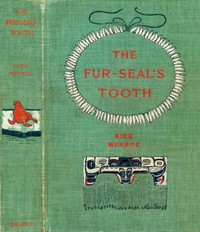
Kirk Munroe's 1894 adventure follows Phil and Serge through Alaskan waters, where sea-otter hunting, bidarkies, and kamleikas reveal a world of precise skills and high-stakes survival. The narrative contrasts youthful enthusiasm with the harsh realities of a dwindling fur trade.
Editorial Edition Score
4.9/5
★★★★★
★★★★★
Calculated from edition completeness, EPUB availability, text structure and catalogue metadata. Not a user rating.
How this score is calculated
- Description quality20 pts
- Title & short description10 pts
- Source metadata20 pts
- Text length15 pts
- Chapters / structure15 pts
- EPUB file integrity20 pts
Total of 100 points, scaled to a 2.5-5.0 range. Editions with an empty description or a missing EPUB file are not scored.
Edition quality
Public-domain source text
Read the source text
The source text is kept in the dedicated reader, separate from this catalogue record and its commentary.
Kirk Munroe's The Fur-Seal's Tooth opens with a specific tension between romantic adventure and the gritty mechanics of survival in late-19th-century Alaska. The dialogue between Phil and Serge, in which Serge explains sea-otter hunting, is dense with technical terms—bidarkie, kamleika, kelp-beds—that ground the story in practical knowledge. Phil's eager questions and Serge's patient answers establish a pattern: the book treats its setting not as a backdrop but as a system of constraints and opportunities. The sea-otter's shyness, the hunters' need to go without fire for weeks, and the extraordinary value of a single pelt (up to eight hundred dollars) all point to a world where skill and luck are tightly interwoven.
Technical Vocabulary as World-Building
Munroe does not simply describe Alaska; he names its tools and practices with precision. Serge explains that a bidarkie is a skin canoe with one, two, or three hatches, and that a kamleika is a waterproof garment made of sea-lion intestines. These terms are not decorative—they are functional. When Serge says that a hunter in a bidarkie must fasten his kamleika "tightly around the hatch coamings so that not a drop of water can get in," the sentence itself enacts the care required. Phil's repeated questions—"What is a bidarkie? And what is a kamleika?"—mirror the reader's need to learn this vocabulary to follow the action. The book thus becomes a kind of apprenticeship in Alaskan maritime culture.
The Economics of the Hunt
The conversation between Phil and Serge reveals a stark economic logic. A single sea-otter skin can bring "as high as eight hundred dollars," yet the animals are now scarce, found only in "the wilder parts of Alaska." Serge notes that hunters used to take seventy-eight otters in a single hour, but the implication is clear: such abundance is gone. The skins go to Russia and China for military uniforms and mandarin robes. Phil's whistle—"Phe-w-w!"—marks his shift from curiosity to calculation. The book does not moralize, but the facts speak: the hunt is dangerous, the prey nearly exhausted, and the profits flow to distant markets. This economic thread runs beneath the adventure, giving it a somber undertow.
Risk and Reward in the North Pacific
Serge's description of sea-otter hunting is a study in controlled risk. Hunters launch bidarkies into gales, run downwind through seas that would swamp larger craft, and land on "rocky reefs and half-submerged islands" that are nearly invisible. They must creep upwind to catch the otter asleep. The method is precise and fragile: a fire miles to windward will spook the animal; a man's footprint on a beach must be washed by many tides before an otter will approach. Phil's summary—"Do you mean to say that the only way ... is to go thirty miles from land, in a gale, with a chance of finding an almost invisible reef?"—captures the absurdity and the thrill. The book's adventure lies not in melodrama but in the careful management of these extreme conditions.
Readers will find that The Fur-Seal's Tooth rewards attention to its technical details. The dialogue carries much of the exposition, and the characters' questions often anticipate the reader's own. Pay particular attention to how Munroe uses specific numbers—distances, prices, hours—to create a sense of verisimilitude. The story's tension arises not from villains but from the environment itself, and from the choices that knowledge and skill demand.
There are moments in The Fur-Seal's Tooth when the boys' confidence outpaces their skill, and I found myself smiling at that familiar ache of learning. It reminded me of another quiet afternoon, turning pages of The Wishing Cap — A Reader’s Guide, where wishing felt less about magic and more about paying attention to what’s already around us. Both left a soft, lingering hum.
There are no reviews for this eBook.
There are no comments for this eBook.
Reader reflection
Record your reading impressions
A brief reflection can help important ideas stay with you longer.
Your progress
0
/
10
2
How much did you enjoy the reading experience?
3
Would you encourage someone else to read it?
4
How demanding did the text feel?
5
Was the book moving at the right speed?
6
How clearly were the main ideas presented?
7
Did it raise ideas you would like to talk about?
8
Could you see yourself revisiting this book?
9
What is the main idea you are taking away?
10