1

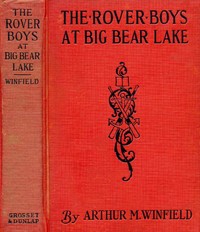
The Rover Boys at Big Bear Lake; or, The Camps of the Rival Cadets — Themes and Context
(0 User reviews)
513
Project Gutenberg
2022
Not confirmed
Rowing -- Juvenile fiction; Boarding schools -- Juvenile fiction; Practical jokes -- Juvenile fiction; Military education -- Juvenile fiction; Competition -- Juvenile fiction; Military cadets -- Juvenile fiction; School camps -- Juvenile fiction; Lakes -- Juvenile fiction
Readers of public-domain and historical texts
Project Gutenberg digital edition
en
Edition facts
Words
69,571
Reading time
303 min
Text sections
40
The Rover Boys at Big Bear Lake; or, The Camps of the Rival Cadets — Themes and Context can be approached with a clearer sense of reading commitment from its source measurements: 69,571 words, 5 hr 3 min estimated reading time, and 40 detected text sections.
The text analysis averages about 13.8 words per sentence, while the detected sections provide another way to judge how the source is divided.
Project Gutenberg metadata also associates the work with “Rowing -- Juvenile fiction,” connecting these edition facts with the source record’s subject description.
Source:
Project Gutenberg record #67285
This editorial note examines the narrative voice and pacing in Edward Stratemeyer's 1923 adventure, focusing on the introduction of Jeff, the cadets' dialogue, and the shift from urban to lakeside setting.
Editorial Edition Score
4.9/5
★★★★★
★★★★★
Calculated from edition completeness, EPUB availability, text structure and catalogue metadata. Not a user rating.
How this score is calculated
- Description quality20 pts
- Title & short description10 pts
- Source metadata20 pts
- Text length15 pts
- Chapters / structure15 pts
- EPUB file integrity20 pts
Total of 100 points, scaled to a 2.5-5.0 range. Editions with an empty description or a missing EPUB file are not scored.
Edition quality
Public-domain source text
Read the source text
The source text is kept in the dedicated reader, separate from this catalogue record and its commentary.
The Rover Boys at Big Bear Lake opens with a brisk, dialogue-heavy scene at a train station, where the cadets—Jack, Fred, Andy, Randy, and Gif—prepare for a camping trip. The narrative voice is direct and colloquial, with characters speaking in short, energetic exchanges that establish their personalities: Andy is impulsive, Gif is practical, and Fred is cautious. The pace quickens as they await Jeff, a hired man described as “lanky” and “languid,” whose entrance introduces a shift in rhythm. Jeff’s slow, shuffling arrival and his complaint about “roundabout streets” contrast with the boys’ eager chatter, creating a comedic tension that Stratemeyer sustains through the journey.
Voice and Characterization Through Dialogue
The excerpt reveals Stratemeyer’s reliance on dialogue to define character. Gif’s exasperated remark—“It’s just like him. He’s the slowest fellow I know”—immediately signals Jeff’s role as a foil to the cadets’ energy. The boys’ banter, such as Andy’s quip about “a barrel of fun,” is peppered with exclamations and interjections (“Gee!”), reinforcing their youthful exuberance. Jeff’s own speech, with its drawn-out phrasing (“I’d an awful walk reachin’ here”), slows the narrative tempo, a deliberate contrast that Stratemeyer uses to highlight cultural and temperamental differences. This technique recurs in the series, but here it is particularly effective because the dialogue carries the exposition: the reader learns about the bungalow, the lake, and the fishing plans through natural conversation rather than narration.
Pacing and the Comedic Interlude
Stratemeyer manipulates pacing by inserting a comic set piece shortly after the train departs. Andy tears a slip of transparent paper from a candy package, rolls it into a taper, and approaches the sleeping Jeff. The narrative slows to describe this preparation in detail, building anticipation. The author then cuts to the sleeping Jeff, described with “eyes closed, evidently sleeping soundly,” creating a pause before the prank. This rhythm—rapid dialogue, then deliberate action—mirrors the cadets’ own shifts between earnest planning and mischief. The scene also establishes a pattern of tension and release that likely recurs throughout the novel, as the boys balance camp duties with practical jokes. The excerpt ends before the prank unfolds, leaving the reader to infer the outcome from the setup.
Setting as a Structural Device
The transition from the Boston train station to the interior of the railway carriage is marked by a shift in sensory detail. Early descriptions focus on visual clutter—newspapers, candy packages, a valise—and the clatter of the train. Once aboard, the narrative narrows to the boys’ compartment, with Jeff asleep behind them. This contraction of space mirrors the story’s movement from the city to the wilderness of Big Bear Lake. Stratemeyer uses the journey to introduce key elements: the four-hour trip to Rocky Run, the possibility of staying with “old Mose Mumbleton,” and the lake’s darkness at night. These details, delivered through dialogue, establish the setting as both a physical destination and a narrative device that will shape the cadets’ adventures. The lake itself remains offstage, a promise of future action.
Readers attentive to voice will notice how Stratemeyer uses Jeff’s dialect and the cadets’ slang to create a layered soundscape. The pacing, alternating between rapid exchanges and deliberate comic pauses, rewards those who follow the rhythm of the dialogue. As the story progresses, watch for how these early patterns—especially the tension between efficiency and laziness—inform the cadets’ interactions with their environment and each other.
There’s something almost tender about how Stratemeyer lets the cadets slow down once they reach Big Bear Lake, as if the water itself asks them to breathe. That quieter rhythm always makes me think of another old friend, where fairness isn’t shouted but simply practiced. The same handshake of decency lives there: Frank Merriwell, Jr.'s, Helping Hand; Or, Fair Play and No Favors — Edition Insights. I remember the chill of those pages on a summer porch, and how little has changed in what we hope for.
There are no reviews for this eBook.
There are no comments for this eBook.
Reader reflection
What did you think of this book?
Answer a few questions and save a private reflection on this device.
Your progress
0
/
10
2
Did this book hold your interest?
3
Would you recommend this book to another reader?
4
How much effort did this book require?
5
How original did the book feel?
6
What was the strongest part of the book?
7
Would you start a conversation about this book?
8
Could you see yourself revisiting this book?
9
What did this book teach you most?
10