1

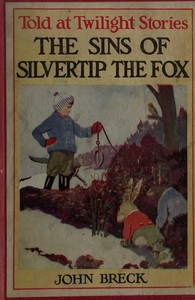
The Sins of Silvertip the Fox — A Reader’s Guide
(0 User reviews)
197
Project Gutenberg
2020
Not confirmed
Animals -- Juvenile fiction; Cows -- Juvenile fiction; Temper -- Juvenile fiction; Foxes -- Juvenile fiction; Farms -- Juvenile fiction
Readers of public-domain and historical texts
Project Gutenberg digital edition
en
Edition facts
Words
19,443
Reading time
85 min
Text sections
19
Before opening The Sins of Silvertip the Fox — A Reader’s Guide, the edition data offers a quick orientation: 19,443 words, 1 hr 25 min estimated reading time, and 19 detected text sections.
The text analysis averages about 14.3 words per sentence, while the detected sections provide another way to judge how the source is divided.
Project Gutenberg metadata also associates the work with “Animals -- Juvenile fiction,” connecting these edition facts with the source record’s subject description.
Source:
Project Gutenberg record #64162
John Breck's 1923 animal story uses precise diction and dialogue to explore wildness and tameness through the eyes of Nibble Rabbit, the Red Cow, and the fox Silvertip. The narrative voice blends folk wisdom with natural observation, as characters debate ownership, compacts, and the boundaries between farm and forest.
Editorial Edition Score
4.7/5
★★★★★
★★★★★
Calculated from edition completeness, EPUB availability, text structure and catalogue metadata. Not a user rating.
How this score is calculated
- Description quality20 pts
- Title & short description10 pts
- Source metadata20 pts
- Text length15 pts
- Chapters / structure15 pts
- EPUB file integrity20 pts
Total of 100 points, scaled to a 2.5-5.0 range. Editions with an empty description or a missing EPUB file are not scored.
Edition quality
Public-domain source text
Read the source text
The source text is kept in the dedicated reader, separate from this catalogue record and its commentary.
John Breck's The Sins of Silvertip the Fox opens with a question that echoes through the entire narrative: can a wild beast ever belong to anyone? The first chapter introduces Doctor Muskrat's Pond as a hub of spring visitors, but the real puzzle is Tommy Peele, a boy whose dog Watch claims he owns the Woods and Fields. The Woodsfolk—wild creatures who have never heard of such a thing—are unsettled. Breck establishes a world where ownership, tameness, and wildness are not fixed states but subjects of debate, and where even a rabbit can be drawn into a fox hunt.
Diction of the Wild and the Tame
Breck's word choices consistently mark the boundary between wild and domestic. The cows speak in a drawling, ruminative register—the White Cow “drawled” her story and “swished her tail thoughtfully”—while Nibble Rabbit sits up “very straight” and speaks in short, decisive sentences. The fox Silvertip is never given direct dialogue in the excerpts; he is described only through his actions: he “wades across the pond,” “trots past with the poor chicken,” and “hides under the culvert.” This asymmetry in voice reinforces the fox's role as a silent, predatory force, while the barnyard animals use language to negotiate their place in the human world.
The Compact as a Narrative Device
The story hinges on a “compact” between cows and man, made “in the First-Off Beginning.” This invented tradition gives the cows a legalistic stake in their own tameness: if Tommy Peele lets wolves into the barn, the cows must go wild again. The White Cow explains the bargain with a pragmatic tone: “It’s better than being hunted by both wolves and men.” Breck uses this compact to raise the stakes of Silvertip’s raids—not just a chicken thief, the fox threatens the entire social order of the farm. Nibble’s promise to the White Cow, that he won’t return to the barn while Silvertip lives, transforms a personal grudge into a matter of communal survival.
Voice and Authority Among the Animals
Breck distributes authority unevenly among his animal characters. Doctor Muskrat “couldn’t say” whether Tommy Peele is friend or enemy, and “wouldn’t” explain. The White Cow, by contrast, speaks with the weight of history, telling a story that explains the present. Nibble Rabbit, though small, asserts himself with the line “It hasn’t anything at all to do with you cows,” and later quotes a fortune told by the stars: “By dusk and by dawn you shall travel alone.” This mix of folk rhyme and barnyard debate gives the dialogue a layered quality, where each character’s speech reflects their role in the community—the cow as historian, the rabbit as impulsive hero, the dog as practical enforcer.
Setting as a Stage for Conflict
The excerpts move between several distinct settings: Doctor Muskrat’s Pond, the barn where the cows chew their cud, and the pasture where Watch scouts for scent. Each location carries its own rules. The pond is a place of arrival and departure, where the Beautiful Duck stops in before heading north. The barn is a space of storytelling and negotiation, where the White Cow reveals the compact. The pasture is a hunting ground, where mist “washed away all the scent” and Nibble must rely on observation rather than smell. Breck uses these shifts in setting to vary the pace—from the leisurely conversation of the cows to the urgent, scentless search for Silvertip—and to underscore the different kinds of knowledge each animal possesses.
Readers attentive to Breck’s language will notice how often characters repeat or reinterpret each other’s words. The Red Cow’s moan “Noo-oo-oo” and Nibble’s echo of the star fortune are small signals of a world where meaning is negotiated aloud. Pay attention to who gets to tell a story and who is only described—these choices reveal the story’s quiet argument about power, voice, and the cost of belonging.
Rereading about Silvertip’s careful truce with the farm reminded me of a summer evening, sitting on the porch, thinking about the wild patches we leave unclaimed. That same feeling—of boundaries softened—came back with Jean Craig Grows Up — Context and Discussion. She, too, learns that growing up means honoring old agreements, not breaking them.
There are no reviews for this eBook.
There are no comments for this eBook.
Reader reflection
How will you remember this book?
Save your reaction, strongest insight, and memorable passage.
Your progress
0
/
10
2
How much did you enjoy the reading experience?
3
Would you encourage someone else to read it?
4
Did the language feel accessible?
5
Was the book what you thought it would be?
6
What did you appreciate most?
7
What did you think about the pace?
8
Would you start a conversation about this book?
9
What did this book teach you most?
10