1

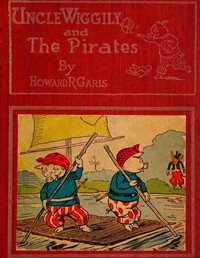
Uncle Wiggily and the Pirates; Or, How the Enemy Craft of Pirate Fox was Sunk — Context and Discussion
(0 User reviews)
417
Project Gutenberg
2020
Not confirmed
Animals -- Juvenile fiction; Humorous stories, American; Pirates -- Juvenile fiction; Squirrels -- Juvenile fiction; Rabbits -- Juvenile fiction; Swine -- Juvenile fiction; Foxes -- Juvenile fiction; Muskrat -- Juvenile fiction; Alligators -- Juvenile fiction; Wolves -- Juvenile fiction; Uncle Wiggily (Fictitious character) -- Juvenile fiction; Bobcat -- Juvenile fiction
Readers of public-domain and historical texts
Project Gutenberg digital edition
en
Edition facts
Words
5,671
Reading time
25 min
Text sections
4
The catalog record for Uncle Wiggily and the Pirates; Or, How the Enemy Craft of Pirate Fox was Sunk — Context and Discussion provides practical reading context through 5,671 words, 25 min estimated reading time, and 4 detected text sections.
The text analysis averages about 16.3 words per sentence, while the detected sections provide another way to judge how the source is divided.
Project Gutenberg metadata also associates the work with “Animals -- Juvenile fiction,” connecting these edition facts with the source record’s subject description.
Source:
Project Gutenberg record #61695
In this early reader, Uncle Wiggily is captured by piggie boys playing pirates, then threatened by Fox and Wolf who plan a real kidnapping. The story shifts to a nutting party nearly spoiled by a bobcat, and a mayflower-gathering outing with Nurse Jane. Garis uses playful dialogue, repetitive structures, and gentle peril.
Editorial Edition Score
4.5/5
★★★★★
★★★★★
Calculated from edition completeness, EPUB availability, text structure and catalogue metadata. Not a user rating.
How this score is calculated
- Description quality20 pts
- Title & short description10 pts
- Source metadata20 pts
- Text length15 pts
- Chapters / structure15 pts
- EPUB file integrity20 pts
Total of 100 points, scaled to a 2.5-5.0 range. Editions with an empty description or a missing EPUB file are not scored.
Edition quality
Public-domain source text
Read the source text
The source text is kept in the dedicated reader, separate from this catalogue record and its commentary.
The story opens with Curly and Floppy Twistytail, two piggie boys, deciding to play pirates. They whittle wooden swords, build a raft, and sail across the duck pond ocean to capture Uncle Wiggily. The bunny gentleman is tied to a mast and held for a ransom of ten lollypops, but he laughs at the fun. Hidden on shore, the Fox and Wolf watch and plot to take advantage of the game. The Wolf suggests they dress up as pirates and capture Uncle Wiggily for real, expecting him to think it's still play. This sets up a pattern of pretend versus genuine threat that runs through the book.
Playful Peril and the Threat of Real Danger
The opening chapter establishes a key tension: the piggie boys' pirate game is harmless, but the Fox and Wolf intend to use it as cover for a real kidnapping. Garis signals this shift through dialogue. The Wolf says, “Those pigs will soon tire of the game. We can take their raft, sneak up and get Uncle Wiggily. He’ll think it is all in fun and, before he knows it, we’ll have him!” The reader is invited to recognize the difference between pretend and actual danger, a distinction that the bunny gentleman himself may not perceive. This layered threat—where the villain exploits the appearance of play—gives the story a mild edge without becoming frightening. The excerpt does not reveal whether the Fox and Wolf succeed, but their plan is clearly laid out, leaving the outcome uncertain.
Repetition and Rhythm in the Piggie Boys' Game
Garis uses repetitive phrasing and simple dialogue to mirror children's own play. Curly and Floppy speak in short, declarative sentences: “We’ll sail over to Uncle Wiggily’s bungalow and capture him,” grunted Curly. “What do we do after we capture him?” asked Floppy. “Hold him for a ransom,” said Curly. This back-and-forth mimics the way children negotiate rules during imaginative games. The pigs' actions—whittling swords, building a raft, setting sail—are described in a straightforward sequence that young readers can follow easily. The phrase “duck pond ocean” is a whimsical touch that shrinks the scale of adventure to a child's backyard world. The piggie boys' eventual release of Uncle Wiggily (“in a little while Curly and Floppy let Uncle Wiggily go”) suggests that their game has a natural end, reinforcing the idea that pretend play is temporary and safe.
Uncle Wiggily's Gentle Demeanor as a Narrative Anchor
Uncle Wiggily is characterized by his calm, amused reaction to being captured. When the piggie boys tie him to the mast, “the bunny gentleman laughed at the fun.” His response—twinkling his pink nose—is a recurring physical detail that signals his good-natured personality. This consistent demeanor provides a stable emotional center for the story. Even when real danger looms from the Fox and Wolf, Uncle Wiggily's lack of alarm keeps the tone light. The excerpt does not show him expressing fear or suspicion, which may be a deliberate choice to maintain the story's playful atmosphere. Readers can rely on Uncle Wiggily's unflappable nature as a cue that the peril is not overwhelming. His role as a gentle, slightly naive figure makes him an effective protagonist for this type of episodic adventure.
Structure and the Promise of Multiple Adventures
The book's title page lists three stories: the pirate tale, “The Bob Cat Nearly Spoiled a Nutting Party,” and “Uncle Wiggily and Nurse Jane Gather May Flowers.” The excerpt covers only the opening of the first story, but the catalog indicates a total word count of 5,671, suggesting each story is brief. The pirate story alone introduces a complete narrative arc: the piggie boys' game, the Fox and Wolf's plot, and a potential resolution. The other two stories likely follow a similar pattern—a simple activity (nutting, flower-gathering) interrupted by a minor antagonist (bobcat, perhaps another animal). Readers familiar with the Uncle Wiggily series will recognize this formula: a gentle adventure with a mild threat, resolved through cleverness or luck. The book's structure, with three self-contained tales, makes it suitable for reading in short sessions.
As you read, pay attention to how Garis signals the shift from play to real danger through the villains' dialogue. Notice also how Uncle Wiggily's unchanging good humor contrasts with the scheming of the Fox and Wolf. The book's short chapters and repetitive patterns make it easy to follow, but the underlying tension between pretend and genuine threat adds a layer of interest for attentive readers.
There’s something tender about how Uncle Wiggily keeps stumbling into gentle peril only to land safely, like a nap after rain. It reminded me of wandering through Our Den — Inside the Classic, where even quiet corners feel alive with old comforts. I found myself lingering there long after the last page turned.
There are no reviews for this eBook.
There are no comments for this eBook.
Reader reflection
How will you remember this book?
Save your reaction, strongest insight, and memorable passage.
Your progress
0
/
10
2
How did the book work for you overall?
3
Is this a title you would suggest to others?
4
How easy was the book to follow?
5
Would you start a conversation about this book?
6
Would a second reading be valuable?
7
Was the book easy to understand?
8
Which aspect of the book did you value most?
9
What changed or sharpened your thinking?
10