1

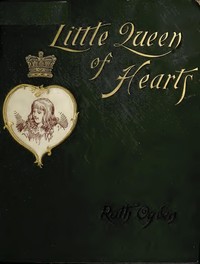
A Little Queen of Hearts: An International Story — A Reader’s Guide
(0 User reviews)
225
Project Gutenberg
2017
Not confirmed
Orphans -- Juvenile fiction; Conduct of life -- Juvenile fiction; Friendship -- Juvenile fiction; Brothers -- Juvenile fiction; Cousins -- Juvenile fiction; Selfishness -- Juvenile fiction; Students -- Juvenile fiction; Youth -- Conduct of life -- Juvenile fiction; Loneliness -- Juvenile fiction; Great Britain -- Description and travel -- Juvenile fiction; Royal households -- Great Britain -- Juvenile fiction
Readers of public-domain and historical texts
Project Gutenberg digital edition
en
Edition facts
Words
77,492
Reading time
337 min
Text sections
10
The source record for A Little Queen of Hearts: An International Story — A Reader’s Guide measures this digital text at 77,492 words, 5 hr 37 min estimated reading time, and 10 detected text sections.
The text analysis averages about 25.2 words per sentence, while the detected sections provide another way to judge how the source is divided.
Project Gutenberg metadata also associates the work with “Orphans -- Juvenile fiction,” connecting these edition facts with the source record’s subject description.
Source:
Project Gutenberg record #54133
Ruth Ogden's 1893 children's novel follows orphaned Ted and his cousin Harold as they navigate secrets, friendship, and a mysterious identity. Set in England and abroad, the story contrasts rural simplicity with royal grandeur, while exploring loyalty and self-discovery through precise, character-driven episodes.
Editorial Edition Score
4.8/5
★★★★★
★★★★★
Calculated from edition completeness, EPUB availability, text structure and catalogue metadata. Not a user rating.
How this score is calculated
- Description quality20 pts
- Title & short description10 pts
- Source metadata20 pts
- Text length15 pts
- Chapters / structure15 pts
- EPUB file integrity20 pts
Total of 100 points, scaled to a 2.5-5.0 range. Editions with an empty description or a missing EPUB file are not scored.
Edition quality
Public-domain source text
Read the source text
The source text is kept in the dedicated reader, separate from this catalogue record and its commentary.
Ruth Ogden opens A Little Queen of Hearts with a striking image: a sturdy English boy, Harold Harris, sobbing into his Eton jacket. The narrator insists on his manliness even as tears stain the sleeve—a deliberate tension between expected stoicism and visible emotion. This early scene, set in a private confrontation with his cousin Ted, establishes a pattern of hidden feelings and guarded revelations that runs through the excerpts.
The book’s subtitle, “An International Story,” hints at movement beyond England, but the opening chapters remain firmly rooted in domestic spaces: inns, farms, and the Hartleys’ home. Ogden’s prose lingers on precise details—the “trim perfection” of miniature English farms, the “clear as a bell” July air—creating a vivid, almost tactile setting against which the characters’ secrets unfold.
Secrets and Silent Understandings
The excerpts are thick with withheld information. Ted, bedridden and pale, extracts a promise from Donald not to reveal their prior acquaintance. Donald’s response—“If I choose I can”—shows a child asserting agency within an adult-arranged mystery. Ogden treats secrecy not as a plot gimmick but as a moral weight: Ted’s confession that he has “never been in the habit of writing, or of doing some other things” suggests a history of neglect or disappointment. The reader is left to infer what those “other things” might be.
Harold acts as intermediary, orchestrating the meeting with a theatrical whisper: “He’s just outside here, and there’s no one else within gun-shot.” The phrase is both practical and playful, hinting at the adventure genre while grounding the scene in domestic reality. Ogden balances the gravity of Ted’s illness with the children’s matter-of-fact negotiations, creating a tone that is earnest but never maudlin.
The Weight of Royalty and Reticence
The catalog subjects list “Royal households—Great Britain” and the title’s “Queen of Hearts” promise regal themes, but the excerpts approach royalty obliquely. Donald’s remark that “up at Windsor, you know, they think you are off on a driving trip” places the characters within orbit of the monarchy without direct depiction. Ted’s sadness at being misunderstood—“Harold knows I’ve never been in the habit of writing”—suggests a personal failure tied to his station.
Ogden’s “Confidential Word” to readers reveals her awareness of an aging audience: she writes for children who “count their years by a single numeral” but also for those growing older. This dual address mirrors the book’s structure, where childish secrets coexist with adult responsibilities. The phrase “Madame La Grande Reine” (chapter XIII) promises a formal encounter, but the excerpts focus instead on the small, human moments—a whispered promise, a walk after breakfast—that precede any grand revelation.
Landscape as Character and Contrast
Ogden uses setting to underscore emotional states. Harold’s two-mile walk to the Hartleys’ is described through sensory details: “the air clear as a bell, and a bird here and there carolling with all the abandon of June.” This pastoral calm contrasts with the tense indoor scene that follows, where Donald stands “transfixed, his hands on his hips in sailor fashion.” The outdoor world is orderly and predictable; the human world is not.
The farms appear “more like toys to unaccustomed eyes,” a phrase that subtly distances the narrator from the landscape, as if seeing it through a visitor’s gaze. This aligns with the “International Story” subtitle: the characters may be English, but their perspectives are unsettled, caught between familiarity and estrangement. Ogden’s descriptive restraint—she never overpaints—leaves room for the reader to inhabit these spaces alongside the characters.
Readers attentive to small gestures will find the story’s heart in its pauses: a sob on an Eton sleeve, a whispered agreement, a boy choosing to keep a secret. Ogden trusts her audience to read between the lines, offering no easy resolutions in these early chapters. The international element remains a promise rather than a fact, and the royal household hovers at the edges. Approach this book as a series of intimate scenes rather than a plotted adventure; the drama lies in what is left unsaid.
Reading about Ted and Harold reminded me of afternoons at my grandmother’s, hushed and still, where secrets felt heavier than they were. That same quiet ache of loyalty surfaced years later when I first opened The Christmas Reindeer — Reading Companion, and its gentle, unobtrusive tone carried me somewhere unexpectedly familiar.
There are no reviews for this eBook.
There are no comments for this eBook.
Reader reflection
Your personal reading reflection
Build a private reading journal entry for this title.
Your progress
0
/
10
2
What was your overall reaction to the book?
3
Is this a title you would suggest to others?
4
How demanding did the text feel?
5
Did anything about the book feel genuinely new?
6
Did it raise ideas you would like to talk about?
7
Could you follow the author’s main argument?
8
Did the book meet your expectations?
9
What is the main idea you are taking away?
10