1

The Christmas Reindeer — Reading Companion
(0 User reviews)
641
Project Gutenberg
2020
Not confirmed
Santa Claus -- Juvenile fiction; Siblings -- Juvenile fiction; Eskimos -- Juvenile fiction; Arctic regions -- Juvenile fiction; Reindeer -- Juvenile fiction
Readers of public-domain and historical texts
Project Gutenberg digital edition
en
Edition facts
Words
25,531
Reading time
112 min
Text sections
4
The catalog record for The Christmas Reindeer — Reading Companion provides practical reading context through 25,531 words, 1 hr 52 min estimated reading time, and 4 detected text sections.
The text analysis averages about 15.8 words per sentence, while the detected sections provide another way to judge how the source is divided.
Project Gutenberg metadata also associates the work with “Santa Claus -- Juvenile fiction,” connecting these edition facts with the source record’s subject description.
Source:
Project Gutenberg record #64109
Thornton W. Burgess's 1926 children's novel follows Eskimo siblings Tuktu and Aklak as they encounter reindeer herding and Santa Claus. The excerpts reveal a blend of realistic Arctic survival details and fantasy, with a notable shift from human to animal perspectives in later chapters.
Editorial Edition Score
4.6/5
★★★★★
★★★★★
Calculated from edition completeness, EPUB availability, text structure and catalogue metadata. Not a user rating.
How this score is calculated
- Description quality20 pts
- Title & short description10 pts
- Source metadata20 pts
- Text length15 pts
- Chapters / structure15 pts
- EPUB file integrity20 pts
Total of 100 points, scaled to a 2.5-5.0 range. Editions with an empty description or a missing EPUB file are not scored.
Edition quality
Public-domain source text
Read the source text
The source text is kept in the dedicated reader, separate from this catalogue record and its commentary.
The Christmas Reindeer opens with a naming custom: Tuktu, meaning caribou, receives her name because a relative named Tuktu died just before her birth. The narrator explains that caribou would have much to do with her life, and indeed her father kills a caribou on the day she is born. This direct link between name, event, and livelihood sets a pattern of meaningful coincidence that runs through the book. The early chapters focus on Tuktu and her brother Aklak, showing their daily tasks—gathering eggs, snaring ptarmigan, and learning to hunt. Burgess grounds the story in specific Arctic practices, such as relying on seal and polar bear when caribou shift their feeding grounds.
Catalog Subjects vs. Excerpt Evidence
The catalog lists five subjects: Santa Claus, siblings, Eskimos, Arctic regions, and reindeer. The excerpts confirm siblings and Eskimo life prominently, but Santa Claus appears only in the chapter list ("Tuktu and Santa Claus") and the dedication, which speaks of "perpetuating a charming fable." The Arctic setting is detailed—fog, wolves, reindeer herds—but the excerpts do not show Santa directly. Reindeer are central, yet the story also features caribou, described as "first cousins" of reindeer. The catalog omits the animal perspective that dominates later chapters: Little Spot the young reindeer and his mother Big Spot, who teach lessons about wolves and the "Great World." This suggests the book may be more about reindeer life than Santa lore.
Voice and Narrative Structure
Burgess uses a third-person narrator who occasionally addresses the reader directly ("you know") and inserts gentle moral commentary. The prose is plain but specific: "Kutok and his family had had to depend almost wholly on seal and polar bear, and these had been none too plentiful." The story shifts between human and animal focalization. Chapter I stays with Tuktu and Aklak, but later excerpts follow Little Spot, a reindeer fawn, who speaks with his mother about wolves and the origin of deer. This dual structure is unusual for a Christmas story and may reflect Burgess's background as a naturalist. The animal chapters use dialogue to convey information about predator-prey dynamics, as when Big Spot explains wolf patience: "They watch for a deer to stray away. Then they get between the herd and that deer."
Recurring Details and Thematic Threads
Two details recur across the excerpts: naming and the "Great World." Tuktu's name is tied to caribou; Aklak means Brown Bear. Little Spot's mother calls him "my son" and he wants to explore the "Great World"—a phrase used three times in the wolf episode. The wolves themselves are called "smart people," a personification that aligns with Burgess's animal-talk style. The excerpts also show a pattern of lessons learned through danger: Tuktu's family nearly starves before the caribou return; Little Spot's boastfulness is cured by real wolves. The dedication mentions "the beautiful faith of childhood" and "the Christmas spirit," but the excerpts emphasize survival knowledge over holiday sentiment. The origin story of deer and wolves ("When the World Was Young") adds a mythic layer that may connect to the Santa fable later.
Readers should note that the excerpts cover only the first third of the book and the animal chapters. The full text likely weaves together the human siblings' reindeer herding with the reindeer's own story, culminating in the Christmas vision promised by the chapter list. Pay attention to how Burgess balances natural history with fantasy—the reindeer talk, but their behavior reflects real wolf avoidance and herd instincts. The catalog subject "Santa Claus" may be confined to the final chapters, so the book is less a Santa story than a layered Arctic adventure with a holiday frame.
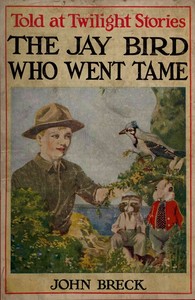
There’s something tender about how Burgess lets the reindeer’s own thoughts take over near the end of The Christmas Reindeer, as if the animals grew tired of being watched and wanted their turn to speak. I felt that same quiet shift reading The Jay Bird Who Went Tame — Context and Discussion — a small, wild creature deciding, on its own terms, what trust might mean. Old books carry such patient echoes.
There are no reviews for this eBook.
There are no comments for this eBook.
Reader reflection
How did this book work for you?
Your answers remain private and are stored only in this browser.
Your progress
0
/
10
2
How did the book work for you overall?
3
Would you pass this book on to a friend?
4
How much effort did this book require?
5
Did any part of the book stay with you emotionally?
6
How did the pace of the book feel?
7
Did the book offer a fresh perspective?
8
Would this book work well in a reading group?
9
Which lesson or insight stayed with you?
10