1

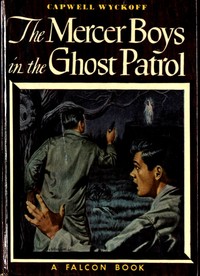
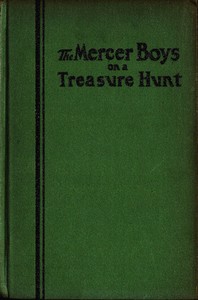
The Mercer Boys in the Ghost Patrol — Inside the Classic
(0 User reviews)
1313
Project Gutenberg
2016
Not confirmed
Detective and mystery stories; Schools -- Juvenile fiction; Ghost stories; Camping -- Juvenile fiction; Brothers -- Juvenile fiction; Military cadets -- Juvenile fiction
Readers of public-domain and historical texts
Project Gutenberg digital edition
en
Edition facts
Words
43,035
Reading time
188 min
Text sections
6
The source record for The Mercer Boys in the Ghost Patrol — Inside the Classic measures this digital text at 43,035 words, 3 hr 8 min estimated reading time, and 6 detected text sections.
The text analysis averages about 14.3 words per sentence, while the detected sections provide another way to judge how the source is divided.
Project Gutenberg metadata also associates the work with “Detective and mystery stories,” connecting these edition facts with the source record’s subject description.
Source:
Project Gutenberg record #53774
This editorial note examines how Capwell Wyckoff structures The Mercer Boys in the Ghost Patrol through alternating camp routines and supernatural incidents, using recurring images of fire, water, and uniformed order to build mystery.
Editorial Edition Score
4.7/5
★★★★★
★★★★★
Calculated from edition completeness, EPUB availability, text structure and catalogue metadata. Not a user rating.
How this score is calculated
- Description quality20 pts
- Title & short description10 pts
- Source metadata20 pts
- Text length15 pts
- Chapters / structure15 pts
- EPUB file integrity20 pts
Total of 100 points, scaled to a 2.5-5.0 range. Editions with an empty description or a missing EPUB file are not scored.
Edition quality
Public-domain source text
Read the source text
The source text is kept in the dedicated reader, separate from this catalogue record and its commentary.
The Mercer Boys in the Ghost Patrol opens not with a ghost but with a red-headed cadet named Terry Mackson ordering a uniform “in a shade to match my hair.” This early scene in the school supply room establishes a pattern: the narrative moves between the regulated world of Woodcrest Military Institute—gray uniforms, drill, mess tents—and the unruly landscape of Rustling Ridge, where a ghost, a stampede, and a mysterious fire disrupt cadet life. The structure relies on this oscillation, each chapter alternating between camp routine and eerie incident.
Uniforms and Unrest
The cadets’ gray and campaign uniforms are more than costuming. They signal a tension between discipline and disorder. In the supply room, the gray “ordinary dress” gives way to “more serviceable” campaign uniforms for encampment—a shift from school to field. Later, the colonel’s authority is asserted through uniformed order: he calls a meeting in his tent, pulls the flap closed, and addresses “his interested boys.” Yet the ghost’s actions—stampeding horses, setting fires—target this order. The uniform becomes a marker of belonging, but also of vulnerability: the cadets are identifiable, while the ghost remains formless.
Fire and Water as Recurring Images
Two elements recur with structural purpose. Fire appears first in the catalog description—“The mass of flame moved quickly down the hill”—and later in the chapter “Moving Flame.” It is both literal (a fire the cadets fight) and metaphorical (the ghost’s “game”). Water offers contrast: Terry’s discovery of a lost child happens because he goes to a brook for a drink. He jokes he’ll “drink nothing but water all my life” in honor of that accident. The juxtaposition of fire (destruction, mystery) and water (accidental rescue, relief) shapes the narrative’s rhythm, each element appearing at key turning points.
Movement Between Camp and Ridge
The story’s geography is binary: the cadets’ camp and Rustling Ridge. Scenes shift between these spaces, often at chapter breaks. The camp is a place of order—drill, mess, colonel’s tent—while the Ridge is where strange tales originate. The ghost “invades” the camp, as the colonel says, stampeding horses. This movement is not just physical but perceptual: the cadets must leave the safety of camp to investigate. The chapter titles trace this arc: “At Rustling Ridge,” “Strange Tales from the Ridge,” “The Shape in the Moonlight.” The Ridge is always offstage, a source of disruption that the camp must confront.
The Colonel’s Commission and the Ghost Patrol
The colonel’s speech in the mess tent is a structural hinge. He reframes the ghost from a “silly” annoyance to a civic duty: “we must track down this ghost and expose him.” He appoints a select group—the Ghost Patrol—giving them authority the general corps lacks. This moment formalizes the boys’ role, moving them from passive observers to active investigators. The commission is couched in the language of school lessons: “we teach you that every man has a duty to the public.” The ghost, then, becomes a test of the cadets’ training, and the patrol a narrative device to channel the mystery into a structured investigation.
Readers will find that the book’s pleasure lies less in the ghost’s identity than in the cadets’ methodical response to the unknown. Wyckoff uses the camp’s routines—drill, meals, meetings—as a counterpoint to the Ridge’s mysteries. Pay attention to how each chapter balances these two worlds, and how small details like a uniform or a drink of water echo across the story. The ghost may be the draw, but the structure is the engine.
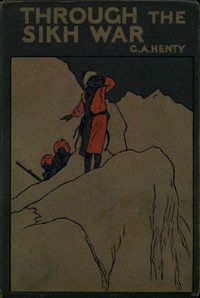
There’s something about how old stories keep their campfires burning long after the last page, isn’t there? That same lingering warmth stayed with me after the Mercer boys’ ghost patrol, where quiet routines slowly give way to strange flames. It reminded me of another journey, where duty and distant lands blur—Through the Sikh War: A Tale of the Conquest of the Punjaub — A Reader’s Guide—and I found myself thinking of its echoes for days afterward, softly.
There are no reviews for this eBook.
There are no comments for this eBook.
Reader reflection
What was your reading experience?
Capture what you thought, learned, and would like to remember.
Your progress
0
/
10
2
Did this book hold your interest?
3
Would you encourage someone else to read it?
4
What was the reading difficulty like?
5
How strongly did the book affect you emotionally?
6
Did the book offer a fresh perspective?
7
How useful did the reading feel?
8
How personally connected did you feel to the book?
9
Which lesson or insight stayed with you?
10