1

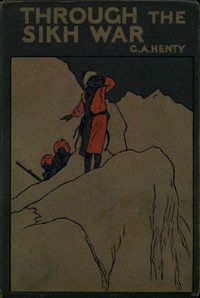
Through the Sikh War: A Tale of the Conquest of the Punjaub — A Reader’s Guide
(0 User reviews)
154
Project Gutenberg
2017
Not confirmed
Orphans -- Juvenile fiction; Conduct of life -- Juvenile fiction; Adventure stories; Youth -- Conduct of life -- Juvenile fiction; Soldiers -- Juvenile fiction; Courage -- Juvenile fiction; Massacres -- Juvenile fiction; Sikh War, 1848-1849 -- Juvenile fiction; India -- History -- 19th century -- Juvenile fiction; Punjab (India) -- Juvenile fiction
Readers of public-domain and historical texts
Project Gutenberg digital edition
en
Edition facts
Words
134,045
Reading time
583 min
Text sections
13
The source record for Through the Sikh War: A Tale of the Conquest of the Punjaub — A Reader’s Guide measures this digital text at 134,045 words, 9 hr 43 min estimated reading time, and 13 detected text sections.
The text analysis averages about 23.4 words per sentence, while the detected sections provide another way to judge how the source is divided.
Project Gutenberg metadata also associates the work with “Orphans -- Juvenile fiction,” connecting these edition facts with the source record’s subject description.
Source:
Project Gutenberg record #53717
This editorial note examines G. A. Henty's diction, dialogue, and descriptive choices in 'Through the Sikh War,' focusing on how the author constructs a young orphan's journey amid the Sikh Wars through precise observations from the text.
Editorial Edition Score
4.9/5
★★★★★
★★★★★
Calculated from edition completeness, EPUB availability, text structure and catalogue metadata. Not a user rating.
How this score is calculated
- Description quality20 pts
- Title & short description10 pts
- Source metadata20 pts
- Text length15 pts
- Chapters / structure15 pts
- EPUB file integrity20 pts
Total of 100 points, scaled to a 2.5-5.0 range. Editions with an empty description or a missing EPUB file are not scored.
Edition quality
Public-domain source text
Read the source text
The source text is kept in the dedicated reader, separate from this catalogue record and its commentary.
G. A. Henty opens Through the Sikh War with a scene of institutional order: the headmaster Dr. Bubear hands a letter to Percy Groves, a boy of about fifteen, after school. The dialogue is brisk and functional—'Groves, here is a letter for you'—and the headmaster's nod is described as 'kindly,' a small but telling detail that establishes a benevolent authority. The letter, from lawyers, sets the plot in motion without melodrama. Henty's prose here is economical, favoring action over sentiment. The orphaned Percy is not given to introspection; instead, the narrative moves quickly to the external world of travel and conflict. This restraint in emotional language is a consistent authorial choice throughout the excerpts, where even perilous moments are rendered with matter-of-fact directness.
Diction of Danger and Duty
Henty's vocabulary in the excerpts is notably concrete and martial. Words like 'dacoit,' 'fortalice,' and 'durbar' are used without explanation, assuming a reader familiar with colonial terminology. The dialogue of the bandit leader, Goolam Tej, is precise and pragmatic: 'It is always well to make sure, either by a stroke with a dagger through the heart, or by cutting off the head.' This bluntness contrasts with Percy's measured speech—'This is a nice fix that we are in'—which understates the gravity of captivity. The author avoids ornate description; even the fortress is described simply as 'ancient' and 'roughly repaired.' Henty's diction thus reinforces a world where danger is routine and duty is paramount, with little room for psychological depth.
Dialogue as Character and Plot Engine
Dialogue in the excerpts serves dual purposes: revealing character and advancing the plot. Percy's exchange with his follower Akram Chunder after capture is telling. Percy says, 'I am awfully sorry for Bhop Lal,' while Akram responds with a practical assessment of the man's survival chances: 'if they were not in a vital place he may live through them, for he is as hard as a piece of iron.' This contrast—Percy's empathy versus Akram's hardheaded realism—defines their relationship. Henty also uses dialogue to convey cultural attitudes; Akram's remark that 'there is not a peasant in the district who does not love the colonel' hints at the colonial context without overt commentary. The bandit leader's speech is similarly functional, mixing self-criticism ('I blame myself') with tactical reasoning, making him a credible antagonist rather than a caricature.
Descriptive Economy in Setting and Action
Henty's descriptive passages are lean, focusing on elements necessary for the narrative. The journey to the bandits' stronghold is rendered in a single paragraph: 'they started up the hills, and after some hours' riding crossed the crest, and then, leaving the bridle-path... dismounted and led their horses along the steep face of the hill until they reached a perpendicular crag.' The castle is introduced with minimal detail—'a castellated building'—and its interior is 'a small room in a little tower.' This brevity keeps the pace swift. Action scenes are similarly terse; the stripping of a wounded man and the debate over his death are conveyed through dialogue rather than graphic description. Henty trusts the reader to infer violence from the characters' words, as when Goolam Tej insists on 'a stroke with a dagger through the heart' to ensure death.
Recurring Motifs: Loyalty and Practicality
Two motifs recur in the excerpts: loyalty among followers and the practical assessment of risk. Akram Chunder's concern is not for himself but for Percy: 'I care not so much for myself, but to think that you... should be seized by these robbers... cuts me to the heart.' This selflessness is mirrored in the bandits' own code, where Goolam Tej criticizes his men for not ensuring a kill. The motif of practical judgment appears in discussions of wounds and survival: 'Men who drink have but little chance of making a good recovery.' Henty's characters constantly weigh probabilities—whether a man is dead, whether news will reach the colonel—creating a world where survival depends on clear-eyed reasoning. These motifs, while not unique to Henty, are handled with a consistency that defines the narrative's moral and practical framework.
Readers attentive to Henty's authorial choices will notice how he balances historical exposition with personal adventure. The excerpts show a writer who prioritizes narrative momentum over psychological exploration, using dialogue and concrete detail to build a credible, if ideologically charged, world. The sparse descriptions and functional dialogue are not weaknesses but deliberate techniques that keep the focus on action and decision. For those interested in Victorian adventure fiction, this work exemplifies how Henty constructs a hero who is resourceful rather than introspective, and a setting that is vividly specific yet never over-described.
There’s something about orphaned boys in Henty’s world—always racing toward a future they can’t yet see. Reading Through the Sikh War, I kept thinking how that restless pull shows up differently in A Little Queen of Hearts: An International Story — A Reader’s Guide, where the journey is quieter, more inward. Both left me with that ache of time passing.
There are no reviews for this eBook.
There are no comments for this eBook.
Reader reflection
Take a moment to reflect on this book
Create a short personal record of your experience with this book.
Your progress
0
/
10
2
How did the book work for you overall?
3
How likely are you to recommend this book?
4
What was the reading difficulty like?
5
Which aspect of the book did you value most?
6
How would you rate its originality?
7
How clearly were the main ideas presented?
8
Did any part of the book feel personally relevant?
9
What changed or sharpened your thinking?
10