1


The Mercer Boys on a Treasure Hunt — Key Ideas to Explore
(0 User reviews)
230
Project Gutenberg
2016
Not confirmed
Detective and mystery stories; Treasure troves -- Juvenile fiction; Brothers -- Juvenile fiction; Military cadets -- Juvenile fiction
Readers of public-domain and historical texts
Project Gutenberg digital edition
en
Edition facts
Words
55,195
Reading time
240 min
Text sections
8
The catalog record for The Mercer Boys on a Treasure Hunt — Key Ideas to Explore provides practical reading context through 55,195 words, 4 hr estimated reading time, and 8 detected text sections.
The text analysis averages about 16.0 words per sentence, while the detected sections provide another way to judge how the source is divided.
Project Gutenberg metadata also associates the work with “Detective and mystery stories,” connecting these edition facts with the source record’s subject description.
Source:
Project Gutenberg record #53673
This editorial note examines how the opening baseball scene, the middle capture sequence, and later sea voyage excerpts guide a first reading of Capwell Wyckoff's 1929 adventure, focusing on the brothers' resourcefulness and the story's episodic structure.
Editorial Edition Score
4.7/5
★★★★★
★★★★★
Calculated from edition completeness, EPUB availability, text structure and catalogue metadata. Not a user rating.
How this score is calculated
- Description quality20 pts
- Title & short description10 pts
- Source metadata20 pts
- Text length15 pts
- Chapters / structure15 pts
- EPUB file integrity20 pts
Total of 100 points, scaled to a 2.5-5.0 range. Editions with an empty description or a missing EPUB file are not scored.
Edition quality
Public-domain source text
Read the source text
The source text is kept in the dedicated reader, separate from this catalogue record and its commentary.
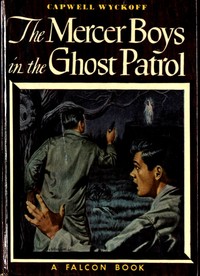
The Mercer Boys on a Treasure Hunt opens not with a treasure map or a mysterious stranger, but with a casual baseball game. Don Mercer, described as sandy haired and slightly freckled, asks a younger boy for a turn at bat. This everyday scene establishes the brothers as approachable, athletic young men rooted in their hometown. The dialogue is natural and unforced, with Jim and Don trading grins and easy banter. The setting—a vacant lot near the center of town—grounds the story in a recognizable American summer. Only after this relaxed introduction does the plot shift with the arrival of a professor's letter, hinting at the adventure to come. The opening thus signals that the Mercer boys are ordinary teenagers who will be drawn into extraordinary circumstances, a pattern common in series fiction of the era.
A Baseball Beginning
The first chapter, titled “The Professor’s Letter,” delays the promised treasure hunt in favor of establishing character. Don and Jim Mercer are introduced through action rather than description: Don wants “a crack at that ball,” and the brothers walk across the field to ask the younger boys for a turn. The dialogue is colloquial and specific—“Put a good one over, Tommy, will you?”—and the scene conveys a sense of community. The boys are well known, and the smaller children feel no alarm at their approach. This opening suggests that the Mercer brothers are competent and well-liked, traits that will serve them in the adventures to come. The baseball game also serves as a contrast to the more dangerous situations they will later face, such as being captured and forced to cook breakfast for their captors.
Capture and Resourcefulness
In the middle excerpts, the brothers are taken prisoner by Sackett and his men. The narrative shifts from leisurely summer play to tense survival. Jim and Terry are forced to ride through the night, hungry and tired, with no chance to escape. The prose becomes more urgent: “They rode steadily onward, the men apparently indifferent to the thought of breakfast and the boys grimly uncomplaining.” Despite their predicament, the boys retain their resourcefulness. Jim volunteers to cook breakfast, saying “I’m too hungry to say ‘no’ just now,” and prepares an excellent meal that even the men enjoy. This moment reveals a practical intelligence and a refusal to be cowed. The capture also introduces the recurring motif of movement through varied landscapes—mountains, plains, a bluff, a beach—which structures the adventure as a series of physical challenges.
The Sea and the Schooner
Later in the story, the action moves to the coast. The boys are marched to a beach where a “battered old schooner with two masts” waits offshore. The description is economical but vivid: the ship “tossing gently to and fro” and the long boat with its crew of six. The boys climb in without resistance, and Terry murmurs “Evidently on a ship.” This matter-of-fact acceptance of their fate contrasts with the earlier baseball scene, highlighting how far they have come from their ordinary lives. The sea voyage introduces a new setting—the open ocean—and a new set of dangers. The schooner’s condition suggests a rough journey ahead. The excerpt ends with the boys being taken on board, leaving the reader to wonder what awaits them. This section demonstrates how the story uses physical movement to escalate tension and broaden the scope of the adventure.
Voice and Period Detail
Wyckoff’s prose is straightforward and unadorned, typical of boys’ adventure series from the 1920s. Dialogue carries much of the characterization: Don’s easy confidence, Jim’s calm practicality, Terry’s grumbling. The narrative voice is omniscient but stays close to the boys’ perspective. Period details—such as the boys being home from Woodcrest Military Institute for summer vacation—place the story in a specific social context. The use of terms like “grub” and “doggone” adds authenticity. The story’s structure is episodic, moving from baseball to capture to sea voyage, each segment introducing new challenges. The excerpts suggest that the treasure hunt itself is a framing device for a series of physical and moral tests. Readers should pay attention to how the brothers respond to each setback, as their resourcefulness is the true engine of the plot.
These excerpts reveal that The Mercer Boys on a Treasure Hunt is less about the treasure itself than about the brothers’ ability to adapt to changing circumstances. From a baseball field to a schooner, the setting shifts rapidly, and the boys must rely on their wits and each other. First-time readers will benefit from noting how Wyckoff uses everyday details—a discolored baseball, a tannery, a bluff—to anchor the adventure in a believable world. The story rewards attention to the brothers’ dialogue and actions, which consistently show them as capable and level-headed.
Rereading the Mercer boys’ baseball game before the treasure hunt, I felt that familiar pull of boys solving trouble with wit alone—it reminded me of another old friend, where a young soldier faces a very different kind of gamble. Both books share that quiet patience with detail. Through the Sikh War: A Tale of the Conquest of the Punjaub — A Reader’s Guide holds that same unhurried pulse, a story told step by step. Strange how distant wars and sunlit fields echo each other.
There are no reviews for this eBook.
There are no comments for this eBook.
Reader reflection
Record your reading impressions
A brief reflection can help important ideas stay with you longer.
Your progress
0
/
10
2
Did this book hold your interest?
3
Is this a title you would suggest to others?
4
What was the reading difficulty like?
5
Did the book give you something worth debating?
6
How understandable was the text?
7
Is this a title worth rereading?
8
Did any part of the book stay with you emotionally?
9
In one sentence, what did you learn?
10