1

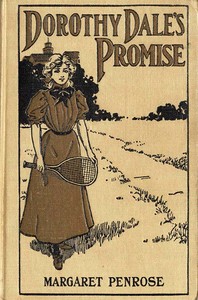
Dorothy Dale's Promise — Inside the Classic
(0 User reviews)
1625
Project Gutenberg
2017
Not confirmed
Orphans -- Juvenile fiction; Schools -- Juvenile fiction; Friendship -- Juvenile fiction; Girls -- Social life and customs -- Juvenile fiction
Readers of public-domain and historical texts
Project Gutenberg digital edition
en
Edition facts
Words
56,211
Reading time
245 min
Text sections
35
For Dorothy Dale's Promise — Inside the Classic, the stored edition analysis reports 56,211 words, 4 hr 5 min estimated reading time, and 35 detected text sections.
The text analysis averages about 12.5 words per sentence, while the detected sections provide another way to judge how the source is divided.
Project Gutenberg metadata also associates the work with “Orphans -- Juvenile fiction,” connecting these edition facts with the source record’s subject description.
Source:
Project Gutenberg record #54021
This editorial note examines Margaret Penrose's diction, dialogue, and descriptive choices in Dorothy Dale's Promise, focusing on how the author constructs character voice, humor, and tension through specific wordplay and physical details in the excerpts.
Editorial Edition Score
4.8/5
★★★★★
★★★★★
Calculated from edition completeness, EPUB availability, text structure and catalogue metadata. Not a user rating.
How this score is calculated
- Description quality20 pts
- Title & short description10 pts
- Source metadata20 pts
- Text length15 pts
- Chapters / structure15 pts
- EPUB file integrity20 pts
Total of 100 points, scaled to a 2.5-5.0 range. Editions with an empty description or a missing EPUB file are not scored.
Edition quality
Public-domain source text
Read the source text
The source text is kept in the dedicated reader, separate from this catalogue record and its commentary.
Margaret Penrose opens Dorothy Dale's Promise with a train scene that immediately establishes the contrasting temperaments of its two central girls. Tavia Travers bursts into the car "almost breathless," her exclamation "Back to dear old Glenwood School, Doro!" punctuated by a hug, while Dorothy Dale responds with a more measured "De-lighted, Miss." This split in energy—Tavia's impulsive enthusiasm versus Dorothy's wry composure—is reinforced by their dialogue: Tavia declares she "could beat" the hateful Akerson man, and Dorothy counters with a scriptural quip about turning the other cheek, her "eyes twinkled" to soften the rebuke. Penrose uses such exchanges to sketch character without heavy exposition.
Diction and the Comic Voice
Penrose’s diction often leans into playful exaggeration and colloquial irreverence, especially through Tavia. When the girls build a snow giant, Tavia refers to its stomach as "colloquially—his ‘dining room’" and insists on "a real shapely giant." She later jokes that the giant’s coal teeth show "the deplorable result of not using Somebody’s Toothpaste—a ‘horrible example’ for the youngsters." These lines blend schoolgirl slang with mock-moralizing, a tone that echoes the era’s advertising jingles. Dorothy, by contrast, uses more measured language: she "was thinking deeply" and decides to "wait and see how it ‘panned out.’" The contrast in their speech patterns—Tavia’s rapid-fire, image-driven outbursts versus Dorothy’s deliberate, idiomatic reflections—creates a comic rhythm that drives many scenes.
Descriptive Economy in Physical Details
Penrose builds the snow giant through a series of concrete, almost inventory-like details: "a noble round head, set firmly on a ‘bull neck’;"; "a white cardboard nose"; "pieces of coal for teeth"; "a bushel basket served as a hat"; "the front of his waistcoat was decorated with round turnips for buttons." The list reads like a recipe for a prank, each item chosen for visual absurdity. Later, the giant is reduced to "a devastated, melting pillar on the school lawn," a phrase that collapses the elaborate construction into a single, pathetic image. This pattern—lavish description of a temporary creation followed by its swift dissolution—mirrors the book’s episodic structure, where elaborate schemes yield quickly to new problems.
Dialogue as a Vehicle for Tension
Penrose uses dialogue not only for humor but also to signal shifts in plot. When Tavia’s remark about the "Agony Column" sparks an idea in Dorothy, the narration notes: "Dorothy’s wits—spurred by Tavia’s irresponsible remark about the ‘Agony Column’ of the newspaper—had been working overtime." The word "irresponsible" distances Dorothy from Tavia’s impulsiveness, yet the idea itself proves practical. Later, Dorothy’s decision to advertise in the Salvation Army paper is described with matter-of-fact precision: "She chose the Salvation Army paper, in which she knew there was a column devoted to requests for news of ‘absent friends.’" The contrast between Tavia’s offhand suggestion and Dorothy’s methodical execution underscores their complementary roles. The marked paragraph "occasioned more excitement in Glenwood school than Dorothy expected," hinting at consequences without revealing them.
Narrative Voice and the Handling of Promise
The title’s "Promise" is introduced obliquely. In the opening chapter, Dorothy’s promise to visit Tavia’s hometown of Dalton is mentioned in passing: "‘You’ll surely go home with me, Doro—to dear old Dalton?’ sang Tavia, hugging her friend. ‘You promised——’". Dorothy’s reply—"‘And I wouldn’t miss it for anything!’"—is cheerful but vague. The ellipsis after "promised" leaves the exact terms unstated, a technique Penrose uses to create forward momentum without over-explaining. Later, the promise to find Celia Moran’s brother is introduced through Dorothy’s internal reflection and a letter to an editor, not through dramatic declaration. This understated handling of the central pledge suggests that Penrose trusts readers to infer its weight from context rather than from explicit moralizing.
Readers attentive to Penrose’s word choices will notice how often she lets a single phrase—Tavia’s "dining room" joke, Dorothy’s "panned out" idiom—carry both characterization and plot momentum. The excerpts offer a clear view of her method: dialogue that distinguishes speakers, descriptions that linger on the absurdly concrete, and a narrative voice that moves briskly between humor and mild suspense. These elements reward close reading, even as the story itself unfolds at a rapid, episodic pace.
I’ve watched Dorothy Dale’s Promise sit quietly on its shelf for decades, its laughter and steadiness a familiar comfort. It makes me think of The Jay Bird Who Went Tame — Context and Discussion, another gentle soul—wildness finding a home. Both simply know that trust is a small, patient thing, earned feather by feather, word by word. Nothing more to it, just that.
There are no reviews for this eBook.
There are no comments for this eBook.
Reader reflection
What was your reading experience?
Capture what you thought, learned, and would like to remember.
Your progress
0
/
10
2
Was reading this book enjoyable?
3
Would you encourage someone else to read it?
4
What was the reading difficulty like?
5
Did the story or argument move comfortably?
6
Did the book meet your expectations?
7
What was its emotional impact?
8
Did the book give you something worth debating?
9
Which lesson or insight stayed with you?
10