1

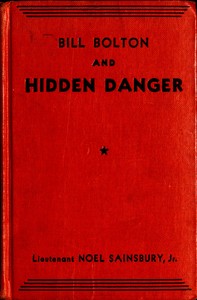
Bill Bolton and Hidden Danger — Context and Discussion
(0 User reviews)
700
Project Gutenberg
2017
Not confirmed
Aeronautics -- Juvenile fiction; New England -- Juvenile fiction; Airplanes -- Juvenile fiction; Bolton, Bill (Fictitious character) -- Juvenile fiction
Readers of public-domain and historical texts
Project Gutenberg digital edition
en
Edition facts
Words
39,961
Reading time
174 min
Text sections
6
Bill Bolton and Hidden Danger — Context and Discussion can be approached with a clearer sense of reading commitment from its source measurements: 39,961 words, 2 hr 54 min estimated reading time, and 6 detected text sections.
The text analysis averages about 13.1 words per sentence, while the detected sections provide another way to judge how the source is divided.
Project Gutenberg metadata also associates the work with “Aeronautics -- Juvenile fiction,” connecting these edition facts with the source record’s subject description.
Source:
Project Gutenberg record #54413
In this 1933 aviation adventure, Bill Bolton faces a mysterious threat amid a summer electrical storm. The opening chapter blends thunder with gunfire, setting a tense tone. Excerpts reveal a focus on sensory details—sound, light, and atmosphere—and a protagonist who relies on observation and caution.
Editorial Edition Score
4.6/5
★★★★★
★★★★★
Calculated from edition completeness, EPUB availability, text structure and catalogue metadata. Not a user rating.
How this score is calculated
- Description quality20 pts
- Title & short description10 pts
- Source metadata20 pts
- Text length15 pts
- Chapters / structure15 pts
- EPUB file integrity20 pts
Total of 100 points, scaled to a 2.5-5.0 range. Editions with an empty description or a missing EPUB file are not scored.
Edition quality
Public-domain source text
Read the source text
The source text is kept in the dedicated reader, separate from this catalogue record and its commentary.
The first chapter of Bill Bolton and Hidden Danger opens with a storm that is both literal and figurative: thunderclaps are indistinguishable from gunshots, and lightning briefly illuminates a figure dropping from a maple tree. The narrative immediately establishes a pattern of sensory confusion—Bill Bolton must parse natural noise from human threat. The prose is brisk, favoring action over introspection, and the setting (a darkened house, a rain-lashed New England estate) is rendered in sharp, almost cinematic flashes. The excerpt also introduces a key structural element: the butler’s pantry with its row of indicators, described as “the still heart of the house.” This image of a nervous system of wires and bells recurs, suggesting that the house itself is a character, with secrets wired into its walls.
Sound as a Narrative Device
The excerpts rely heavily on auditory cues to build tension. The opening barrage of “Bang! Bang! Bang!” is deliberately ambiguous—is it thunder or a gun? Bill’s process of elimination (“Thunder, that’s all”) is immediately contradicted by the “ping of a bullet.” Later, in the butler’s pantry, a “soft, faint whir” and the “tinkling of an electric bell” create a puzzle of unseen movement. The text often contrasts the noise of the storm (wind, rain, thunder) with the “deadly stillness inside the house.” This opposition heightens the reader’s awareness of every sound, making the silence as ominous as the crashes. Notably, the narrative withholds the source of the cellar bell, leaving the reader—like Bill—straining to interpret an incomplete signal.
The House as a Labyrinth of Clues
The Bolton house is not merely a backdrop but an active puzzle. The butler’s pantry, with its “jail-like row of keys” and indicator panel, is described as a “still heart” with “bloodless arteries.” This anatomical metaphor suggests a building that can be read like a body—if one knows where to look. Bill’s investigation is tactile and spatial: he feels his way down cellar steps, turns keys, and notes the position of doors. The detail that the cellar door key is left in the lock “to prevent the insertion of a duplicate from the cellar side” implies a cat-and-mouse game of security. The house’s layout—dark passages, closed doors, a second cellar entrance—creates a geography of hidden danger, where every room might hold a clue or a threat.
Bill Bolton’s Methodical Caution
Despite the action-oriented genre, Bill Bolton is portrayed as a deliberate thinker. He does not rush; he “crept on all fours,” “waited a moment or two,” and “ventured to move.” His internal monologue reveals a habit of reasoning: he deduces the shooter’s location (“perched in a maple”), considers the possibility of a message in the cellar bell, and even chides himself for “nerves.” The text emphasizes his reliance on observation over impulse. When he sees a tremor in the indicator, he dismisses it as imagination, then reconsiders. This self-doubt is a rare vulnerability in a juvenile adventure hero. The excerpts also show him planning—checking the garage light, switching off electrics—suggesting a methodical mind that treats the house as a system to be managed.
Readers should pay close attention to the way the narrative uses the house’s infrastructure—wires, bells, keys—as both plot devices and symbols. The tension between what Bill sees and what he hears (or fails to hear) is central to the mystery. The excerpts offer only fragments of the larger plot, but they establish a pattern of layered perception: the storm masks gunfire, the house’s silence masks activity. This is a story where danger is hidden not only in shadows but in the very fabric of the setting.
The rain hammered the attic window as I reread the storm-charged opening of Bill Bolton and Hidden Danger, where thunder and gunfire blur into one. That same restless, listening mood carried me afterward to a gentler kind of waiting—nurses on a foreign shore, watching for news. The Red Cross Girls in Belgium — Themes and Context felt like turning a lamp on in that dim, rain-soaked afternoon.
There are no reviews for this eBook.
There are no comments for this eBook.
Reader reflection
Before you leave, reflect on the book
Use these questions to collect your thoughts before moving on.
Your progress
0
/
10
2
How much did you enjoy the reading experience?
3
Is this a title you would suggest to others?
4
Did the language feel accessible?
5
Was the book easy to understand?
6
How useful did the reading feel?
7
Would a second reading be valuable?
8
Did any part of the book feel personally relevant?
9
In one sentence, what did you learn?
10