1

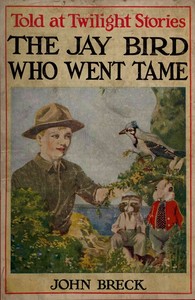
The Jay Bird Who Went Tame — Context and Discussion
(0 User reviews)
1463
Project Gutenberg
2021
Not confirmed
Animals -- Juvenile fiction; Birds -- Juvenile fiction; Cows -- Juvenile fiction; Temper -- Juvenile fiction; Farms -- Juvenile fiction
Readers of public-domain and historical texts
Project Gutenberg digital edition
en
Edition facts
Words
19,915
Reading time
87 min
Text sections
15
This digital edition of The Jay Bird Who Went Tame — Context and Discussion is described by source-level measurements including 19,915 words, 1 hr 27 min estimated reading time, and 15 detected text sections.
The text analysis averages about 15.1 words per sentence, while the detected sections provide another way to judge how the source is divided.
Project Gutenberg metadata also associates the work with “Animals -- Juvenile fiction,” connecting these edition facts with the source record’s subject description.
Source:
Project Gutenberg record #64586
In this 1923 children's story, a blue jay with a hurt wing is taken in by a boy named Louie Thomson. The excerpts show a world where woodland creatures speak in riddles, and a weasel named Killer fears a mythical Ghost Owl. The catalog subjects list 'Temper' and 'Cows,' but the text focuses on animal folklore and predator-prey dynamics.
Editorial Edition Score
4.7/5
★★★★★
★★★★★
Calculated from edition completeness, EPUB availability, text structure and catalogue metadata. Not a user rating.
How this score is calculated
- Description quality20 pts
- Title & short description10 pts
- Source metadata20 pts
- Text length15 pts
- Chapters / structure15 pts
- EPUB file integrity20 pts
Total of 100 points, scaled to a 2.5-5.0 range. Editions with an empty description or a missing EPUB file are not scored.
Edition quality
Public-domain source text
Read the source text
The source text is kept in the dedicated reader, separate from this catalogue record and its commentary.
The excerpts from The Jay Bird Who Went Tame open not with the jay but with Chaik Jay and Tad Coon sheltering from rain. The narrative voice is colloquial and direct, addressing the reader as 'you' and assuming shared experience: 'You know just how you’d feel if you were Louie.' This conversational tone persists throughout, even during tense moments like Killer the Weasel’s encounter with a hop-toad. The story’s world is one where animals speak, hold beliefs, and fear supernatural transformations—such as the Ghost Owl, a creature said to be a fox reborn as an owl. The catalog subjects list 'Temper' and 'Cows,' but the excerpts contain no scenes of anger or bovine characters; instead, the focus is on animal folklore and predator-prey dynamics.
A Conversational Narrator and Animal Perspectives
The narrator frequently breaks the fourth wall, using phrases like 'Prob’ly you’re all wondering' and 'You know just how you’d feel.' This technique invites the reader into the story as a confidant. The animals are given distinct voices: Chaik Jay is described as feeling 'fluttery' but trusting, while Killer the Weasel speaks in a 'husky voice' and articulates elaborate myths. The hop-toad’s cryptic pronouncements—'The bones of yesterday lie where even the blind ants can find them'—add a layer of folk wisdom. The narrative does not explain whether these beliefs are true; it simply reports them, leaving the reader to gauge the creatures’ reliability.
The Ghost Owl: Folklore Within the Story
A central piece of animal lore is the Ghost Owl, described as a 'big white Owl' that hunts weasels and minks. Killer explains that weasels believe the Ghost Owl is a fox that sheds its fur for feathers, becoming an immortal predator. The text states: 'It never dies. It lives on us who are strongest, swiftest, cleverest of hunters.' This myth is presented without authorial correction, allowing the reader to see how the animals rationalize danger. The hop-toad’s evasions—'Who knows?'—reinforce the ambiguity. The excerpts do not reveal whether the Ghost Owl actually appears, but the folklore shapes Killer’s decisions and drives the plot forward.
Gaps Between Catalog Subjects and Text
The Project Gutenberg catalog lists 'Animals -- Juvenile fiction; Birds -- Juvenile fiction; Cows -- Juvenile fiction; Temper -- Juvenile fiction; Farms -- Juvenile fiction.' However, the excerpts contain no cows, no farm setting, and no explicit temper-related incidents. The story’s action takes place in woods, fields, and a pond, with characters like Dr. Muskrat and Nibble Rabbit. The word 'temper' does not appear in the provided text. This discrepancy suggests the catalog may have been based on a broader summary or a different edition. Readers should not expect a farmyard tale or a moral about anger; instead, the excerpts promise a woodland fantasy with talking animals and supernatural undertones.
Readers approaching The Jay Bird Who Went Tame should set aside expectations of a simple pet story. The excerpts reveal a narrative rich in animal folklore, where characters debate the nature of predators and the reliability of rumor. The conversational style and the unresolved mystery of the Ghost Owl invite readers to interpret the creatures’ beliefs as part of the story’s texture. Pay attention to who speaks and what they claim—the truth may be as slippery as a hop-toad’s riddles.
That old jay’s world—full of wary creatures and unseen wings—always made me wonder what happened after Louie closed the door. I found myself thinking of it again while drifting through The Mercer Boys on a Treasure Hunt — Key Ideas to Explore, where every rustle in the woods carries the same patient, watchful feeling. Some stories just keep that quiet hush about them, don't they?
There are no reviews for this eBook.
There are no comments for this eBook.
Reader reflection
What did you think of this book?
Answer a few questions and save a private reflection on this device.
Your progress
0
/
10
2
How did the book work for you overall?
3
How likely are you to recommend this book?
4
Did the language feel accessible?
5
Would a second reading be valuable?
6
How understandable was the text?
7
How much did the book move you?
8
How strong was your personal connection to the text?
9
In one sentence, what did you learn?
10