1

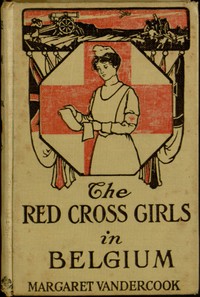
The Red Cross Girls in Belgium — Themes and Context
(0 User reviews)
757
Project Gutenberg
2016
Not confirmed
War stories; Young women -- Juvenile fiction; Nursing -- Juvenile fiction; Red Cross and Red Crescent -- Juvenile fiction; World War, 1914-1918 -- Juvenile fiction; Belgium -- Juvenile fiction; Participation -- Juvenile fiction
Readers of public-domain and historical texts
Project Gutenberg digital edition
en
Edition facts
Words
48,073
Reading time
210 min
Text sections
5
The Red Cross Girls in Belgium — Themes and Context can be approached with a clearer sense of reading commitment from its source measurements: 48,073 words, 3 hr 30 min estimated reading time, and 5 detected text sections.
The text analysis averages about 15.6 words per sentence, while the detected sections provide another way to judge how the source is divided.
Project Gutenberg metadata also associates the work with “War stories,” connecting these edition facts with the source record’s subject description.
Source:
Project Gutenberg record #53730
This editorial note examines how Margaret Vandercook's 1916 novel balances its catalog subjects of war nursing and Red Cross service with a focus on personal relationships, romantic tension, and the characters' emotional lives in occupied Belgium.
Editorial Edition Score
4.7/5
★★★★★
★★★★★
Calculated from edition completeness, EPUB availability, text structure and catalogue metadata. Not a user rating.
How this score is calculated
- Description quality20 pts
- Title & short description10 pts
- Source metadata20 pts
- Text length15 pts
- Chapters / structure15 pts
- EPUB file integrity20 pts
Total of 100 points, scaled to a 2.5-5.0 range. Editions with an empty description or a missing EPUB file are not scored.
Edition quality
Public-domain source text
Read the source text
The source text is kept in the dedicated reader, separate from this catalogue record and its commentary.
Although cataloged as a war story about Red Cross nursing in World War I Belgium, The Red Cross Girls in Belgium devotes much of its early chapters to the characters' personal dynamics and romantic subplots. The opening chapter describes the four American girls as “inspired to offer their services to the French soldiers” after six months in British trenches, yet the narrative quickly shifts to their domestic life in a French farmhouse, where they “almost forgot the tragedies near at hand.” This tension between the advertised subject and the actual content is a defining feature of the book.
War as Backdrop, Not Focus
The catalog subjects list “World War, 1914-1918 -- Juvenile fiction” and “Belgium -- Juvenile fiction,” but the excerpts show the war largely as a distant setting. In Chapter I, the girls experience “a lull in the fighting along the borders of Alsace-Lorraine,” allowing them to enjoy “the fragrant woods” and “the romantic atmosphere of the French country.” The narrative dwells on their friendships, a developing relationship with Captain Henri Castaigne, and the mystery of a “locked door” and a “ghost.” The war intrudes mainly through conversations about provisions and the difficulty of buying food, rather than through direct combat or nursing scenes. This pattern suggests the book uses the war as a backdrop for a story more concerned with the characters' emotional lives.
Nursing and Red Cross Work: Implied, Not Shown
Despite the title and catalog subjects emphasizing nursing and Red Cross work, the excerpts contain no detailed descriptions of medical procedures, hospital routines, or the care of wounded soldiers. The girls are identified as Red Cross nurses, but their duties are mentioned only in passing: Barbara is asked if her “work at the hospital” is more difficult than Nona's, and she denies it. The narrative instead focuses on personal conversations, such as Barbara's complaint that people keep telling her she “don't look well,” and Eugenia's discussion of whether happiness makes it easier to bear others' suffering. The Red Cross appears as an identity rather than an activity, and the reader must infer the nursing work from the characters' roles rather than from any depicted events.
Romantic Tension and Emotional Subtext
The excerpts reveal a strong undercurrent of romantic and emotional tension among the characters. In Chapter XII, Barbara and Eugenia discuss whether Dick Thornton and Nona are “very happy over something,” with Barbara speculating that “if one is happy oneself, it is not hard to bear the sufferings of other people.” Eugenia recalls a previous moonlight conversation about the same topic, and Barbara dismissively suggests that Eugenia would not “see or understand” the signs of romance. The dialogue is laden with implication: Barbara's cynicism, Eugenia's careful replies, and the reference to a note from Nona all point to a romantic subplot that overshadows the war setting. The chapter title “The Ghost” hints at mystery, but the actual content is a conversation about relationships, not supernatural events.
Readers approaching The Red Cross Girls in Belgium expecting a straightforward war narrative or detailed nursing scenes will find instead a story centered on personal relationships, romantic intrigue, and the emotional lives of its young American heroines. The war and Red Cross service provide a setting and identity for the characters, but the plot advances through conversations, secrets, and romantic tensions. This note encourages readers to adjust their expectations accordingly and to appreciate the book as a period piece reflecting early twentieth-century girls' series fiction.
Reading about the Red Cross girls in occupied Belgium, I was struck by how their personal worries kept threading through the larger war’s machinery. It reminded me of an old favorite, the quiet focus on individual loyalty amidst cannon fire in Through the Sikh War: A Tale of the Conquest of the Punjaub — A Reader’s Guide. Both books feel less like histories and more like letters home, with the same tender, unhurried heartbeat beneath the dust.
There are no reviews for this eBook.
There are no comments for this eBook.
Reader reflection
Record your reading impressions
A brief reflection can help important ideas stay with you longer.
Your progress
0
/
10
2
How did the book work for you overall?
3
How likely are you to recommend this book?
4
How much effort did this book require?
5
How original did the book feel?
6
Did the book meet your expectations?
7
Would you read this book again?
8
What did you think about the pace?
9
Which lesson or insight stayed with you?
10