1

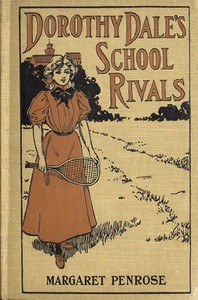
Dorothy Dale's School Rivals — Text and Context
(0 User reviews)
810
Project Gutenberg
2017
Not confirmed
Schools -- Juvenile fiction; Friendship -- Juvenile fiction; Social classes -- Juvenile fiction; Boarding school students -- Juvenile fiction; Competition -- Juvenile fiction; Girls -- Social life and customs -- Juvenile fiction
Readers of public-domain and historical texts
Project Gutenberg digital edition
en
Edition facts
Words
57,310
Reading time
250 min
Text sections
56
This digital edition of Dorothy Dale's School Rivals — Text and Context is described by source-level measurements including 57,310 words, 4 hr 10 min estimated reading time, and 56 detected text sections.
The text analysis averages about 13.9 words per sentence, while the detected sections provide another way to judge how the source is divided.
Project Gutenberg metadata also associates the work with “Schools -- Juvenile fiction,” connecting these edition facts with the source record’s subject description.
Source:
Project Gutenberg record #54649
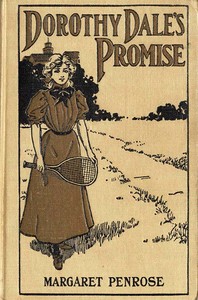
In this seventh Dorothy Dale novel, Margaret Penrose weaves a story of boarding school rivalries, secret letters, and a lost dog named Ravelings, as Dorothy and her friends navigate friendships, suspicions, and a mysterious reward.
Editorial Edition Score
4.9/5
★★★★★
★★★★★
Calculated from edition completeness, EPUB availability, text structure and catalogue metadata. Not a user rating.
How this score is calculated
- Description quality20 pts
- Title & short description10 pts
- Source metadata20 pts
- Text length15 pts
- Chapters / structure15 pts
- EPUB file integrity20 pts
Total of 100 points, scaled to a 2.5-5.0 range. Editions with an empty description or a missing EPUB file are not scored.
Edition quality
Public-domain source text
Read the source text
The source text is kept in the dedicated reader, separate from this catalogue record and its commentary.
The opening chapter of Dorothy Dale's School Rivals finds Dorothy staring blankly from a train window, her blue eyes seeing nothing as she broods over an unpleasant thought. Her friend Tavia, by contrast, scatters books and candy boxes around the seat, chattering about their return to Glenwood School. The contrast between Dorothy's quiet worry and Tavia's restless energy sets a pattern: the narrative often pairs a serious, responsible girl with a more impulsive, mischievous one. The dialogue moves quickly, with Tavia teasing Dorothy about being 'glum' and Dorothy responding with a forced smile. The scene establishes a tone of light tension, hinting at troubles to come without revealing them.
A Dog Named Ravelings and a Hundred-Dollar Reward
The excerpts introduce a subplot involving a small dog named Ravelings, who has a habit of jumping out of automobiles. A man named Jake receives a one-hundred-dollar reward for returning the dog to its owner, and he suspects Tavia and Edna were involved in the dog's disappearance. The girls learn that Dorothy actually brought the dog back, but they keep the reward a secret from her, creating a private joke. The dog's owner explains that Ravelings 'always wants to jump out of the automobile,' and this is his third attempt. The incident weaves through the narrative, connecting characters and revealing hidden knowledge. Jake's comment that Dorothy 'does not look as she did' hints at deeper concerns beneath the surface.
Tavia's Slang and the Weight of Good Language
Tavia's speech is marked by playful slang and a conscious rebellion against schoolroom propriety. She tells Edna, 'one does get so tired of using good language in school, that it's a positive comfort to “slang” once in a while.' This line captures a central tension in the book: the pressure to conform to polite behavior versus the desire for freedom and self-expression. Tavia's 'facetious' remarks and her habit of dragging friends into scrapes contrast with Dorothy's more reserved demeanor. The narrative notes that when a school girl is happy, 'she gives a little skip'—a small but telling detail about the physical expression of emotion. Tavia's energy often drives the plot, but her impulsiveness also creates complications.
Letters, Secrets, and Unspoken Worries
Letters are a recurring device in the excerpts. Tavia eagerly checks the post-office box, hoping for an invitation but finding a bill instead. Dorothy receives two letters, neither from home, and Tavia watches her reaction closely. A mysterious letter from 'Jean' is found at Dorothy's door, and its mention 'took the smile from Tavia's face.' The narrative withholds the content of these letters, building suspense. The post-master looks at Tavia 'keenly' before handing over the mail, suggesting that the girls' activities are under scrutiny. The combination of secret correspondence, unspoken worries, and the reward for Ravelings creates a web of hidden information that the reader must piece together alongside the characters.
Readers should pay attention to the small details that accumulate across chapters: the way Tavia's slang contrasts with Dorothy's propriety, the repeated motif of letters and secrets, and the role of minor characters like Jake and the post-master. The excerpts offer a fragmented view, but they suggest a story built on misunderstandings and withheld information. The dog Ravelings, though a minor element, ties together several threads. Approach the text as a puzzle where every glance, letter, and skipped heartbeat may carry meaning.
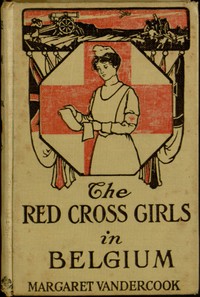
There’s something about the quiet ache of letters in Dorothy Dale’s School Rivals that stays with me, much like the whispered courage I found later in The Red Cross Girls in Belgium — Themes and Context. Both felt less like plots and more like afternoon light on a familiar floor—small loyalties, held gently, without needing to be announced.
There are no reviews for this eBook.
There are no comments for this eBook.
Reader reflection
How did this book work for you?
Your answers remain private and are stored only in this browser.
Your progress
0
/
10
2
What was your overall reaction to the book?
3
Would you recommend this book to another reader?
4
How much effort did this book require?
5
Did you gain anything practical from the text?
6
Would a second reading be valuable?
7
Did you relate to its people, ideas, or situations?
8
Did the book offer a fresh perspective?
9
In one sentence, what did you learn?
10